The China Mail - Balkan wild rivers in steady decline: study

USD -
AED 3.672499
AFN 65.497331
ALL 82.291054
AMD 379.210024
ANG 1.79008
AOA 916.999797
ARS 1434.249787
AUD 1.48067
AWG 1.8
AZN 1.700107
BAM 1.667477
BBD 2.015065
BDT 122.387907
BGN 1.67937
BHD 0.377048
BIF 2962.558775
BMD 1
BND 1.282878
BOB 6.913544
BRL 5.374399
BSD 1.000503
BTN 90.87719
BWP 13.370165
BYN 2.884096
BYR 19600
BZD 2.012166
CAD 1.383455
CDF 2154.999795
CHF 0.791897
CLF 0.022439
CLP 885.999767
CNY 6.961203
CNH 6.960215
COP 3672
CRC 487.844388
CUC 1
CUP 26.5
CVE 94.798647
CZK 20.800098
DJF 178.163712
DKK 6.37986
DOP 63.440232
DZD 129.81494
EGP 47.449487
ERN 15
ETB 155.400785
EUR 0.854026
FJD 2.266959
FKP 0.742423
GBP 0.744295
GEL 2.695025
GGP 0.742423
GHS 10.845029
GIP 0.742423
GMD 73.499211
GNF 8761.968096
GTQ 7.664167
GYD 209.106627
HKD 7.79695
HNL 26.449696
HRK 6.4339
HTG 130.972833
HUF 328.8265
IDR 16943.7
ILS 3.168175
IMP 0.742423
INR 91.685504
IQD 1310.666161
IRR 42125.000158
ISK 124.859778
JEP 0.742423
JMD 157.540466
JOD 0.708989
JPY 157.897025
KES 129.000237
KGS 87.450236
KHR 4029.277484
KMF 420.00031
KPW 900.031287
KRW 1469.045025
KWD 0.30726
KYD 0.833735
KZT 508.255074
LAK 21635.838914
LBP 89594.642408
LKR 309.85195
LRD 184.925002
LSL 16.442879
LTL 2.95274
LVL 0.60489
LYD 5.437757
MAD 9.167843
MDL 17.043861
MGA 4534.999833
MKD 52.540263
MMK 2099.691634
MNT 3565.807821
MOP 8.03545
MRU 39.99011
MUR 45.999664
MVR 15.449528
MWK 1734.915722
MXN 17.560902
MYR 4.048497
MZN 63.909843
NAD 16.442879
NGN 1419.419902
NIO 36.697537
NOK 9.98964
NPR 145.549336
NZD 1.710425
OMR 0.384513
PAB 1.000499
PEN 3.358911
PGK 4.18875
PHP 59.279663
PKR 279.975013
PLN 3.60871
PYG 6681.672081
QAR 3.640962
RON 4.350798
RSD 100.250985
RUB 77.530803
RWF 1459.197463
SAR 3.75008
SBD 8.130216
SCR 13.816896
SDG 601.495264
SEK 9.129125
SGD 1.28369
SHP 0.750259
SLE 24.150325
SLL 20969.499267
SOS 571.498029
SRD 38.31104
STD 20697.981008
STN 21.2
SVC 8.754258
SYP 11059.574895
SZL 16.446275
THB 31.124498
TJS 9.33029
TMT 3.5
TND 2.89075
TOP 2.40776
TRY 43.29499
TTD 6.77969
TWD 31.622802
TZS 2537.49797
UAH 43.30264
UGX 3458.159254
UYU 38.414528
UZS 12075.000008
VES 346.83002
VND 26267.5
VUV 120.830431
WST 2.782376
XAF 559.258422
XAG 0.010529
XAU 0.000206
XCD 2.70255
XCG 1.803114
XDR 0.695535
XOF 560.498421
XPF 102.224982
YER 238.349369
ZAR 16.36653
ZMK 9001.198496
ZMW 20.0347
ZWL 321.999592
  • RYCEF

    0.1800

    17.26

    +1.04%

  • RELX

    -0.0280

    40.262

    -0.07%

  • GSK

    0.6800

    48.33

    +1.41%

  • RIO

    3.5050

    89.185

    +3.93%

  • CMSD

    -0.1030

    23.917

    -0.43%

  • SCS

    0.0200

    16.14

    +0.12%

  • NGG

    0.3000

    80.3

    +0.37%

  • VOD

    0.0700

    13.57

    +0.52%

  • BCC

    0.7800

    84.6

    +0.92%

  • JRI

    0.0950

    13.765

    +0.69%

  • RBGPF

    0.0000

    84.04

    0%

  • BCE

    0.0500

    24.44

    +0.2%

  • BTI

    0.4000

    56.72

    +0.71%

  • CMSC

    0.0000

    23.46

    0%

  • AZN

    -0.0800

    89.86

    -0.09%

  • BP

    0.6650

    35.815

    +1.86%

Balkan wild rivers in steady decline: study
Balkan wild rivers in steady decline: study / Photo: © AFP

Balkan wild rivers in steady decline: study

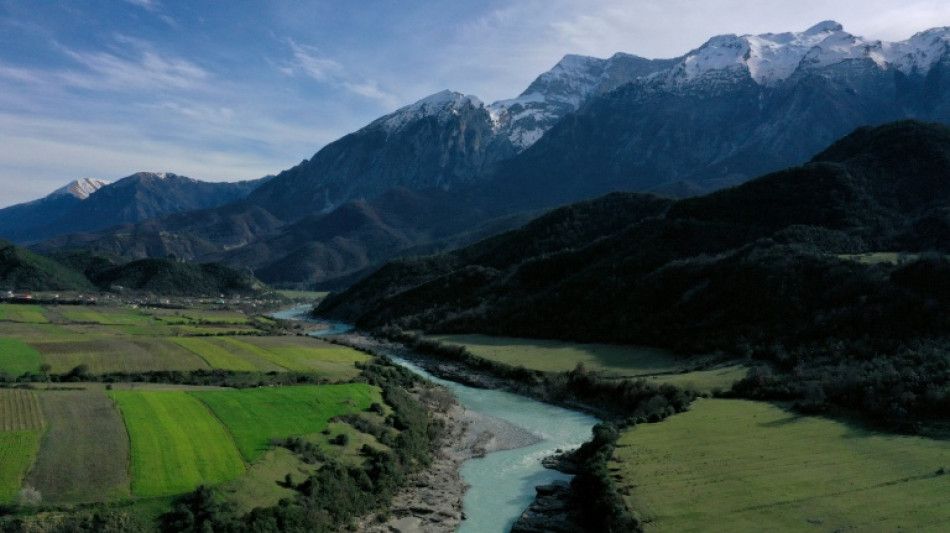
Thousands of kilometres of Balkan rivers have been damaged in recent years, a study published Wednesday found, as hydropower development, dams and sediment extraction drive a "steady erosion" of some of Europe's last pristine waterways.

Text size:

The Balkans are home to some of Europe's cleanest and wildest rivers, crucial to the continent's biodiversity. But a surge in infrastructure projects increasingly threatens them, said the study published by NGOs Riverwatch and EuroNatur.

A wild river is one untouched by industry or dams. But in recent years, the entire Balkan region has seen a boom in small hydropower plants, generously subsidised, as investors seek to exploit a reliable and renewable energy source.

According to a 2024 report by the same NGOs, there are around 1,800 such plants in the Balkans, with more than 3,000 additional construction projects planned.

The new research focused on "near-natural" rivers -- waterways where flow remains intact or nearly so, with natural floodplains.

In 2012, these largely unaltered rivers accounted for 30 per cent of the region's waterways. By 2025 however, they represented only 23 per cent -- a loss of nearly 2,500 kilometres (almost 1,600 miles).

These rivers, which are essential to environmental preservation, are particularly threatened in Albania and Bosnia.

For Bosnia, the proportion of intact rivers decreased by 23 per cent between 2012 and 2025.

Albania recorded a "massive reduction" in "near-natural river sections", falling from 68 per cent in 2012 to just 40 per cent in 2025, the report said.

But it also noted that Albania's 2023 decision to designate the Vjosa -- one of Europe's last wild rivers -- as a national park had helped block dozens of planned dams there.

Across the region nearly 900 kilometres (560 miles) of rivers had been successfully preserved thanks to legal victories.

C.Fong--ThChM