The China Mail - Climate change main driver of European ocean warming: study

USD -
AED 3.672498
AFN 65.000488
ALL 79.32497
AMD 364.960097
ANG 1.789783
AOA 917.999792
ARS 1497.2397
AUD 1.40412
AWG 1.80125
AZN 1.690866
BAM 1.685279
BBD 2.014312
BDT 122.212456
BGN 1.696366
BHD 0.377005
BIF 2986
BMD 1
BND 1.276583
BOB 11.555778
BRL 5.178098
BSD 1.000134
BTN 95.716237
BWP 13.507738
BYN 3.041998
BYR 19600
BZD 2.011383
CAD 1.380935
CDF 2272.99999
CHF 0.797834
CLF 0.023418
CLP 921.659905
CNY 6.729749
CNH 6.72958
COP 3053.19
CRC 447.54835
CUC 1
CUP 26.5
CVE 94.874977
CZK 20.70285
DJF 177.719822
DKK 6.40322
DOP 58.949624
DZD 132.843962
EGP 50.651017
ERN 15
ETB 160.874996
EUR 0.85653
FJD 2.19835
FKP 0.738395
GBP 0.735275
GEL 2.597594
GGP 0.738395
GHS 11.105049
GIP 0.738395
GMD 73.52774
GNF 8774.999949
GTQ 7.631759
GYD 209.237901
HKD 7.840179
HNL 26.87979
HRK 6.450196
HTG 130.81205
HUF 311.996501
IDR 17815
ILS 2.97705
IMP 0.738395
INR 95.49625
IQD 1310.5
IRR 1374599.999918
ISK 121.796955
JEP 0.738395
JMD 158.032606
JOD 0.708992
JPY 158.343984
KES 129.440247
KGS 87.450182
KHR 4045.000113
KMF 421.999741
KPW 900.000294
KRW 1387.674991
KWD 0.308251
KYD 0.83342
KZT 461.963991
LAK 22526.000378
LBP 89550.000433
LKR 330.989556
LRD 181.150105
LSL 16.18967
LTL 2.95274
LVL 0.60489
LYD 6.350172
MAD 9.24725
MDL 17.247441
MGA 4300.000127
MKD 52.688596
MMK 2099.245957
MNT 3597.150887
MOP 8.077223
MRU 40.109942
MUR 46.979738
MVR 15.449802
MWK 1736.000031
MXN 16.953502
MYR 4.044902
MZN 63.895028
NAD 16.085792
NGN 1350.259776
NIO 36.669489
NOK 9.331765
NPR 153.14945
NZD 1.68476
OMR 0.384516
PAB 1.000134
PEN 3.364503
PGK 4.41625
PHP 61.7465
PKR 277.60292
PLN 3.699935
PYG 6016.268569
QAR 3.64402
RON 4.493598
RSD 100.474989
RUB 83.999974
RWF 1467
SAR 3.756199
SBD 8.032258
SCR 14.221191
SDG 601.476319
SEK 9.44274
SGD 1.271505
SHP 0.740866
SLE 24.591475
SLL 20969.499227
SOS 571.498187
SRD 37.741982
STD 20697.981008
STN 21.375
SVC 8.751136
SYP 13001.999906
SZL 16.096697
THB 32.869844
TJS 9.225924
TMT 3.5
TND 2.89725
TOP 2.40776
TRY 47.950397
TTD 6.783882
TWD 31.830387
TZS 2647.726015
UAH 44.716187
UGX 3730.144027
UYU 40.085479
UZS 11817.496955
VES 776.44435
VND 26180.5
VUV 118.215486
WST 2.715898
XAF 565.226795
XAG 0.01491
XAU 0.000221
XCD 2.70255
XCG 1.802445
XDR 0.707052
XOF 564.999819
XPF 103.501496
YER 237.074981
ZAR 16.09916
ZMK 9001.198067
ZMW 18.726547
ZWL 321.999592
  • VOD

    0.0400

    16.17

    +0.25%

  • RBGPF

    1.2400

    69.89

    +1.77%

  • RYCEF

    -0.6500

    20.6

    -3.16%

  • JRI

    -0.0600

    12.38

    -0.48%

  • BCE

    0.3400

    23.7

    +1.43%

  • CMSC

    0.0580

    21.298

    +0.27%

  • GSK

    1.7300

    52.88

    +3.27%

  • RIO

    3.7500

    100.44

    +3.73%

  • BCC

    2.9500

    83.13

    +3.55%

  • CMSD

    0.0600

    21.15

    +0.28%

  • NGG

    -1.4900

    80.66

    -1.85%

  • AZN

    4.8500

    164.95

    +2.94%

  • RELX

    0.5900

    35.1

    +1.68%

  • BP

    0.3200

    43.73

    +0.73%

  • BTI

    -0.4000

    55.98

    -0.71%

Climate change main driver of European ocean warming: study
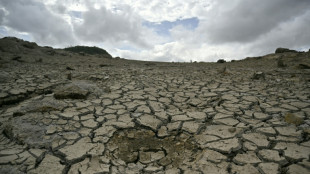
Climate change main driver of European ocean warming: study / Photo: © AFP

Climate change main driver of European ocean warming: study

Climate change is the main driver of Europe's rising marine temperatures, directly adding around 2C of warming in the Mediterranean this summer and severely impacting ecosystems, a study said Wednesday.

Text size:

"From the Atlantic waters off Ireland to the Mediterranean Sea, Europe's seas are experiencing an alarming surge in temperatures," said co-author Thomas Frolicher, an environmental physicist at the University of Bern, Switzerland.

"Our research shows clearly that this is being driven by climate change, in particular by the continued burning of fossil fuels," he added.

Scientists from the World Weather Attribution (WWA) group estimated that climate change added about 2C of warming to the Mediterranean, and over 1.3-1.4C to Western European seas.

They arrived at the figures by combining observational data and climate model simulations.

The WWA said there was "evidence of severe ecological impacts", with species "shifting northwards to cooler waters, disrupting food chains, coastal fisheries and aquaculture".

"Impacts can spill into land too, with higher sea surface temperatures driving up humidity for coastal areas increasing the risks of extreme heat," it said in a statement.

Marine ecologist John Bruno told reporters that it was surprising "how little warming it actually takes to tip organisms past that threshold to kill them".

"It's only about 1C on coral reefs, for example."

He added that some organisms benefit from heatwaves because of a preference for warmer temperatures or the disappearance of their natural enemies.

There is a "kind of reshuffling, reorganisation of communities. So we have what we call winners and losers", he said.

According to the European Union's global warming monitor, the Copernicus Climate Change Service, the world's oceans hit record-high temperatures for a second straight month in July.

The WWA said that some Mediterranean areas had recorded sea surface temperatures more than 6C hotter than normal over the hottest two weeks of the month.

The group added that climate change has driven marine heatwaves to spread across a larger part of European regions.

This year 90 percent of the Bay of Biscay and Iberian coast region and 80 percent of the Western Mediterranean have experienced marine heatwaves, it said.

Without the current 1.4C of human-caused warming, only around 40 percent of those areas would have been affected, it predicted.

Claire Bergin, study co-author and researcher at Maynooth University in Ireland, noted that "warmer waters for swimming may sound appealing to beachgoers in cooler countries like mine".

However, "the impacts on marine life beneath the surface are more serious".

L.Johnson--ThChM