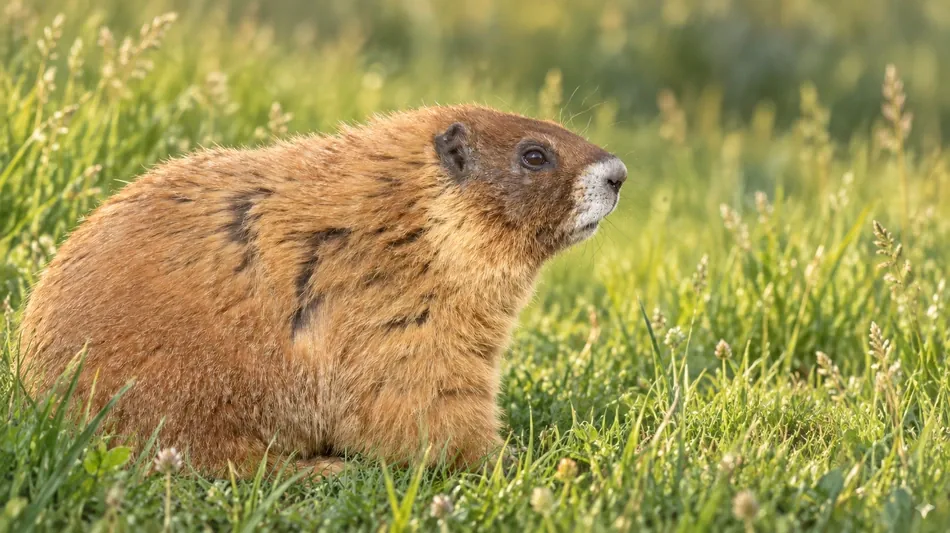
Marmot research gains over $140,000 from meme-coin fees alongside wildlife contest

A Colorado marmot research project has received more than $140,000 in meme-coin transaction fees as researchers experiment with public fundraising. Its first Fat Marmot Week also highlighted a seven-year-old male whose weight rose from about 8.6 pounds to 13 pounds over the summer.
A long-running study of yellow-bellied marmots is drawing support through a public wildlife contest, an OnlyFans account and an independently created cryptocurrency. The combination has introduced new audiences and funding to the Marmot Project at Colorado's Rocky Mountain Biological Laboratory.
Emily Renkey, a first-year UCLA master's student in Dan Blumstein's laboratory, described the efforts in an interview with Jenni Doering of the public-radio program Living on Earth. She said the project had received more than $140,000 in transaction fees from a meme coin, in addition to a few thousand dollars through its OnlyMarms account.
The research team also held its inaugural Fat Marmot Week this year. Inspired by Alaska's Fat Bear Week, the event invited the public to choose among eight adult marmots, each presented with information about its life and behavior.
Fat Bear Week focuses on bears feeding on salmon in Katmai National Park and Preserve as they prepare for winter. The marmot version similarly draws attention to the importance of building body reserves before hibernation, while encouraging support for research.
The winning marmot, Dawn, led both the public vote and the bracket's recorded weights. Researchers estimated his mass at about 8.6 pounds in June and approximately 13 pounds on August 15, at the end of their summer season.
Dawn is about seven years old. Renkey described him as one of the first animals researchers typically encounter when they arrive at the field station in April. He often emerges before females and digs at the entrances to the burrows where they have spent the winter.
Those winter burrows are known as hibernacula. After emerging, Dawn moves between them and begins interacting with females. Researchers believe he fathered perhaps four litters this year.
Renkey said he remains around his offspring and has been observed carrying dried plants to them. His unusually large size was already noticeable in May, helping motivate the team to turn its longstanding idea for a marmot contest into an event.
Dawn's behavior also makes him recognizable in the field. He frequently engages in tail flagging, moving his tail as part of scent-marking and dominance behavior while walking between burrows.
He sometimes chews rocks, which Renkey suggested may allow marmots to obtain minerals or salt. That explanation was presented as her interpretation, rather than a confirmed finding about each instance of the behavior.
Collecting measurements from him proved less straightforward than attracting public interest. Researchers set baited traps so they can identify animals and collect data, but Dawn learned to push the traps over to reach food.
Other marmots also appear able to avoid the plate that closes a trap's door. Renkey said Dawn evaded capture for part of the summer before eventually entering a trap, allowing the team to weigh him.
The timing of measurements matters because the research follows change across the active season rather than relying on one photograph or a single public vote. Renkey described estimating mass in June and again in August. Dawn's popularity and his measured size happened to align, but the contest result and the research measurements were separate observations.
The increase in his body mass has a biological purpose. Fat accumulated during the active season supplies energy while a marmot is underground through winter, helping it maintain the conditions necessary to survive until spring.
The Marmot Project began in 1962 and is approaching its 65th year of monitoring the population. Renkey is in her fourth field season, having volunteered before beginning her graduate degree.
One central research subject is the flexible social organization of yellow-bellied marmots. Some animals live alone, others occupy larger groups, and some change between those arrangements from year to year.
That variation allows researchers to examine why social strategies differ. Renkey said the choice to live alone or with others does not necessarily determine survival, making the animals useful for studying how social behavior relates to other aspects of life.
The project has also investigated cumulative adversity: the effects of experiencing several hardships early in life. Previous work found that such experiences can reduce later survival in marmots, paralleling associations studied in humans.
Renkey is working with another graduate student on a forthcoming paper examining whether early adversity also changes adult behavior. The work therefore extends beyond survival to how animals act after different developmental experiences.
For Renkey, the funding arrangements were an unexpected part of graduate research. She said these were not subjects she had imagined discussing while pursuing a master's degree in wildlife biology. The team had talked about a marmot contest for several years, whereas the cryptocurrency proposal arrived from people outside the laboratory after the fundraising activity attracted attention.
Fundraising became a priority after several years of financial difficulty for Blumstein's laboratory. Renkey said the idea for an OnlyFans account arose after Blumstein watched Margo's Got Money Troubles, a show in which a woman earns money through the platform.
The researchers adapted that idea into OnlyMarms, an account featuring their animals on a site generally associated with adult content. At the time of the interview, it had around 2,600 subscribers and had brought in a few thousand dollars.
The meme coin came from outside the research group. Renkey said members of a cryptocurrency-trading community contacted the team after creating it and explained that the project could claim it and receive fees when people traded.
She initially doubted whether the proposal was real. The group eventually claimed the coin, and Renkey believes that association with the research project encouraged further participation among traders interested in supporting the work.
The more than $140,000 figure refers to transaction fees received by the project, rather than the coin's market valuation or a guaranteed source of future income. Renkey said the cryptocurrency community was not an audience the researchers had expected to mobilize.
The experience has nevertheless broadened engagement with wildlife biology, she said. People who might not ordinarily follow field research have taken an interest in the animals and the continuity of the study.
Yellow-bellied marmots are classified as a species of least conservation concern. Renkey said studying a relatively secure population allows scientists to investigate broad biological questions that may be harder to answer in a species close to extinction.
They share useful characteristics with other mammals: they hibernate, display varied social behavior and can be observed over multiple generations. They live relatively long lives for rodents, but their generation times remain short enough for long-running projects to track population change.
The duration of the project is important to that use of marmots as a model. A population followed through successive generations allows researchers to connect observations early in an animal's life with its later behavior and survival. Renkey contrasted that timescale with studying much longer-lived mammals such as elephants, where equivalent generational change takes far longer to observe.
That combination makes them a model system. Findings about behavior, survival and responses to early hardship can help inform questions about other populations, while recognizing that different species also require their own research.
Renkey pointed to the endangered Vancouver Island marmot as a closely related example. Its recovery project has worked with a very small population, including animals brought into captivity after the species approached extinction.
Decades of knowledge from the Colorado project can supplement the Vancouver Island team's own studies when it designs recovery measures. The relevance lies in understanding marmot behavior and survival, not in assuming that conditions are identical for both species.
The Colorado population itself suffered a major decline over the most recent winter. Renkey said researchers ended the previous fall with approximately 160 animals and saw only about 60 emerge the following spring.
The lack of snow does not simply change the appearance of the field site. In Renkey's explanation, the relevant mechanism is the loss of insulation around animals that are not feeding during hibernation. Greater temperature variation can raise their use of finite energy reserves before spring food becomes available.
She attributed much of that loss to insufficient snow cover. Researchers normally ski to the field station in April, but this year they walked the entire route on bare ground.
Snow acts as insulation above hibernating marmots, limiting temperature fluctuations around their burrows. Without that protective layer, animals may use more stored fat to maintain warmth as temperatures vary.
Renkey said many animals appeared to exhaust their reserves before they could emerge and resume feeding. The observed losses give researchers an example of how changing winter conditions can affect survival, although she emphasized that important questions remain about the precise effects of climate on the population.
The public contest and unconventional fundraising efforts are intended to help sustain the long-term observations needed to investigate those questions. Dawn's summer weight gain illustrates one part of that work, while the severe winter losses show why body reserves and conditions around the burrows are studied together.
Q.Moore--ThChM