EU lays out response to US green tech subsidies / Photo: © AFP/File

The EU will reveal Wednesday plans to counter the threat to European industry from US green energy subsidies and unfair competition from China, with leaked proposals pointing to a controversial expansion of state aid rules.
The United States passed a landmark spending bill last year for $370 billion in subsidies for its energy transition, including tax cuts for US-made electric cars and batteries, leaving European manufacturers dismayed.
European countries are unnerved by parts of the Inflation Reduction Act (IRA) since it offers lavish advantages for US buyers of electric vehicles if they "Buy American".
The European Commission's response was worked out against a backdrop of disagreement among EU member states on how best to protect Europe's businesses, and fears of triggering a trade war.
Countries such as France are calling for expanded state aid rules. But others say that would help only richer member states and fragment the single market since less deep-pocketed nations would not be able to pour big money into businesses.
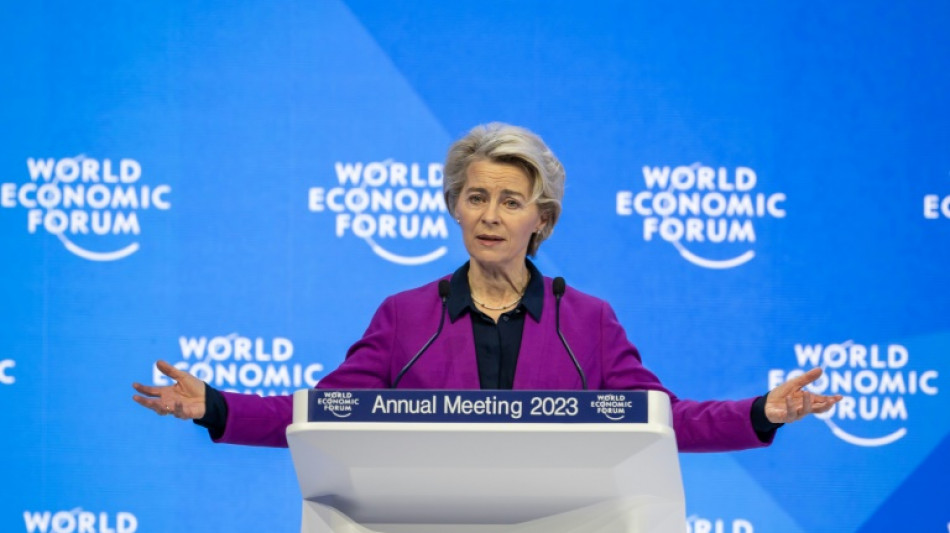
A significant point of contention is a new sovereignty fund proposed by the commission President Ursula von der Leyen but opposed by some members including Denmark and Finland, which oppose throwing money at, or boosting borrowing, to resolve the problem.
Draft proposals seen by AFP suggest the fund idea will be jettisoned in the short term but state aid rules will be extended to the green technology sector.
The plan would give companies tax benefits to encourage investment in production facilities in "net-zero" sectors.
- Competitiveness at risk -
EU leaders will discuss the proposals at a summit in Brussels next week.
Another idea in the document is using existing EU money, including part of the 800-billion-euro ($870-billion) recovery fund set up during the coronavirus pandemic, to invest in green technology.
"We do not need new financial common debt instruments on a European scale," German Finance Minister Christian Lindner said Monday.
"We are convinced that the money available is enough to support the green and digital transformation of the economy," he said.
The bloc's 27 members have already committed 250 billion euros to the green transition in national recovery plans.
The EU is pushing the United States to make exemptions for European companies but a special joint taskforce set up to address Brussels' concerns has yielded little fruit.
Businesses and their representative organisations are calling on the EU to urgently act.
Groups including BusinessEurope, the EU's main business lobby, point to risks from sky-high energy bills and regulatory costs as "push factors" that could see companies move their production to the United States.
BusinessEurope has stressed "the financial pull factor created by the IRA" and warned: "If the EU fails to deliver on all those aspects, we will lose even more ground on global competitiveness."
On energy, corporate investment decisions can take into account that natural gas in Europe costs three times more than in Asia and North America.
Von der Leyen last month also slammed "aggressive attempts" by China to persuade Europe's clean technology companies to relocate and take advantage of its cheaper labour and more lenient regulations.
O.Yip--ThChM