Brazil's internet bill row, explained / Photo: © AFP/File

Messaging app Telegram calls it an "attack on democracy," Google says it "seriously threatens free speech" -- but what exactly is in Brazil's controversial measure to regulate disinformation online?
Here is a quick look at Bill 2630/2020, dubbed the "censorship bill" by critics but hailed by proponents as a vital defense against "fake news" and online extremism.
- How did the kerfuffle start? -
The legislation was introduced in 2020 to deal with a flood of disinformation online -- then stalled in the lower house, after passing the Senate.
It surged into the spotlight again after supporters of far-right ex-president Jair Bolsonaro ran riot in Brasilia in January, allegedly incited by social media disinformation claiming their candidate's 2022 election loss to now-President Luiz Inacio Lula da Silva was fraudulent.
A recent series of deadly attacks on schools has also fed a national debate on combatting violent extremism on social media.
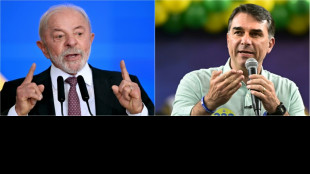
Lula's left-wing government and various civil society groups back the bill.
Tech companies, Evangelical Christian lawmakers and Bolsonaro supporters oppose it, alleging it would create an Orwellian "Truth Ministry" to censor citizens' views.
The measure has made headlines in recent weeks as the government and courts have hit back at Google and Telegram for using their platforms to oppose it.
- What's in the bill? -
Brazilian law currently exempts internet companies from responsibility for third-party content, except when there is a court order to remove it or in the case of pornographic images published without a subject's consent.
Companies set their own rules on content, under their terms of use.
The bill would change the legal landscape, regulating how companies moderate content.
It aims to increase their transparency and make them adopt rules to combat illegal content in seven areas: attacks against democracy and the rule of law, children, the health system, and women; racism; terrorism; and incitement to suicide or self-harm.
Based partly on the European Union's recently adopted Digital Services Act, the bill would apply to all social networks, search engines and instant messaging apps with more than 10 million monthly users, and require them to hire external auditors.
"It won't require (companies) to remove or label all such content, but they will be required to demonstrate that they are making sufficient efforts to take it out of circulation," Pablo Ortellado, a public policy expert at the University of Sao Paulo, told AFP.
Penalties would range from warnings to temporary suspensions or fines of up to 10 percent of revenue.
- Why do tech firms oppose it? -
Telegram sent a message Tuesday to its more than 40 million users in Brazil warning that Congress "is about to pass a law that will end free speech" and "give the government censorship powers."
"Companies would have to remove legitimate views, resulting in excessive blockage and a new kind of censorship," wrote Marcelo Lacerda, Google Brasil's public policy director.
- Who will do the oversight? -
The current version of the legislation leaves a question mark over exactly how it will be enforced, experts say.
"Plans to create an independent regulatory agency were removed from the bill, after the accusations that it would create a 'Truth Ministry,'" said Ortellado.
He warned that left the door open to a political, rather than technical, oversight process.
"That's dangerous," he told AFP.
W.Cheng--ThChM