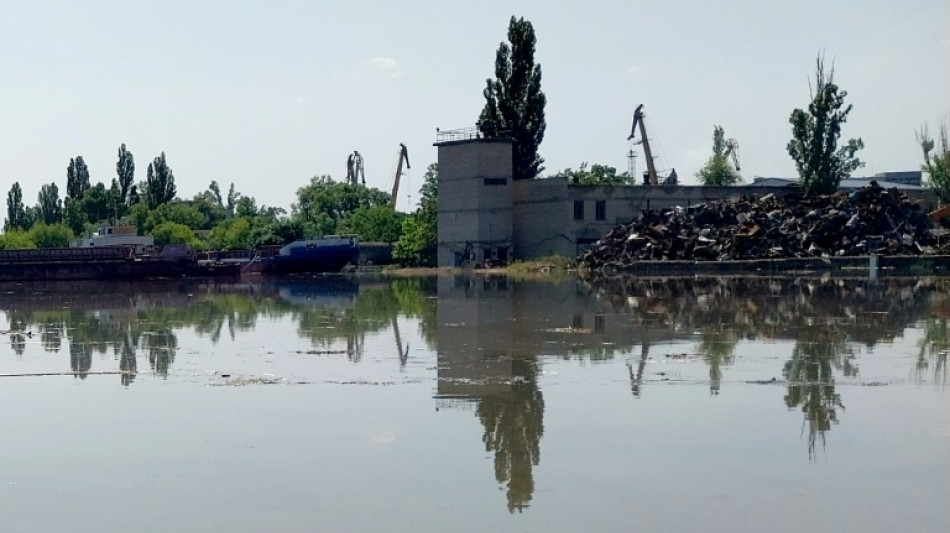
Ukraine nuke plant safe for now after dam break: IAEA / Photo: © AFP

Ukraine's dam break is posing "no short-term risk" to Europe's biggest atomic plant, despite falling water levels in a reservoir used to cool its reactors, according to the UN nuclear watchdog agency.
Ukraine's Kakhovka hydroelectric dam was breached on Tuesday following an attack that Moscow and Kyiv have blamed on each other.
The Kakhovka dam sits on the Dnipro river, which feeds a reservoir providing cooling water for the Russian-occupied Zaporizhzhia nuclear power station, Europe's largest, some 150 kilometres (90 miles) upstream.
- 'No immediate risk' -
The International Atomic Energy Agency (IAEA) -- which has a team of experts at the plant -- said late Tuesday that it saw "no short-term risk to nuclear safety and security".
Though the reservoir's water level is falling, the facility has "back-up options available", the IAEA said in a statement.
Karine Herviou, the deputy head of France's IRSN nuclear safety regulator, also told AFP there was "no immediate risk to the safety of the plant".
The plant's Russian-installed director, Yuri Chernichuk, has insisted there was no security threat to the plant.
But Ukraine -- which in 1986 suffered the devastating Chernobyl nuclear disaster -- sounded the alarm.
Ukrainian presidential aide Mykhaylo Podolyak said on Tuesday that the world "once again finds itself on the brink of a nuclear disaster".
- Depleting reservoir -
Water levels were dropping by nine centimetres (3.5 inches) per hour in the reservoir above the dam, up from five centimetres early on Tuesday, IAEA head Rafael Grossi said in a statement.
Water in the reservoir was at around 15.44 metres late Tuesday, he added. When the level drops below 12.7 metres, then water can no longer be pumped to the plant, Grossi warned.
"As the full extent of the damage to the dam is not yet known, and the water loss rate is fluctuating, it is not possible to predict exactly when this might happen," Grossi said, adding that the key level "could be reached in the next couple of days".
Existing water at the plant in cooling ponds and elsewhere can then still be used "for some time" to cool the reactors and the spent fuel pools in the reactor buildings, Grossi added.
Additionally, a large cooling pond next to the site is "currently full and has enough in storage to supply the plant for several months as its six reactors are in shutdown mode", Grossi said.
"It is therefore vital that this cooling pond remains intact... I call on all sides to ensure nothing is done to undermine that," Grossi told a meeting of the agency's board of governors, adding he will visit the plant next week.
The plant can also access a deep water-filled excavation in its cargo port area, as well as the water system of the nearby city of Enerhodar and use mobile pumps and firefighter trucks to fetch water.
Plant staff have already implemented measures to limit the consumption of water, using it only for "essential nuclear-safety related activities".
"There is a preparedness for events like this (the dam being damaged)... But clearly, this is making an already very difficult and unpredictable nuclear safety and security situation even more so," Grossi said.
Herviou, too, said the damaged dam was "worsening" the situation at the plant, but "in any case, we have time" to look for solutions.
- Shut-down reactors -
The plant's reactors have already been shut down, but they still need cooling water to ensure there is no nuclear disaster.
"Absence of cooling water in the essential cooling water systems for an extended period of time would cause fuel melt and inoperability of the emergency diesel generators," Grossi warned.
"The impact is therefore lower," she added.
Grossi has repeatedly called for the protection of the plant as shelling has taken place near it and also several times disrupted its crucial power supply.
burs-jza/yad
T.Luo--ThChM