The China Mail - Two years on, WHO warns pandemic 'far from over'

USD -
AED 3.672497
AFN 63.999777
ALL 80.742224
AMD 360.119979
ANG 1.789785
AOA 917.999458
ARS 1548.284459
AUD 1.42503
AWG 1.8025
AZN 1.697294
BAM 1.737338
BBD 2.013458
BDT 124.459802
BGN 1.747831
BHD 0.377436
BIF 2986.973187
BMD 1
BND 1.277909
BOB 12.120755
BRL 5.479505
BSD 0.999711
BTN 94.558763
BWP 13.724402
BYN 2.982914
BYR 19600
BZD 2.010562
CAD 1.395655
CDF 2312.499971
CHF 0.818175
CLF 0.024639
CLP 969.570357
CNY 6.680902
CNH 6.67235
COP 3226.97
CRC 454.091218
CUC 1
CUP 23.992112
CVE 97.94847
CZK 21.61745
DJF 178.012285
DKK 6.647675
DOP 60.031357
DZD 135.604852
EGP 54.672698
ERN 15
ETB 164.071845
EUR 0.88941
FJD 2.241749
FKP 0.745268
GBP 0.742255
GEL 2.601675
GGP 0.745268
GHS 11.631305
GIP 0.745268
GMD 74.000158
GNF 8855.469045
GTQ 7.639521
GYD 209.448686
HKD 7.845735
HNL 26.868429
HRK 6.76901
HTG 130.971046
HUF 322.677498
IDR 18158
ILS 3.15645
IMP 0.745268
INR 94.60155
IQD 1515.529716
IRR 1883408.504511
ISK 121.594104
JEP 0.745268
JMD 158.455068
JOD 0.709001
JPY 158.581028
KES 129.889935
KGS 87.450375
KHR 4064.827605
KMF 440.999727
KPW 899.999961
KRW 1340.015028
KWD 0.310802
KYD 0.833041
KZT 451.807175
LAK 22506.673299
LBP 89519.744527
LKR 332.641939
LRD 169.939285
LSL 16.455617
LTL 2.95274
LVL 0.60489
LYD 6.409977
MAD 9.765444
MDL 17.929301
MGA 4515.192027
MKD 54.718717
MMK 2099.52083
MNT 3598.087189
MOP 8.077598
MRU 40.663904
MUR 47.08984
MVR 15.454973
MWK 1733.399066
MXN 18.657745
MYR 4.064101
MZN 63.909813
NAD 16.455325
NGN 1345.3302
NIO 36.784529
NOK 9.26018
NPR 151.29402
NZD 1.77713
OMR 0.384484
PAB 0.999773
PEN 3.450426
PGK 4.485918
PHP 63.530047
PKR 276.534117
PLN 3.91339
PYG 6061.763543
QAR 3.644609
RON 4.752498
RSD 104.611997
RUB 81.849243
RWF 1471.012787
SAR 3.756339
SBD 8.051718
SCR 13.775247
SDG 601.497329
SEK 9.76354
SGD 1.278805
SHP 0.745545
SLE 22.909972
SLL 20969.504398
SOS 571.349894
SRD 37.564017
STD 20697.981008
STN 21.763752
SVC 8.747096
SYP 13001.999685
SZL 16.44674
THB 33.641502
TJS 9.221818
TMT 3.51
TND 2.979449
TOP 2.40776
TRY 50.0213
TTD 6.776725
TWD 32.878963
TZS 2649.952964
UAH 45.52523
UGX 4104.021853
UYU 40.19489
UZS 11886.139647
VES 890.036598
VND 25704.5
VUV 119.472328
WST 2.779309
XAF 583.414895
XAG 0.019193
XAU 0.000247952225
XCD 2.70255
XCG 1.801579
XDR 0.707052
XOF 583.414895
XPF 105.938734
YER 236.174947
ZAR 16.448175
ZMK 9001.195264
ZMW 20.274394
ZWL 321.999592
SSP 5745.96484
MXV 2.100144
  • RYCEF

    0.4000

    19.71

    +2.03%

  • CMSC

    0.0000

    20.4

    0%

  • BTI

    0.4200

    56.05

    +0.75%

  • BP

    0.2800

    44.43

    +0.63%

  • RBGPF

    1.6000

    67

    +2.39%

  • RIO

    -0.1500

    94.41

    -0.16%

  • AZN

    -0.4300

    166.15

    -0.26%

  • GSK

    0.4600

    49.7

    +0.93%

  • BCE

    -0.4100

    20.56

    -1.99%

  • NGG

    -0.2500

    75.24

    -0.33%

  • VOD

    -0.0400

    16.58

    -0.24%

  • RELX

    -0.4500

    33.07

    -1.36%

  • BCC

    -0.5500

    76.59

    -0.72%

  • CMSD

    -0.0300

    20.27

    -0.15%

  • JRI

    -0.2500

    10.77

    -2.32%

Two years on, WHO warns pandemic 'far from over'

Two years on, WHO warns pandemic 'far from over'

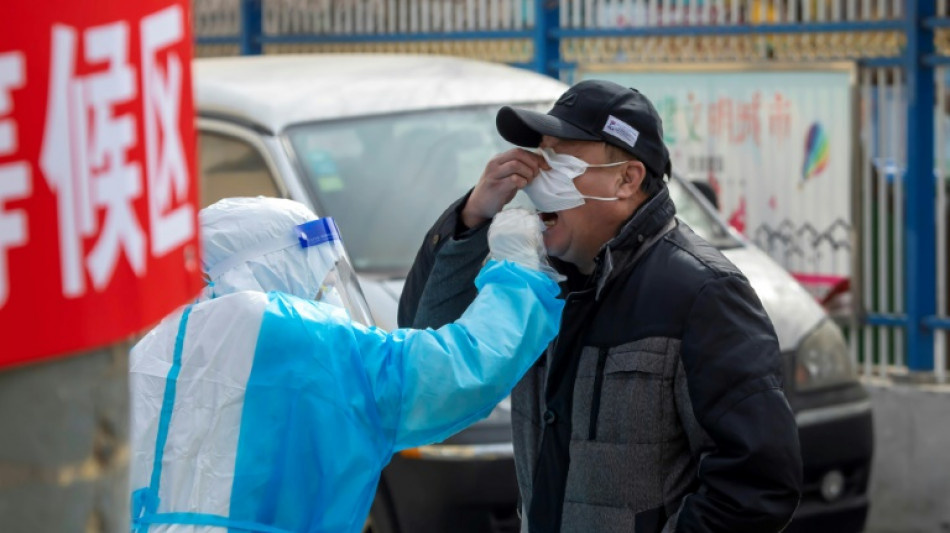
The pandemic is far from over, the WHO's leader insisted Wednesday, two years after he first used the term to wake the world up to the emerging threat of Covid-19.

Text size:

The World Health Organization's director-general Tedros Adhanom Ghebreyesus first described Covid-19 as a pandemic on March 11, 2020.

Two years on, he lamented how the virus was still evolving and surging in some parts of the world.

The WHO declared a public health emergency of international concern -- the highest level of alarm in the UN health agency's regulations -- on January 30, 2020, when, outside of China, fewer than 100 cases and no deaths had been reported.

But it was only the use of the word pandemic six weeks on that seemed to shake many countries into action.

"Two years later, more than six million people have died," Tedros told a press conference, while nearly 444 million cases have been registered.

"Although reported cases and deaths are declining globally, and several countries have lifted restrictions, the pandemic is far from over -- and it will not be over anywhere until it's over everywhere."

He noted the 46-percent rise in new cases last week in the WHO's Western Pacific region, where 3.9 million infections were recorded.

"The virus continues to evolve, and we continue to face major obstacles in distributing vaccines, tests and treatments everywhere they are needed," Tedros said.

He also sounded a warning on the recent plunge in testing rates, saying it left the planet blind to what Covid-19 was up to.

"WHO is concerned that several countries are drastically reducing testing," Tedros said.

"This inhibits our ability to see where the virus is, how it's spreading and how it's evolving."

- Call for vigilance -

The number of fresh cases fell five percent worldwide last week compared to the week before, while the number of deaths dropped eight percent.

However, Maria Van Kerkhove, the WHO's Covid-19 technical lead, warned that the case rate was certainly an underestimate due the dramatic drop-off in testing.

"The virus is still spreading at far too intensive a level, three years into this pandemic," she said.

"Even though we are seeing declining trends... there were still more than 10 million reported cases reported at a global level last week.

"We have to remain vigilant."

In its weekly update on the spread of the virus, the WHO said earlier that the Omicron variant had "global dominance" over other mutations of the virus.

The WHO said Omicron accounted for 99.7 percent of samples collected in the last 30 days that have been sequenced and uploaded to the GISAID global science initiative.

The WHO says unequal access to Covid-19 vaccines, tests and treatments remains rampant and is prolonging the pandemic.

On jabs, the WHO's latest figures show 23 countries are yet to fully immunise 10 percent of their populations, while 73 countries are yet to achieve the 40 percent coverage target set for the start of 2022.

F.Jackson--ThChM