German cabinet approves belt-tightening draft budget / Photo: © AFP

Germany's coalition government approved a draft of next year's budget Wednesday after fractious negotiations, aiming to impose deep cuts after years of big spending while giving defence a boost.
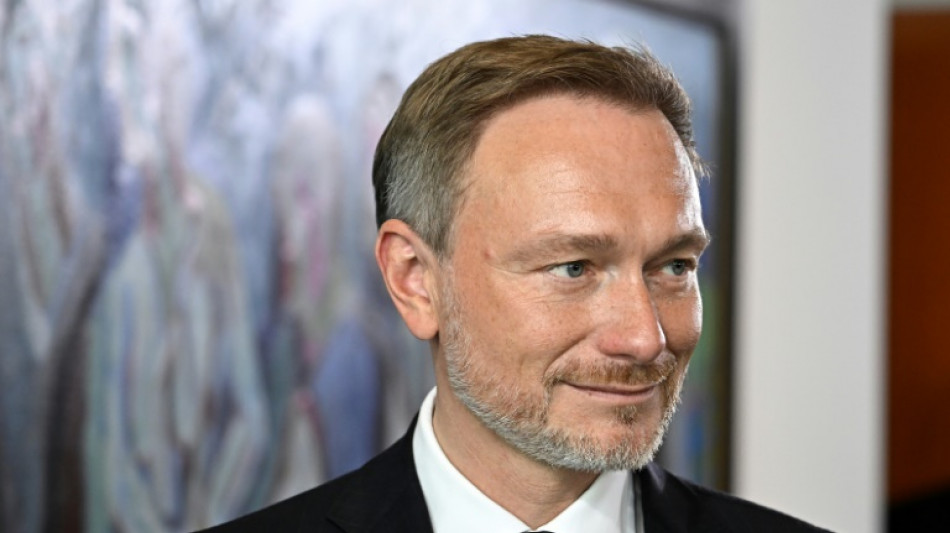
Following months of feuding after Finance Minister Christian Lindner, from the business-friendly FDP party, demanded severe cutbacks, Chancellor Olaf Scholz's cabinet signed off on the proposed 2024 budget.
Lindner sees it as a turning point after several years of massive outlays to tackle first the coronavirus pandemic and then an energy crisis triggered by Russia's invasion of Ukraine.
"With the 2024 federal budget, we are taking an important step towards fiscal normality," he wrote in an article in conservative daily Frankfurter Allgemeine Zeitung.
"Not everything that is politically popular can be financed."
This statement is a swipe at his coalition partners, Scholz's centre-left SPD party and the Greens, with whom negotiations have been tense.
The Greens were upset at Lindner's refusal to sacrifice tax breaks for motorists while he has also been reluctant to give ground on a proposed new scheme to combat child poverty.
The cabinet approved the draft budget Wednesday, according to government sources, and Lindner will present it at a press conference later in the day. It will be debated in parliament from September.
Europe's top economy -- which slipped into recession at the turn of the year, as surging inflation and interest rate hikes took their toll -- forecasts spending of 445.7 billion euros ($485 billion) next year, down from 476.3 billion planned for 2023.
Despite the drop, spending will still be 25 percent higher than in 2019, according to the draft.
Cuts to borrowing are even more drastic. For 2024, 16.6 billion euros in new borrowing is forecast, down from 45.6 billion in 2023.
- Defence boost -
Germany should thus comply with its constitutional "debt break" which limits new annual borrowing to 0.35 percent of gross domestic product a year.
After being suspended from 2020 as Germany spent huge sums to tackle the pandemic, the rule came back into force this year.
But to ensure that the 2023 spending plan complied with the debt break, the government has had to resort to creating several special funds that are outside the official budget.
They have been used in particular to help households and businesses cope with rising energy prices after Russia slashed crucial gas supplies to Europe amid the Ukraine war.
The government will tap one of these funds to ensure it hits the NATO target in 2024 of spending two percent of GDP on the military, according to the draft budget.
About 19.2 billion euros will be channelled to the armed forces from a 100-billion-euro pot set up to overhaul the creaking Bundeswehr after the start of the Ukraine war.
This will be in addition to the regular defence budget of 51.8 billion euros, up from about 50 billion the previous year.
However, the amount is still far short of the 10 billion extra that the defence minister was seeking.
Just days ahead of a summit of NATO leaders in Lithuania, some are questioning how Germany will be able to hit its military spending targets in future.
The German government must "explain how it intends to achieve more than two percent of GDP in the long term, once the special fund has been spent," asked daily Tagesspiegel.
B.Chan--ThChM