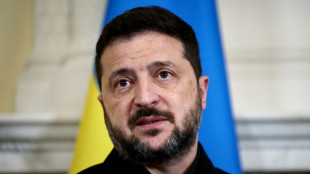
Brazil economy slows, but beats forecasts again in Q2 / Photo: © AFP/File

Brazil's economic growth slowed to 0.9 percent in the second quarter, officials said Friday, but once again beat expectations in a fresh boost for President Luiz Inacio Lula da Silva.
Though Latin America's biggest economy remains far from the dynamo it was when Lula first led Brazil in the 2000s, it has now posted better-than-expected growth for two straight quarters since the veteran leftist returned to office for a third term in January.
Analysts polled by business daily Valor had forecast growth of just 0.3 percent for the April-June period.
Brazil's economy also beat forecasts in the first quarter, when it expanded by 1.8 percent -- revised down Friday from an initially reported figure of 1.9 percent.
"The much faster-than-expected Brazilian Q2 GDP growth figure... suggests that the economy is in stronger health than many -- ourselves included -- had thought," said William Jackson, chief emerging markets economist at consulting firm Capital Economics.
"We think growth will be weaker over the second half of the year... But we had thought the (second-quarter) slowdown would be much more marked," he said in a note.
Domestic demand led the growth, with an expansion of 0.9 percent in household spending, according to the latest GDP numbers from the national statistics institute, IBGE.
"That boost was undoubtedly due to increased real median income, which has been rising due to inflation coming under control and measures by the Lula administration to increase demand," economist Andre Perfeito said in a note.
Government spending meanwhile expanded by 0.7 percent.
The industrial sector posted growth of 0.9 percent, thanks largely to the mining industry, and the services sector saw growth of 0.6 percent.
The key agribusiness sector, which drove growth in the first quarter thanks to a bumper harvest, meanwhile contracted by 0.9 percent.
- Improving outlook -
Lula, who previously led Brazil from 2003 to 2010, returned to office on January 1 after beating far-right incumbent Jair Bolsonaro in a divisive election last year.
He and Finance Minister Fernando Haddad are pushing hard to ignite the economy, unveiling a massive 1.7-trillion-reais ($340 billion) infrastructure investment program last month and ushering new budget rules through Congress that replaced the government's rigid spending cap with more-flexible debt-cutting targets.
At the same time, Lula, 77, has regularly criticized the central bank for keeping interest rates high, which he says is stunting economic growth, given that the annual inflation rate has eased from double digits last year to 3.99 percent -- within the bank's target range.
After months of attacks from Lula over its "irrational" interest rates, the central bank cut the benchmark rate last month by a larger-than-expected half-point, to 13.25 percent, citing easing inflation.
It said it anticipated further cuts to come.
"It's worth noting the interest-rate cut happened in the third quarter, and its effects will still be felt for the rest of the year," said Perfeito.
He raised his forecast for Brazil's economic growth for 2023 from 2.5 percent to three percent. Capital Economics raised its forecast from 2.3 percent to 3.5 percent.
A.Zhang--ThChM