Russia upends global grain trade / Photo: © AFP/File

Russia has cemented its position as the world's top grain exporter with the help of a bumper harvest and cut-rate prices while its war in Ukraine has upended the market.
Ukraine was a major exporter of wheat and other food commodities to developing nations before Russia's invasion in February last year, but it has lost access to the crucial Black Sea route for its shipments.
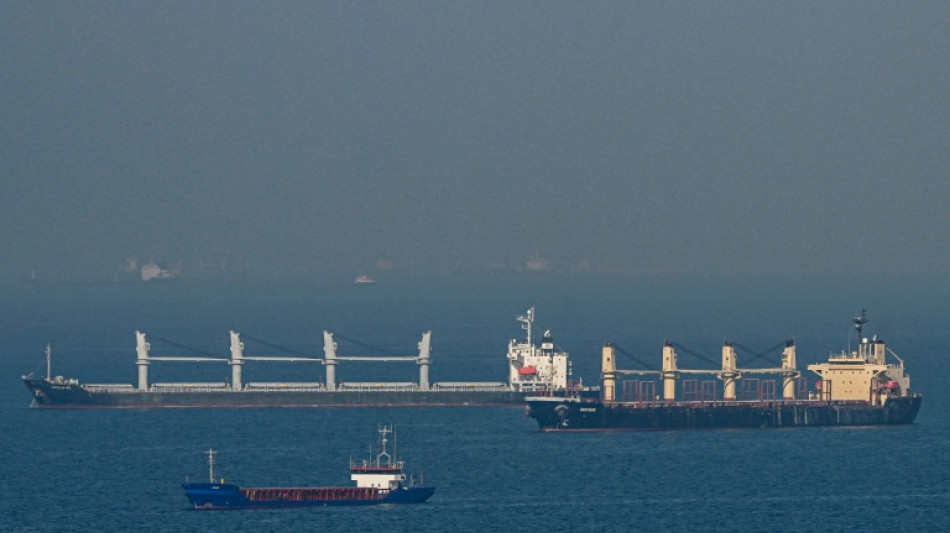
Moscow initially imposed a blockade on Ukraine shipments via the Black Sea but later agreed to reopen the route in a deal brokered by the United Nations and Turkey that included inspections of ships to ensure they were not carrying weapons.
The agreement enabled Ukraine to export more than 30 million tonnes of grain from three Black Sea ports, but Russia withdrew from the initiative in July.
The corridor "didn't help Ukraine rebound in terms of their agricultural production" as the invasion deprived it of a quarter of its exploitable grain fields, said Joseph Glauber, senior research fellow at the International Food Policy Research Institute in Washington.
Turkish President Recep Tayyip Erdogan met Russian leader Vladimir Putin on Monday in an effort to revive the grain deal.
Putin warned that Moscow would only return to the arrangement when Western nations fully implement agreements to lift restrictions on Russian agricultural exports.
Erdogan said on Monday that Turkey and the United Nations had prepared new proposals aimed at addressing Russia's problems with the deal.
The Black Sea disruptions have prompted Ukraine divert its grain exports through other routes including the Danube river, trucks and train.
But the river route is not completely safe, either, with infrastructure coming under attack, the latest being a drone strike on a grain export hub on the Danube on Monday.
- 'Russified' wheat diplomacy -
Global wheat production is also expected to be smaller in 2023-2024 than in the previous year due to the effects of climate change on harvests in Canada and Australia and consumption forecasts exceeding production by 20 million tonnes.
With that in mind, "the world hopes that 45 million tonnes of Russia wheat will reach the market," said David Laborde, director of agrifood economics division at the UN's Food and Agriculture Organization.
Sebastien Abis, author of the book "Geopolitics of Wheat" and associate researcher at the French Institute of International and Strategic Relations think tank, noted that Russia alone provides a quarter of world wheat exports.
The country has also built up a "significant" stock of grain, he added.
Russia, which imported more wheat than it exported 25 years ago at the end of Soviet rule, became the top exporter in 2016.
Agriculture is now the third biggest sector in terms of trade for Russia behind fossil fuels and minerals.
"Russia recharged its agriculture," Abis said, adding that Moscow has also "'Russified' its wheat diplomacy. We are no longer within the rules of the market".
Putin said Monday that Russia would soon make good on a promise made after the grain deal collapsed to deliver free shipments to six African countries.
He has also kept grain prices low to gain a competitive edge over other exporting nations and offered special prices to Egypt, which has also been a buyer of Ukrainian wheat.
Moscow "is drawing new maps" as it seizes on the fact that Russia is the only country capable of producing and exporting more, Abis said.
"The only country that could match Russia was Ukraine," he added.
- Pressure to revive deal -
Egypt and Turkey are the top importers of Russian wheat.
The North African country imports 80 percent of its grain from Russia and Ukraine while Turkey turns it into flour for export to the Middle East, Africa and Asia, Laborde said.
Countries that are big consumers of bread depend the most on Russian wheat and are as far east as Pakistan or Sri Lanka.
The trade routes no longer follow any "geographic logic", with Morocco and Algeria, for instance, changing their import rules to be able to buy Russian wheat instead of their traditional supplier France, Abis said.
Several African countries that import wheat have remained neutral regarding the conflict to avoid angering Russia, Glauber said.
But they also backed the grain deal as it helped to cool food prices that had soared in the wake of the invasion.
O.Tse--ThChM