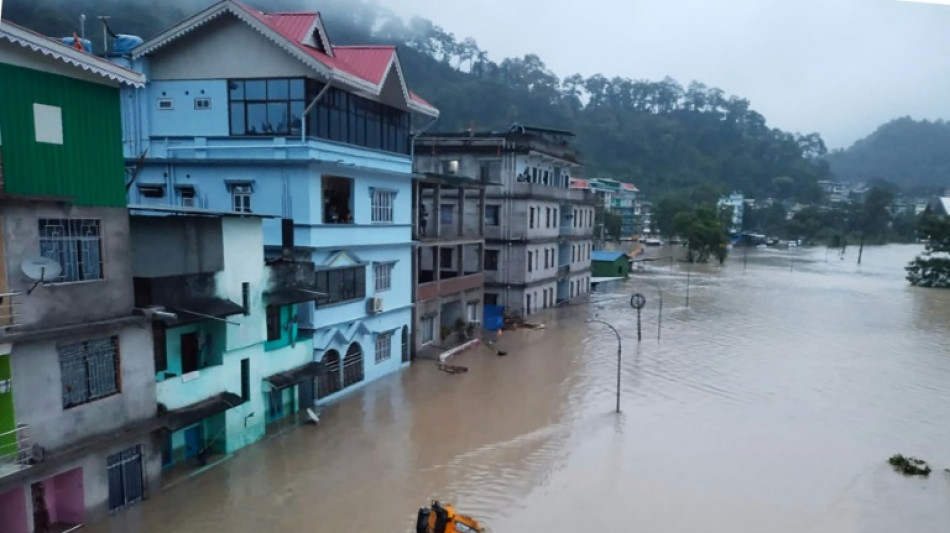
At least 23 Indian soldiers missing in flash flood / Photo: © INDIAN ARMY/AFP

The Indian army said Wednesday that 23 soldiers were missing after a flash flood caused by intense rainfall tore through a valley in the mountainous northeast Sikkim state.
A video released by an Indian army spokesman showed a thick torrent of raging brown water sweeping down a thickly forested valley, with roads washed away and power lines ripped down.
"Due to sudden cloud burst over Lhonak Lake in North Sikkim, a flash flood occurred in the Teesta River... 23 personnel have been reported missing and some vehicles are reported submerged under the slush," the army said in a statement. "Search operations are underway."
Lhonak Lake sits at the base of a glacier in the peaks that surround Kangchenjunga, the world's third-highest mountain.
The army said water released upstream from the Chungthang dam meant the river was already more than 4.5 metres (15 feet) higher than usual.
Local media reported that three civilians had died after water smashed into homes overnight, with their bodies recovered from the town of Singtam on Wednesday.
Sikkim is close to India's border with Nepal and China and boasts a sizeable military presence.
India has been wary of its northern neighbour's growing military assertiveness and their 3,500-kilometre (2,200-mile) shared frontier has been a perennial source of tension, with parts of Sikkim claimed by Beijing.
Clashes in January 2021 left injuries on both sides in Naku La pass, which connects Sikkim with Tibet on the Chinese side.
China and India, who fought a border war in 1962, have posted tens of thousands of troops into border zones.
Flash floods are common during the monsoon season, which begins in June and normally withdraws from the Indian subcontinent by the end of September. By October, the heaviest of the monsoon rains are usually over.
Experts say climate change is increasing their frequency and severity.
- Streets swamped -
Other photographs shared by the army showed water submerging the first floor of buildings, and flowing down a street in a town with only the tip of a small construction crane visible.
Sikkim Chief Minister Prem Singh Tamang said emergency services were working to support those impacted by the ferocious floods and urged people to "remain vigilant".
Six bridges were washed away and the national highway that connects Sikkim with the rest of the country was badly damaged, state disaster management chief Prabhakar Rai said.
The monsoon occurs when summer heat warms the landmass of the subcontinent, causing the air to rise and suck in cooler Indian Ocean winds, which then produce enormous volumes of rain.
It brings destruction every year in the form of landslides and floods.
Melting glaciers add to the volume of water while unregulated construction in flood-prone areas exacerbates the damage.
Himalayan glaciers are melting faster than ever due to climate change, exposing communities to unpredictable and costly disasters.
Glaciers disappeared 65 percent faster from 2011 to 2020 compared with the previous decade, a report in June by the International Centre for Integrated Mountain Development warned.
Based on current emissions trajectories, the glaciers could lose up to 80 percent of their current volume by the end of the century, it said.
M.Chau--ThChM