EU backs rules to improve app workers' conditions / Photo: © AFP/File

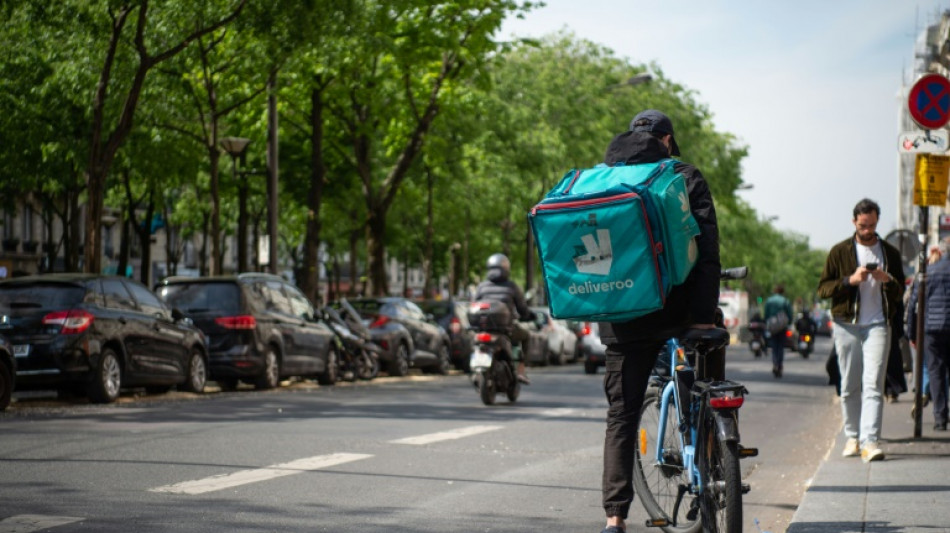
The European Parliament and EU member states struck a landmark deal Wednesday to strengthen conditions for those working through apps, such as ride-hailing drivers.
Once formally adopted, the law will be a global first covering the gig economy and part of the European Union's effort to give clarity to the status of millions of workers.
The hope is that courts across Europe will not hand down decisions that vary wildly, since there are now uniform rules for all 27 states.
For many years, companies such as Uber have been able to dodge rules on minimum wage and holiday pay by arguing their workers are not employees but independent contractors.
Under the new law, many platform workers in Europe could be reclassified as employees and therefore gain access to labour and social protection rights, the parliament said.
At least 5.5 million people could be "wrongly classified as self-employed", the parliament said.
There are around 28 million gig workers dependent on online platforms in Europe, and the number is expected to rise to 43 million in 2025.
"This is a revolutionary agreement and the first legislative framework for digital platform workers," said MEP Elisabetta Gualmini, the rapporteur who spearheaded the text in parliament.
"We have transparency and accountability for algorithms, we have better rights for the least protected workers in the world and we have fair competition for platforms," she added.
If a worker meets two out of five criteria set out in the legislation it will be presumed they are an employee.
The five criteria are: limits on how much workers can be remunerated, remote supervision of their work, control over what tasks they do, restrictions on their hours and control over their conditions, limits on their appearance or conduct.
The EU's member states can expand the list. Workers can lobby EU member states to expand the list as well.
- 'Legal certainty' -
The lobby group Delivery Platform Europe, which represents Uber Eats and Deliveroo among others, had previously criticised the draft legislation.
The text will become law once formally adopted by member states and the parliament.
An Uber spokesperson said the company supported efforts to improve working conditions but hoped the text "delivers on these principles while ensuring legal clarity".
"We remain committed to Europe and we'll keep advocating for a model that gives platform workers what they say they want: independence, benefits and flexibility."
The EU's jobs and social rights commissioner, Nicolas Schmit, welcomed the agreement.
"The new rules we have agreed ensure platform workers, such as drivers and riders, receive the social and labour rights they are entitled to, without sacrificing the flexibility of the platform business model," Schmit said.
The rules also say platform workers should be able to access information on how an app's algorithms work and how their behaviour affects decisions taken by automated systems.
And no platform will be able to sack workers or suspend accounts without human oversight, the parliament said.
There are also stricter rules on personal data, forbidding platforms to process data including personal beliefs and private exchanges with colleagues.
A.Kwok--ThChM