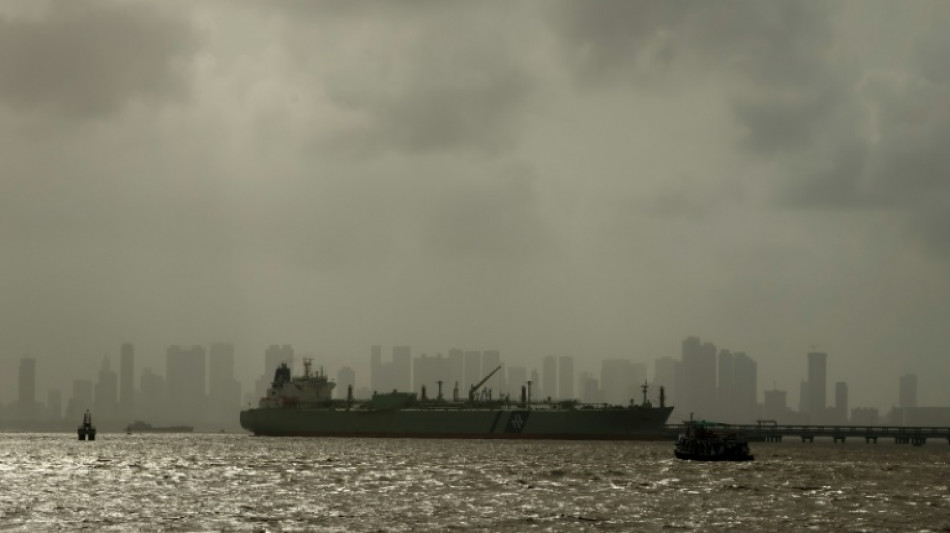
Rising prices cap India's thirst for Russian oil / Photo: © AFP/File

Indian purchases of Russian crude in defiance of Western pressure over the Ukraine war have fallen to an 11-month low as the price tag on the discounted oil rises, figures show.
Since the invasion of Ukraine nearly two years ago, India has bought hundreds of millions of barrels of cut-price Russian crude, saving itself billions of dollars while bolstering Moscow's war coffers.
The purchases have catapulted it to second place among Russia's customers behind China, and Indian officials have made no secret of their decision to prioritise national interest over international sanctions against Moscow.
But the price of Russian crude has risen in the face of OPEC+ production cuts and increased demand from China, analysts say, making it less attractive to Indian customers.
Indian refiners bought 1.45 million barrels per day of Russian oil last month, their lowest amount since last January and down nearly 16 percent from November, according to global energy trade intelligence platform Kpler.
The "interplay between India and China" was a key driver of the change, Viktor Katona, lead crude analyst at Kpler told AFP, "as both countries now vie for the same barrels".
The biggest beneficiary of the change is Moscow: Russian crude has been trading above $85 per barrel, reports say, even though a coalition of the G7, EU and Australia imposed a $60 price cap a year ago.
New Delhi's reduced imports will be welcomed by some European policymakers who have raised concerns over how Indian refiners have processed Russian crude into fuel for the European market, effectively bypassing the EU's sanctions.
- Pragmatism, not politics -
New Delhi and Moscow have ties dating back to the Cold War, and Russia remains by far the biggest arms supplier to the world's most populous country.
India has shied away from explicit condemnations of Russia over its invasion of Ukraine, even as it pursues greater security ties with the United States.
But instead of following in the West's footsteps, it has doubled down on its historical partnership with Russia to secure cheap energy, to help it boost growth without running up its fiscal deficit.
Russia has become India's top oil supplier, overtaking the traditional heavyweight Middle Eastern exporters, and remains so by a distance despite the recent falls.
India is the world's third-largest importer and consumer of oil, and imports nearly 80 percent of its needs.
In the 10 months after Russia invaded Ukraine, India saved $3.6 billion by importing heavily discounted crude from Russia, according to data presented by a ruling party lawmaker in parliament.
The country's imports of Russian crude peaked in June 2023 at nearly two million barrels per day, but have steadily shrunk since.
Government officials say the change is purely pragmatic and price-driven, rather than political.
"If they don't offer us a discount, why would we buy from them," Indian oil minister Hardeep Singh Puri told reporters last week.
"India's leadership has only one requirement: that the Indian consumer gets the energy at the most economical price, without disruption," he added.
- Changing course -
Indian refineries paid an average $85.90 a barrel for Russian crude in November, according to a Bloomberg analysis of government data, just above the $85.70 offered by Iraq, and over $25 higher than the G7's price cap.
Moscow is itself looking to shore up its oil revenues.
In May, Russian Finance Minister Anton Siluanov blamed "all these discounts" for a 50 percent fall in its energy revenues.
Yale professor Jeffrey Sonnenfeld, who has advised the US Treasury on the price caps, told AFP there had been some "reduction in the efficacy of the price cap", but said it was still driving up Moscow's shipping and insurance costs.
Indian officials admit there have been logistical challenges.
New Delhi and other customers of Russian oil prefer to avoid paying for it in US dollars as doing so could open them to secondary sanctions.
Last month, state-run Indian Oil Corporation agreed to buy Sokol-grade oil from the Russian Pacific island of Sakhalin in UAE dirhams, an Indian government official told AFP.
But the deal ultimately did not go through because the Russian oil supplier was unable to open a UAE bank account to accept the currency, he said.
The shipment changed destination on the high seas and now appears to be en route to a Chinese refiner, according to an assessment by energy trade platform Vortexa.
China remains Moscow's biggest oil customer and tracking data from Kpler shows that over the last two months, 10 tankers of Sokol cargoes that were headed for Indian destinations either changed course or idled abruptly.
But minister Puri insisted payment problems were not driving the import drop, saying: "It is a pure function of the price at which our refineries will buy."
D.Pan--ThChM