US, Iran proxy war at turning point after American troops killed / Photo: © AFP

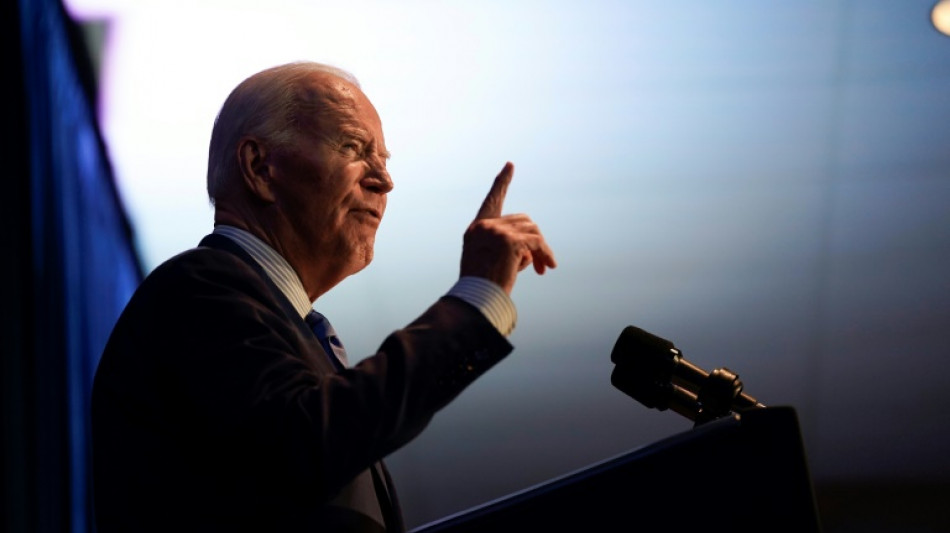
The killing of three US troops is dragging the United States further into a proxy war with Iran that President Joe Biden had hoped to avoid and that he still hopes can be contained.
After years of trying to ease tensions with Iran through dialogue, and then months seeking to keep the Israel-Hamas war from escalating, the drone strike by Iranian-backed militants on US forces in Jordan crossed an unstated red line for the Biden administration.
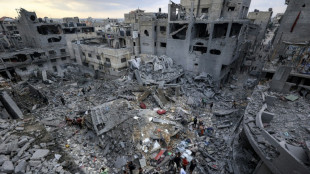
The United States has already been hitting another Iranian-backed group, Yemen's Huthi rebels. The strikes come after warnings failed to dissuade Huthi attacks on Red Sea shipping, which the insurgents say are acts of solidarity with Palestinians in Gaza being bombarded by US ally Israel.
The White House has promised a "very consequential" response to the Jordan attack, which comes at the start of an election year in which Biden's Republican rivals are going on the offensive and urging direct attacks on Iran.
But the Biden administration has already stated that it does not want war with Iran -- where officials have sought to distance themselves from the attack.
"It's a fork-in-the-road moment," said Alex Vatanka, founding director of the Iran program at the Middle East Institute.
He said that Iran's goal since the October 7 attack by Hamas on Israel has been "to avoid war with Israel and the United States, but to use this opportunity to squeeze both as part of a long-term game plan."
The clerical state knows that, "like Iran, the United States is not interested in a regional escalation."
But Iranian officials also know that, with elections approaching, "President Biden is already being hammered for being weak in the face of foreign adversaries, and that politically he has to do something."
- How to change Iran calculus? -
Vatanka expected further US strikes on Iran's so-called "Axis of Resistance," with messages sent to Iran to make clear that it cannot afford greater escalation.
Thomas Warrick, a former State Department official now at the Atlantic Council, said the United States had no good choices.
Iran will not be deterred by attacks on proxies, and a full-blown assault in Iraq could hand Tehran a strategic victory by strengthening calls for US troops to leave.
"The Iranian regime doesn't believe in deterrence the way US policymakers and strategists do," he said.
Other options could include directly targeting a top military site inside Iran or eliminating Revolutionary Guard positions in Syria, where Israel has also been striking Tehran's capacities.
"Neither of these options are good, and both risk keeping the United States embroiled in a regional conflict that the Biden administration was hoping to avoid," he said.
- Hopes dim for diplomacy -
In 2020, after another flare-up with Iranian-backed groups at the start of an election year, then president Donald Trump ordered a strike at the Baghdad airport that killed General Qasem Soleimani, the storied commander of an elite Revolutionary Guards unit.
But months earlier, Trump abruptly cancelled plans to strike Iran itself, wary of escalating conflict over Tehran's shooting down of a US unmanned drone.
The Biden administration took office seeking diplomacy with Iran, negotiating through the European Union on restoring a 2015 nuclear deal scrapped by Trump.
The talks collapsed in part over Iran's demands for greater sanctions relief, and an agreement became politically toxic after the religious regime violently cracked down on women-led protests that erupted in September 2022.
But US officials since then have quietly spoken to Iran about regional tensions and -- until October 7 -- the Biden administration had boasted that it had brought attacks on US troops down to a standstill.
Now, while US officials are not speaking in the language of regime change, Vatanka said they have concluded that a "fundamental part of a solution to a large-scale sustained de-escalation in the Middle East requires a very different political order in Tehran."
Ali Vaez, Iran project director at the International Crisis Group, said US fatalities marked a "major step up the escalation ladder by Iran-backed groups" and that Tehran's denials of responsibility carried little weight.
But he said that last year's diplomacy had brought calm, while US strikes in Iraq, Syria and Yemen have only made Iran-backed fighters more brazen.
"While there is no political space in Washington for engagement with Iran in an election year, diplomacy is the only approach that has reined Iran in," he said.
J.Liv--ThChM