Tunisian economic crisis mutes build-up to Ramadan / Photo: © AFP

Tunisians are bracing themselves for more subdued celebrations during the Muslim holy month of Ramadan as an economic crisis grips the North African country.
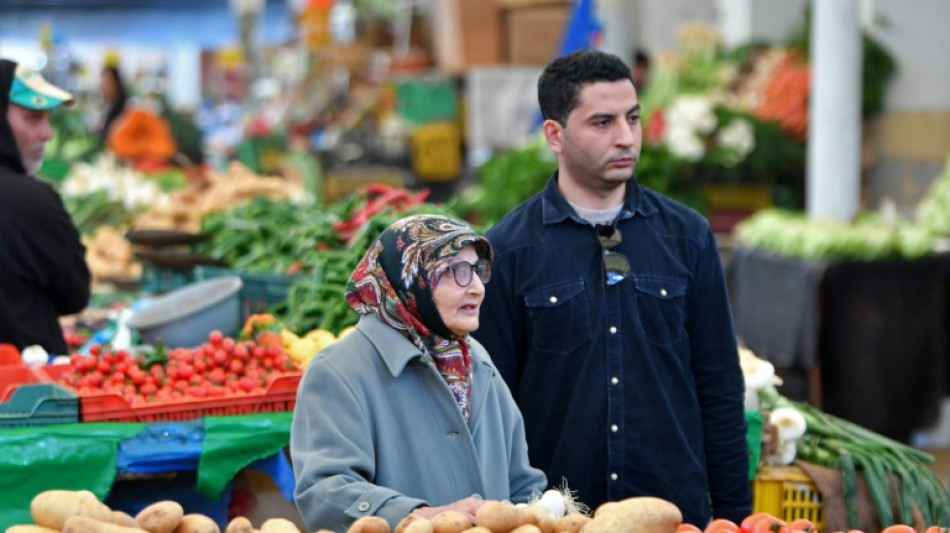
In past years "you wouldn't have been able to set foot in the market because it was so crowded", vegetable merchant Mohamed Doryi told AFP.
"That's not the case today," said the 69-year-old, who no longer displays his prices to avoid scaring away potential customers.
Tunisians usually prepare for Ramadan -- when daytime fasting is followed by festive but often costly meals with family and friends -- by stocking up on large amounts of food.
But this year things are different, with purchasing power greatly diminished because of soaring prices, a recession and rising unemployment.
"I'm not poor, but I can't do it anymore. My pension doesn't cover my needs," said Fayka, a 65-year-old at Tunis's working-class Bab El Fellah market.
"This is the first time I've bought fruits and vegetables by the piece" instead of in bulk, the retiree added, asking that only her first name be used.
Tunisia has also been beset by political tensions since President Kais Saied granted himself full powers in July 2021.
A third of its 12 million people currently live below the poverty line after two years of high inflation -- running at 10 percent on average per year -- and the price of many foods has tripled.
GDP growth came in at 0.4 percent last year after severe drought damaged agriculture, and the country entered a recession at the end of 2023.
Unemployment also rose to 16.4 percent at the end of last year, compared with 15.2 percent at the end of 2022.
- 'Stagflation' -
Economist Ridha Chkoundali says Tunisia is "experiencing a period of stagflation, which means a decline in growth and a rise in inflation".
This has been caused by "the deliberate choice of public authorities to prefer to repay debt, especially external debt", he argued.
This came at "the detriment of supplying the market with basic foodstuffs and agricultural inputs" such as fertilisers and fodder.
A shortage of money in the public coffers -- burdened by the salaries of more than 650,000 civil servants -- has meant regular shortages of basic subsidised items including flour, rice, sugar and semolina as the state has difficulties paying for them.
Tunisian banks are being asked by the state to finance the country's debt amounting to 80 percent of GDP, undermining their ability to lend to the private sector and reducing growth even more.
Chkoundali argues that a lack of resources is a result of "the choice to break with the IMF".
In October 2022, the International Monetary Fund agreed in principle to lend Tunisia around $2 billion, but Saied later rejected it on the grounds that the reforms it required in return were not sustainable.
In a Tunis butcher's shop, a 50-year-old woman cautiously ordered 150 grams of veal ahead of Ramadan.
Red meat, which now costs more than 40 dinars (around $13) a kilo, is a luxury in a country where the average salary is 1,000 dinars per month (about $325).
"My husband recently passed away and I can't afford to buy more," she whispered to the butcher.
Mustapha Ben Salmane, 52, told AFP that more and more customers ask for just a handful of minced meat or spicy merguez sausage.
"I can't say no to them. People are exhausted," he said.
Q.Yam--ThChM