Sudan's silent suffering, one year into generals' war / Photo: © AFP/File

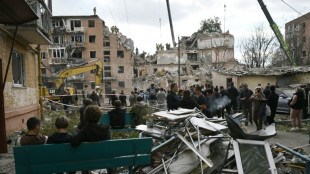
Millions displaced and on the brink of famine. Sexual and ethnic violence. Infrastructure destroyed. Aid workers say a year of war between rival generals in Sudan has led to catastrophe, but the world has turned away.
The northeast African country is experiencing "one of the worst humanitarian disasters in recent memory" and "the largest internal displacement crisis in the world", the United Nations says.
It is also on track to become "the world's worst hunger crisis".
Aid workers have called it the "forgotten war" affecting a country of 48 million -- more than half of whom they say need humanitarian assistance.
"People have been killed and raped and assaulted and detained and beaten and taken away for months at a time. We're used to it," said Mahmud Mokhtar, who helped provide volunteer social services in the Khartoum area during the war before finally fleeing to Cairo.
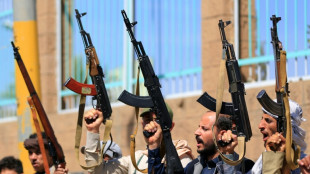
Experts see no end in sight to the fighting, which began on April 15 last year between army chief Abdel Fattah al-Burhan and his former deputy Mohamed Hamdan Daglo, who commands the paramilitary Rapid Support Forces (RSF).
Since then thousands of people have been killed, including up to 15,000 in one West Darfur town alone, according to UN experts.
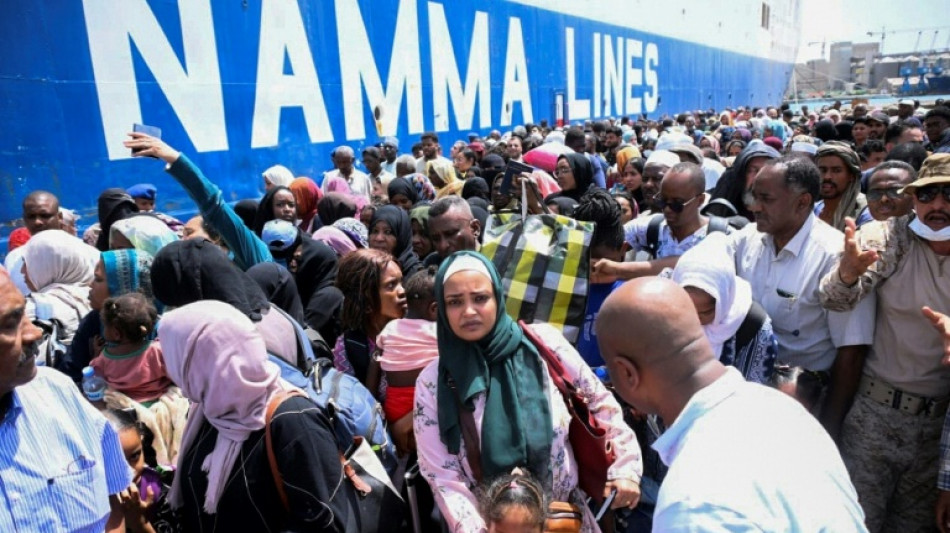
More than 8.5 million have had to flee their homes to seek safety elsewhere in Sudan or across borders in neighbouring countries.
The war "is brutal, devastating and shows no signs of coming to an end", said veteran Sudan expert Alex de Waal.
But even if the violence stops now, "the state has collapsed, and the path to rebuilding it is long and fraught", de Waal said.
Before the bombing and pillaging began, Sudan was already one of the world's poorest countries.
Yet the UN says that by January, its humanitarian response scheme had only been 3.1 percent funded and can barely reach one of every 10 people in need.
- 'Milestone of shame' -
"Before the start of the war, there were dozens of international organisations responding across the country," according to Christos Christou, international president of medical charity Doctors Without Borders (MSF).
"Now, there are almost none."
The health system has all but collapsed, and most agricultural land -- the leading employer and once touted as a model for African development -- is out of commission, researchers have said.
Gibril Ibrahim, finance minister in the army-aligned government, said in early March that Sudan had lost "80 percent of its income".
Days later, the situation became even more precarious when the energy minister declared force majeure over a "major rupture" on an oil pipeline. Oil exports, via neighbouring South Sudan, account for tens of millions of dollars in earnings each month.
For desperate civilians, virtually all that remains is mutual aid: volunteers organising soup kitchens, evacuation plans and emergency health care.
"The world continues to look the other way," said Will Carter, Sudan country director for the Norwegian Refugee Council, which alongside MSF is one of the few humanitarian organisations still operating there.
The war's anniversary is "a milestone of shame", he said, charging that the international community "has allowed this catastrophe to worsen".
On the ground, the RSF now controls most of the capital and the western Darfur region.
The paramilitaries descended from the feared Janjaweed militia, unleashed by former strongman Omar al-Bashir's government to quash an ethnic rebellion.
The International Criminal Court (ICC) charged Bashir with genocide, crimes against humanity and war crimes dating from 2003, but Sudanese authorities never handed him over following his overthrow in 2019 after mass protests.
- 'Pure evil' -
During the current war, government forces have used their air power to bomb targets on the ground, but failed to gain back much territory and have been blamed for striking civilians.
"A final victory is out of the question," said a former army officer, requesting anonymity to speak freely.
Sudanese analyst Mohammed Latif agreed, telling AFP a win "is impossible" at this point for either side.
"Their troops are tired and their supplies drained," Latif said.
There has, however, been no shortage of abuses against civilians, rights groups say.
"What is happening is verging on pure evil," Clementine Nkweta-Salami, the UN humanitarian coordinator for Sudan, said earlier in the war.
Most recently, the army has taken over homes in Khartoum's twin city of Omdurman, according to a pro-democracy lawyers' committee, after similar seizures by the RSF earlier in the fighting.
The lawyers' committee, like other volunteer groups across Sudan, has spent the past year painstakingly documenting violations including summary killings, the use of sexual violence as a weapon of war and the forced conscription of children.
The ICC, currently investigating ethnic-based killings primarily by the RSF in Darfur, says it has "grounds to believe" both sides are committing atrocities.
International mediation efforts yielded only truce announcements that were quickly violated.
A UN Security Council call last month for a ceasefire also failed to end the war, as did Western sanctions.
The war is "a vortex of transnational conflicts and global rivalries that threaten to set a wider region aflame", said de Waal.
Both sides have sought regional support, experts say, and the United Arab Emirates has been painted as the RSF's main foreign backer, though its leaders deny it.
Washington has signalled talks could restart around April 18, but army-aligned prosecutors have since moved against civilian leaders the international community had looked to as potential partners.
Still, according to de Waal, "it should not be difficult to reach a consensus across Africa and the Middle East that state collapse is in no one's interest".
Against those complex realities, Amer Sohaiel, a displaced man taking shelter in Darfur's Abu Shouk camp, has a simple hope, "that God will help us achieve peace this year".
F.Jackson--ThChM