Hong Kong demands online platforms remove banned protest song / Photo: © AFP

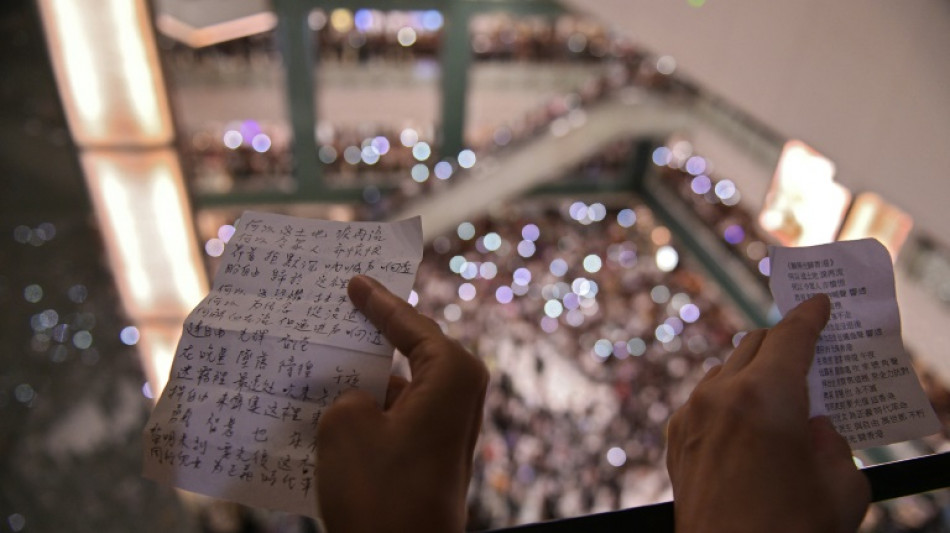
Hong Kong demanded Wednesday a protest song popular during pro-democracy demonstrations be removed from the internet after a court banned it, judging it was a "weapon" to incite violent protests in 2019.
The case has been closely watched for how it would affect tech firms and internet platform operators -- a concern that has been raised internationally over the free flow of information in Hong Kong.
Wednesday's ban comes after a campaign by the city's authorities against the song, which has seen them demand it be removed from Google's internet search results and other content-sharing platforms -- a request that has been largely rebuffed.
"The government, in the next step, will communicate with relevant internet service providers, request or demand them to remove relevant content in accordance with the injunction order," said Paul Lam, the semi-autonomous city's Secretary for Justice.
"The effect is to persuade the internet service providers not to provide the convenience and not to facilitate the commission of unlawful acts," Lam told reporters.
"Glory to Hong Kong" is the first song to be banned in the former British colony since it was handed over to China in 1997.
The song grew popular during the protests, and was also secretly recorded by an anonymous orchestra. Its defiant lyrics incorporate the key protest slogan "Liberate Hong Kong, revolution of our times".
The Hong Kong government's first attempt to get an official injunction was refused by the High Court last year in a surprise ruling, which said a ban could have a "chilling effect" on innocent third parties.
Angering the city's government, the song has in recent years been played at several international sporting events, with event organisers mistaking it for the Chinese territory's anthem.
Hong Kong is a semi-autonomous territory with no anthem of its own, and uses China's "March of the Volunteers".
Reversing a lower court's decision last year, appeal judge Jeremy Poon wrote in a judgement that the composer of the song had "intended it to be a 'weapon' and so it had become".
"It had been used as an impetus to propel the violent protests plaguing Hong Kong since 2019. It is powerful in arousing emotions among certain fractions of the society," he said.
The order would also stop a range of acts including broadcasting and performing the song "with criminal intent".
The song can also no longer be disseminated or reproduced on internet-based platforms, though the injunction contained exceptions for "academic activity and news activity" -- a tweak the government made after earlier questioning by judges.
The judgement said an injunction order was "necessary" because internet platform operators "indicated that they are ready to accede to the Government's request if there is a court order".
The Asia Internet Coalition -- an industry group that includes tech giants like Google, Apple, Spotify, and X -- said it was assessing the implications of the decision "to determine its impact on businesses".
"We believe that a free and open internet is fundamental to the city's ambitions to become an international technology and innovation hub," said the group's managing director Jeff Paine.
Soon after the judgement was handed down, Beijing authorities said the ban was a "necessary measure by (Hong Kong) to fulfil its responsibility of safeguarding national security".
- 'Policing the internet' -
Hong Kong-based cybersecurity expert Anthony Lai explained that if a platform was to comply with the ban, they would have to make sure the song cannot have a Hong Kong IP address or Hong Kong users cannot access the song.
But both ways would be as difficult as "pulling a cow to climb up a tree", he said.
"I understand the government's need to defend national security, but I worry it would take up too much of their resources to police the whole internet," Lai told AFP.
After the ban was announced, a couple of YouTube links of the song -- listed in Wednesday's judgement document -- appeared to be inaccessible, though many others remained up.
"This video isn't available anymore," said one link.
Lam insisted the ban did not hurt the city's free speech.
"Free flow of information is of crucial importance to Hong Kong," he said, adding "we are concerned with very specific unlawful behaviours".
In 2020, after the protests were quashed and Beijing's national security law enacted, public dissent has largely been absent, and the bulk of pro-democracy activists and opposition politicians have either been arrested, silenced, or fled Hong Kong.
The "Liberate Hong Kong" slogan -- embedded in the song -- was deemed secessionist by the city's courts in 2021, and since then authorities have targeted musicians who performed it.
The city enacted a second national security law this year -- targeting major crimes including treason and insurrection -- which foreign governments like the United States and Britain say would further undermine rights and freedoms.
Y.Parker--ThChM