The China Mail - Nepal's nature threatened by new development push: conservationists

USD -
AED 3.672499
AFN 63.99961
ALL 82.034979
AMD 362.140294
ANG 1.790365
AOA 917.999912
ARS 1520.631701
AUD 1.432767
AWG 1.8025
AZN 1.703552
BAM 1.7375
BBD 2.011772
BDT 122.756127
BGN 1.683441
BHD 0.37705
BIF 2997.5
BMD 1
BND 1.277108
BOB 12.009896
BRL 4.982796
BSD 0.998867
BTN 96.254936
BWP 13.739983
BYN 3.068524
BYR 19600
BZD 2.008697
CAD 1.42143
CDF 2317.481055
CHF 0.83255
CLF 0.024652
CLP 973.389942
CNY 6.704597
CNH 6.703325
COP 3240.73
CRC 457.269266
CUC 1
CUP 23.971252
CVE 98.050042
CZK 21.69235
DJF 177.720235
DKK 6.644185
DOP 60.349837
DZD 134.518181
EGP 52.281398
ERN 15
ETB 161.019593
EUR 0.88888
FJD 2.24675
FKP 0.756613
GBP 0.753925
GEL 2.595002
GGP 0.756613
GHS 11.780375
GIP 0.756613
GMD 73.999933
GNF 8749.999935
GTQ 7.629057
GYD 208.966494
HKD 7.847935
HNL 26.830073
HRK 6.6963
HTG 130.793628
HUF 324.5925
IDR 17862.4
ILS 3.04465
IMP 0.756613
INR 96.37075
IQD 1310
IRR 1732150.000014
ISK 121.95001
JEP 0.756613
JMD 158.718596
JOD 0.709018
JPY 158.413006
KES 129.789879
KGS 87.450216
KHR 4062.500677
KMF 437.999646
KPW 900.000318
KRW 1339.645004
KWD 0.30955
KYD 0.832341
KZT 450.791818
LAK 22479.999927
LBP 89599.999618
LKR 330.203262
LRD 170.999693
LSL 16.529469
LTL 2.95274
LVL 0.60489
LYD 6.429705
MAD 9.967501
MDL 17.823955
MGA 4449.999824
MKD 54.682782
MMK 2099.06815
MNT 3597.6832
MOP 8.073986
MRU 40.159735
MUR 47.409919
MVR 15.409967
MWK 1740.999917
MXN 17.97222
MYR 4.085802
MZN 63.899783
NAD 16.630106
NGN 1324.049913
NIO 36.669827
NOK 9.554306
NPR 154.011674
NZD 1.77919
OMR 0.384504
PAB 0.998801
PEN 3.44625
PGK 4.453018
PHP 62.754503
PKR 276.999669
PLN 3.88604
PYG 5851.782097
QAR 3.643699
RON 4.753205
RSD 104.370051
RUB 84.748496
RWF 1474
SAR 3.74687
SBD 8.058541
SCR 13.999573
SDG 601.498917
SEK 9.99986
SGD 1.27802
SHP 0.75643
SLE 24.650311
SLL 20969.491881
SOS 571.496279
SRD 37.649671
STD 20697.981008
STN 22.225
SVC 8.739533
SYP 13002.000254
SZL 16.630049
THB 33.623027
TJS 9.208683
TMT 3.51
TND 2.994502
TOP 2.40776
TRY 49.200705
TTD 6.770431
TWD 31.792043
TZS 2630.002987
UAH 44.866159
UGX 4029.976056
UYU 40.303811
UZS 11789.999653
VES 870.279505
VND 25992
VUV 120.275684
WST 2.783099
XAF 583.067316
XAG 0.016309
XAU 0.000240227544
XCD 2.70255
XCG 1.800123
XDR 0.707052
XOF 583.067316
XPF 106.650213
YER 236.249982
ZAR 16.54319
ZMK 9001.202803
ZMW 19.751167
ZWL 321.999592
SSP 5720.889873
MXV 2.031744
  • RYCEF

    0.4000

    19.71

    +2.03%

  • CMSC

    0.0000

    20.4

    0%

  • BTI

    0.4200

    56.05

    +0.75%

  • BP

    0.2800

    44.43

    +0.63%

  • RBGPF

    1.6000

    67

    +2.39%

  • RIO

    -0.1500

    94.41

    -0.16%

  • AZN

    -0.4300

    166.15

    -0.26%

  • GSK

    0.4600

    49.7

    +0.93%

  • BCE

    -0.4100

    20.56

    -1.99%

  • NGG

    -0.2500

    75.24

    -0.33%

  • VOD

    -0.0400

    16.58

    -0.24%

  • RELX

    -0.4500

    33.07

    -1.36%

  • BCC

    -0.5500

    76.59

    -0.72%

  • CMSD

    -0.0300

    20.27

    -0.15%

  • JRI

    -0.2500

    10.77

    -2.32%

Nepal's nature threatened by new development push: conservationists
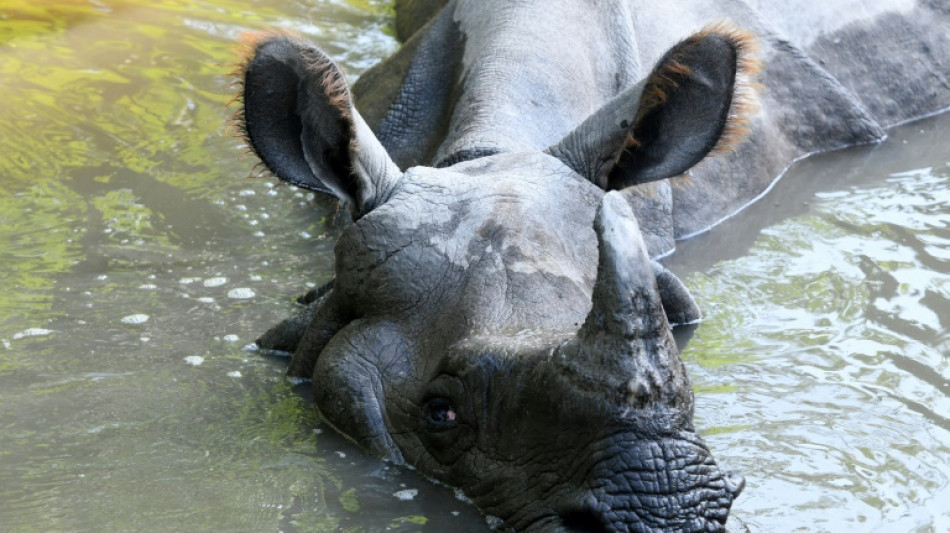
Nepal's nature threatened by new development push: conservationists / Photo: © AFP

Nepal's nature threatened by new development push: conservationists

Nepali conservationists condemned on Thursday new regulations permitting hydropower and hotel projects in protected nature reserves, saying they threatened to damage the habitats of tigers and other endangered animals.

Text size:

A fifth of the Himalayan republic's total lands have been designated as protected areas established to forbid infrastructure projects that could damage the environment.

Nepal has been praised worldwide for combating poachers and conserving wildlife, allowing it to bring several animal species back from the brink of local extinction.

However, the government enacted an ordinance last month allowing it to approve infrastructure projects in national parks, forests and other conservation areas.

"The number of endangered tigers and one-horned rhinos in the country have thrived because of these protected areas as they found a favourable environment," Rampreet Yadav, a wildlife conservationist, told AFP.

"This decision allowing construction of infrastructure will surely impact their habitat."

Yadav, who is also the former chief conservation officer of Chitwan National Park, Nepal's most important conservation area, said the decision was driven by the "vested interests of political leaders".

"We will have nothing to show and give our next generation," he said.

Nepal's protected habitat laws have seen the country triple the local tiger population to 355 since 2010, while the number of one-horned rhinoceros also rose to 752 in 2021 from around a hundred in the 1960s.

It also nearly doubled its forest cover between 1992 and 2016 after rampant logging.

Nepal has been keen to further develop its hydropower industry after a dam-building spree since the turn of the century that has given it an installed capacity of more than 2,600 megawatts.

It signed a deal with India in January to export 10,000 megawatts of hydroelectricity over the next decade to its energy-hungry neighbour.

Tourism is also a major earner for Nepal, which saw a million foreign visitors last year after a post-pandemic bounceback, and investments are being made in hotels and airports to cater to travellers.

Environment ministry spokesperson Badri Raj Dhungana said the new regulations had been introduced to bring a balance between environmental protection and development.

"They will not be constructed in very sensitive areas. We will need a work plan with proper mapping," he said.

But Padma Bahadur Shrestha, a lawyer specialising in litigation aimed at nature protection, said the decision showed the government was set on casting aside environmental concerns in its rush for development.

"It wants to destroy Nepal's biodiversity to make new infrastructure," he said.

B.Clarke--ThChM