Pakistan reaches $7 bn aid deal with IMF / Photo: © AFP/File

The International Monetary Fund said it reached a new $7 billion loan deal with Pakistan in a bid to bolster its faltering economy.
Islamabad agreed in exchange to conduct further unpopular reforms, including widening the South Asian nation's chronically low tax base.
Pakistan last year came to the brink of default as the economy shrivelled amid political chaos, catastrophic 2022 monsoon floods and decades of mismanagement -- as well as the global economic downturn.
The nation was saved by last-minute loans from friendly countries, as well as support from the IMF, but its finances remain in dire straits with high inflation and staggering public debts.
The new three-year deal, which still needs approval by the IMF Executive Board, should enable Pakistan to "cement macroeconomic stability and create conditions for stronger, more inclusive and resilient growth", it said in a statement Friday.
- Dealing with a downturn -
Islamabad wrangled for months with IMF officials to unlock the new loan -- its 24th payout from the lender in more than six decades.
It came on condition of far-reaching reforms, most notably increasing the chronically low tax base.
In a nation of over 240 million people and where most jobs are in the informal sector, only 5.2 million filed income tax returns in 2022.
During the 2024-25 fiscal year which started at the beginning of July, the government aims to raise nearly $46 billion in taxes, a 40 percent increase from the previous year.
More unusual methods have seen the tax authority block 210,000 SIM cards of mobile users who have not filed tax returns in a bid to widen the revenue bracket.
Islamabad also aims to reduce its fiscal deficit by 1.5 percent to 5.9 percent in the coming year, heeding another key IMF demand.
But Pakistan's public debt remains huge at $242 billion and servicing it will still swallow up half of the government's income in 2024, according to the IMF.
Analysts have criticised Islamabad's measures as surface-level reforms -- aimed at courting the IMF without addressing underlying problems.
"It is hard to not see old patterns in this new IMF deal," Ali Hasanain, associate professor of economics at the Lahore University of Management Sciences, told AFP.
"The IMF has issued a loan similar in size and conditions as the one agreed to five years ago, and five years before that."
"Will authorities seize the opportunity thus created to embark on fundamental reforms to how the country is run?" he asked. "You would be well-advised not to hold your breath."
- Public backlash -
Prime Minister Shehbaz Sharif came to power in February elections marred by allegations of rigging -- with ex-prime minister Imran Khan jailed and barred from running.
The diet of strict economic measures introduced by his shaky coalition government is likely to undermine their popularity.
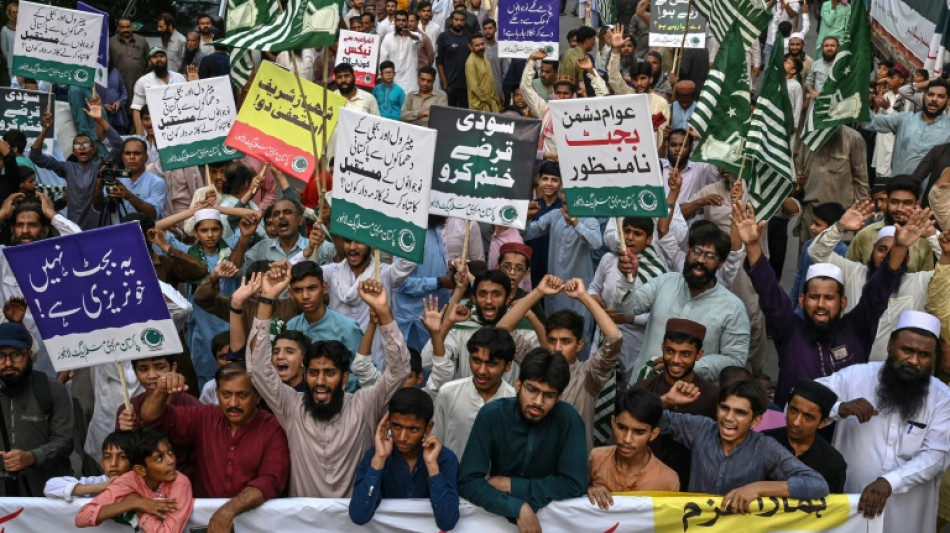
There have already been scattered protests over tax and bill hikes introduced in last month's budget -- prepared with IMF oversight -- and more demonstrations are scheduled for the coming weeks.
While around 40 percent of the population already lives below the poverty line, the World Bank said in April it feared that 10 million additional Pakistanis would fall below this threshold.
Pakistan's last $3 billion loan from the IMF in 2023 proved a lifeline.
But it also came on the condition of unpopular austerity measures, including an end to subsidies cushioning consumer costs.
In recent months, the current account balance has recovered slightly and high inflation has started to subside.
The IMF anticipates two percent growth this year, with inflation still expected to reach nearly 25 percent year-on-year, before gradually coming down in 2025 and 2026.
E.Lau--ThChM