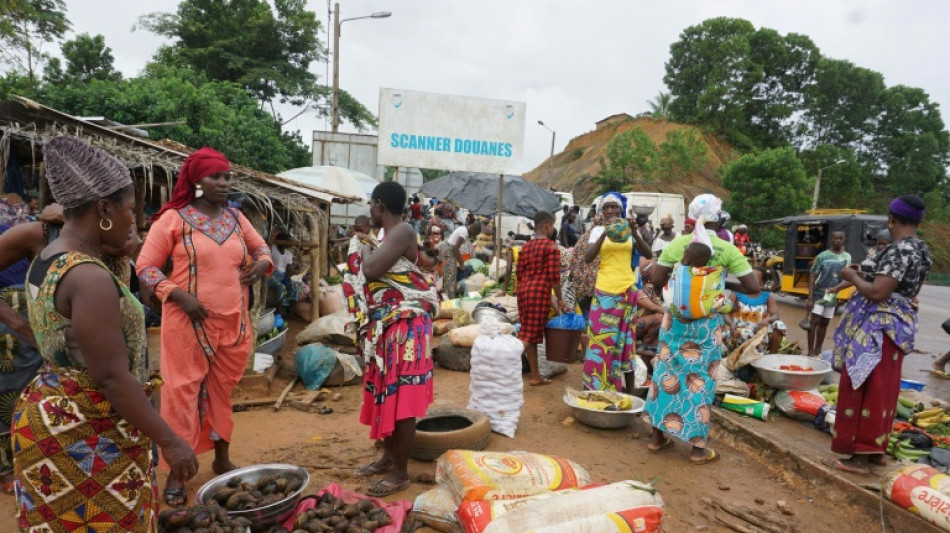
Ghana a long way off from gender equality despite new law / Photo: © AFP/File

After nearly three decades of dithering, Ghana has passed a law pledging to give women equal representation in parliament, public life and business, but activists say parity is a long way off.
The Ghanaian parliament unanimously passed the Affirmative Action Gender Bill 2024 last week, ending a process launched in 1998 aimed at creating an equitable society.
But sexism in the male-dominated West African nation of 33 million people is rife, with women often sidelined and suffering violence and practices such as female genital mutilation.
The law seeks to ensure 50:50 gender parity in public posts and parliament by 2030. The number of women in parliament is currently 15 percent, well below the 30 percent target set by the United Nations for all countries.
The text says the "object of this Act is to ensure the achievement of gender equality in the political, social, economic, educational and cultural spheres of the society".
Anyone obstructing this can be jailed for up to a year.
The new law also moots quotas for women in the private sector in return for tax breaks.
According to World Bank figures, 27 percent of top private sector posts are held by women.
Activists said a lot needed to be done to change traditional mindsets.
Rodaline Imoru Ayarna, a member of the Alliance for Revolutionary Change, said broader consultations were needed for effective implementation of the law.
"Because of our cultural norms and values, it plays a very great role towards getting people to even understand what we are talking about," she said.
- Game changer? -
"There's a lot that needs to be done through mindset change, letting people understand that women can equally do the same jobs that men are doing, if not better.
"There was a time when you would say that women didn't go to war, they didn't shoot, but they're doing it now. Women are flying planes. Women are captains of ships and the like," she added.
Ghana's two main parties, the ruling New Patriotic Party and the main opposition National Democratic Congress, have made gender equality campaign themes ahead of a presidential election in December.
The NDC has promised to create a development bank for women entrepreneurs offering loans at low interest rates while the NPP has pledged to set up a similar body to help women-run businesses.
Women often suffer violence. A 2016 government report showed that nearly 39 percent of married women aged between 15 and 49 were physically abused or beaten up.
Lawyer Sheila Minkah-Premo, convener of the Affirmative Action Coalition group, told AFP that gender stereotypes had to be erased in Ghana.
"Women are not seen as natural leaders. There's usually a tendency to sort of push women aside and ensure that leadership is held by men. We need to work towards addressing this," she said.
"And that requires a lot of education and sensitisation to enable people to have a mindset, to let people know that equal opportunities have to be given to both men and women to achieve the best that they can."
Celestina Damoah of the Africa Center for Democracy and Socioeconomic Development struck a more upbeat note.
"This is more than just a law; it is the key to unlocking the potential of generations of women who have been waiting for their moment to rise," she said.
L.Johnson--ThChM