Canada marine protection plan aims to serve as global model / Photo: © AFP

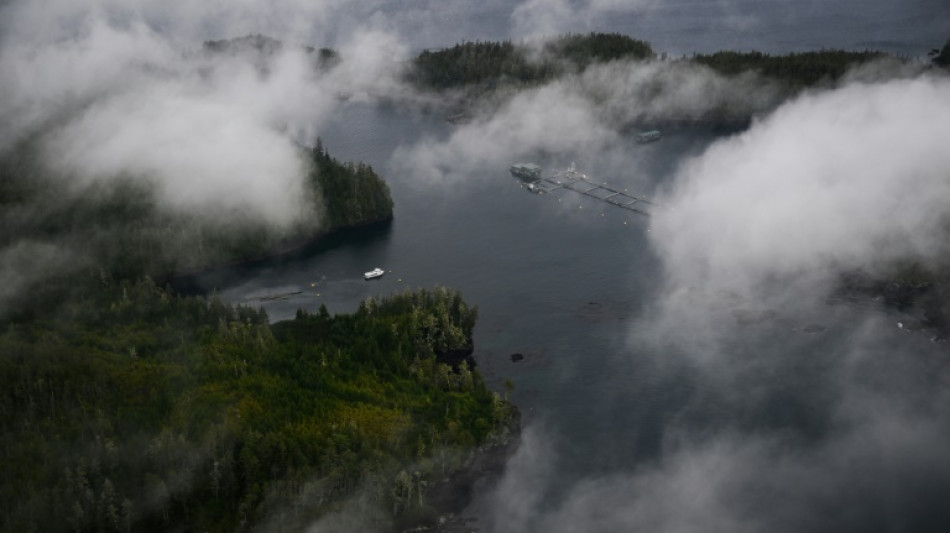
Viewed from above, Canada's newest Marine Protected Area (MPA) is deceptively simple: stretches of blue Pacific Ocean waters and a few patches of green forest.
But beneath the surface of the area known as the Great Bear Sea, off Vancouver Island, lies an area so rich in biodiversity it has been dubbed the "Galapagos of the North." It may also serve as a model for how to protect marine life elsewhere.
In July, the federal government took an unprecedented step, designating an area roughly as large as Greece an MPA. Previously, protected areas were significantly smaller in size.
The step followed years of consultation and aimed to pioneer a new model of holistic protection, which would see marine populations shielded from a variety of harmful activities across an enormous stretch of ocean, hopefully allowing them to replenish and thrive.
Crucially, the talks also involved a new approach to collaboration.
In addition to the government, fishing industry representatives and the indigenous communities who rely on the area's resources for their livelihoods worked together to develop a protection scheme that balances various interests.
"I am optimistic that we are going to be able to be a model for any future initiatives" on marine protection, said Danielle Shaw, chief of the Wuikinuxv nation, one of the indigenous communities in the area.
The UN COP Biodiversity Conference known as COP-16 opens in Cali, Colombia next week.
At the last conference, COP-15 held in Montreal in 2022, nations agreed to protect 30 percent of the seas by 2030, but there was no clear definition of what amounts to a protected area -- an uncertainty the Canadian model aims to help address.
- 'Species at risk' -
Around the Great Bear Sea, overfishing, pollution and warming waters caused by climate change have altered the area substantially.
Shaw told AFP that "recently there's been some years where we've had to close (fishing) all together for our own people," in order to protect vulnerable fish populations.
That is devastating for the remote community as it means "people haven't been able to stock up their shelves and their freezers for the winter," she said.
The area newly designated for official protection includes 64 species of fish, 70 seabird species, as well as whales, bears, wolves and ancient cedar forest. The seafloor also counts more than 47 underwater mountains, or seamounts.
"It's home to really unique ecosystems and species, but also there are species that are at risk," said Kate MacMillan, conservation director for the ocean program at the Canadian Parks and Wilderness Society - British Columbia.
Federal MPA guidelines aim to put a variety of new restrictions on the activities allowed across a vast marine area, including prohibitions on oil and gas exploration, mineral exploitation, waste disposal and the use of dredging gear, among others.
MacMillan described the MPA model as "an important tool," but warned it is not "a silver bullet."
"They don't stop everything. They won't solve every threat," she said.
Those threats are set to persist, especially with the region of British Columbia surrounding the MPA seeing an increase of maritime traffic, including shipments of liquefied natural gas.
Enforcement remains a challenge and the Canadian model aims to involve First Nations in monitoring potential violations, even if they won't have enforcement power.
- 'We have no choice' -
Bo Owadi, a member of the Wuikinuxv nation, said she spends most of her days on the water and is among those who will be working with police and researchers to document misconduct to assess the health of marine life.
She said her generation has "an ingrained sense of responsibility to take care of the land," and that joining forces with the government and others was inevitable.
"We have to come together," she told AFP. "We have no choice."
Chief Shaw agreed that collaborating on protection efforts, including by weighing the economic considerations of the fishing industry, could help foster more durable support.
"The hope is, in the long term, a stronger ecosystem means more food sources for humans and also the stronger economy," she said.
B.Clarke--ThChM