Revolution over but more protests than ever in Bangladesh / Photo: © AFP

The solo protest of Bangladeshi hunger striker Mahbubul Haque Shipon is hard to spot among the six other demonstrations under way on the same busy thoroughfare.
Shipon's country is emerging from a summer of upheaval after student protests sparked a revolution, culminating in autocratic premier Sheikh Hasina's August ouster.
Hasina's government imposed draconian restrictions on public assembly until it was no longer able to contain anger over rights abuses and widening inequality after 15 years of rule.
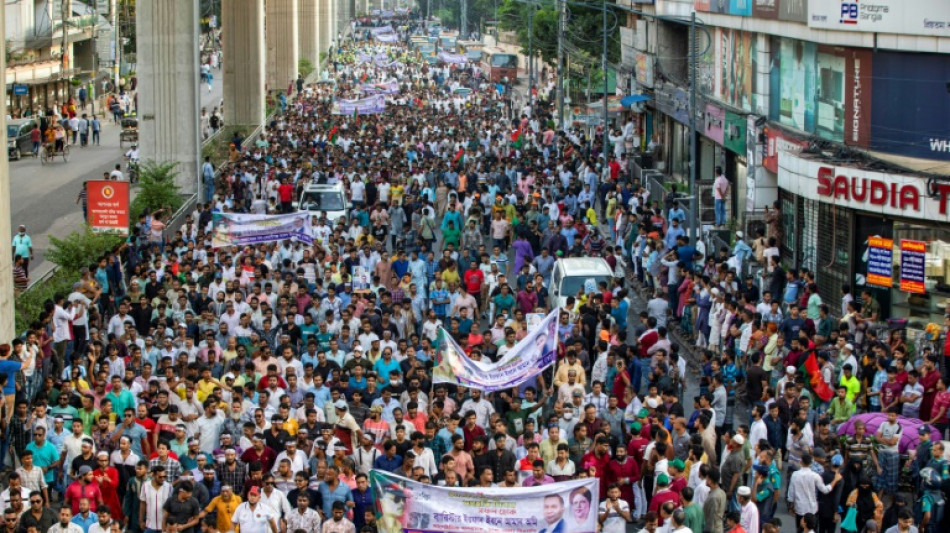
While many are hopeful that Hasina's overthrow heralds a brighter future, the end of those restrictions has led to more protests in the capital Dhaka since her departure than during the uprising against her.
"I am here for the sake of the nation and for a great cause," Shipon told AFP, four days after he dragged a mattress onto the kerb to begin his one-man campout.
The 47-year-old is calling for the ouster of Bangladesh's president -- still in office, but suspect as a Hasina appointee -- and the scrapping of the constitution he blames for the country's past woes.
As he vowed not to eat again until his demands were met, his words were drowned out by the clamour of numerous other protests being staged around him.
Government land office employees nearby chanted demands for higher pay and benefits, next to another man waging his own solitary protest urging protections for Sufi religious shrines.
Further down was a group forming a human chain to highlight the case of a university official subjected to anonymous death threats. They left, and another group took their place to condemn a vandal attack on a nearby mosque.
Non-stop demonstrations near the Secretariat building -- the administrative nerve centre of Bangladesh's government -- have been gratefully catered to by the area's street vendors.
"Since the protests began, demand has skyrocketed," Arup Sarkar, who makes a living selling an assortment of red and green Bangladesh flags, told AFP.
"Protesters need flags of various shapes and sizes."
- 'A standstill' -
But police are less enthused about the sheer number of protests across the sprawling megacity, home to more than 21 million people.
Many rallies are staged on Dhaka's arterial roads, already notorious for their near-constant gridlock.
On a day in November, garment workers protesting over unpaid wages held sit-ins on highways that halted transport into the city's industrial fringes.
At the same time, an unrelated student procession blocked the road outside the Secretariat for hours.
Determining the precise number of protests held in Dhaka in a given week is impossible, because rules requiring prior permission from police are routinely disregarded.
"Some follow the rules, while many don't, so we do not really know the actual number of demonstrations," police officer Muhammad Talebur Rahman told AFP.
"We encourage people to speak up, but at the same time, we would ask that they avoid inconveniencing Dhaka's residents."
- 'Fascist party' -
The interim government that replaced Hasina, led by Nobel Peace Prize laureate Muhammad Yunus, has been largely tolerant of protests since it came to office.
One notable exception is on demonstrations called by the remnants of Hasina's Awami League party, which it fears is attempting to regroup after many of its top leaders were arrested following her downfall.
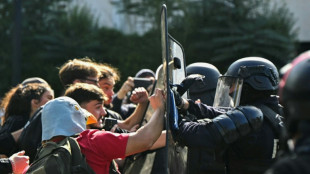
The party's attempts to stage a rally this month were quickly thwarted by police and student demonstrators, who occupied the site of the planned mobilisation to drive off supporters.
"The Awami League, in its current form, is a fascist party," Yunus' press secretary Shafiqul Alam told AFP.
"This fascist party will not be allowed to hold protest rallies in Bangladesh."
- 'Fundamental rights' -
Other signs suggest growing concern within the government over the constant disruptions caused by protests.
Last month, it urged Bangladeshis to stop staging rallies that blocked traffic and instead hold them in parks -- a directive that has been largely ignored.
Yunus's administration had already banned rallies outside his official residence weeks after he took power, evidently out of frustration that constant crowds were impeding its work.
On some occasions, the protests have also threatened to provoke disorder and violence.
Islamist groups last month announced plans to besiege the offices of two newspapers after accusing them of disrespecting their faith, prompting the government to deploy soldiers to protect staff inside.
And earlier this month, a crowd attempted to storm Dhaka's most prestigious theatre to stop the staging of a popular play.
A member of the production had allegedly posted a Facebook comment criticising the protesters that ousted Hasina, and authorities had to halt the play to ensure the safety of performers.
"Freedom of speech and assembly are fundamental rights," Abu Ahmed Faizul Kabir of legal rights group Ain O Salish Kendra told AFP.
"But they should not infringe upon the rights of others."
S.Wilson--ThChM