Copenhagen takes on its biggest climate threat -- water / Photo: © Ritzau Scanpix/AFP

In low-lying Copenhagen where rising sea levels, groundwater and rainfall pose a risk to infrastructure, the Danish capital is trying to adapt and protect urban areas from climate change.
And Karens Minde park is one of the more than 300 projects underway to stop the city being submerged.
A former marsh once shunned by people living nearby, it has been redesigned with attractive meandering paths and grassy areas that double up to collect rain and floodwater.
Built on the shores of the Oresund strait, Copenhagen is hugely vulnerable to water.
"All of Copenhagen is in a way in negotiation with the water cycle because it is wetland that has been drained," said Anna Aslaug Lund, a University of Copenhagen architecture professor.
The threat is three-pronged. The Danish meteorological institute predicts rainfall will increase by 30 to 70 percent by 2100; the sea will also rise by an average of 42 cm (16.5 inches) by the end of the century and groundwater is also rising.
Only a trained eye would notice the special water defences put in place in Karens Minde park.
At one of the bends in the brick path there are three pipe outlets for rainwater collected in the neighbourhood. It then flows to an artificial lake a few hundred metres (yards) away.
- Inventing solutions -
The water is cleaned as it is "transported across the trickle meadow, and then here we can store it and finally let it out back into the harbour," said Ditte Reinholdt Jensen of Hofor, the water and utility provider that designed the park with the city.
Grass, shrubbery and trees border the artificial lake.
As well as managing floodwater, Copenhagen wants to "improve biodiversity, fight heat island effects and make green areas" for people to meet in, Jan Rasmussen, of the city's climate adaptation project, told AFP.
The city began work in 2008 to identify its weak spots, primarily from flooding.
"The biggest challenge is that we don't have a manual," there are no tried and tested methods "of how to do this", he said.
So solutions vary from neighbourhood to neighbourhood.
After torrential rain on July 2, 2011 -- when a staggering 135.4 mm (5.3 inches) fell in just two hours causing major damage -- the city decided to develop a network of rainwater tunnels.
These serve as underground rain "highways" in areas where urban development does not allow for direct water management.
"If we don't have the space, we need pipes to divert the water out of the city," Rasmussen said.
- Model for other cities -
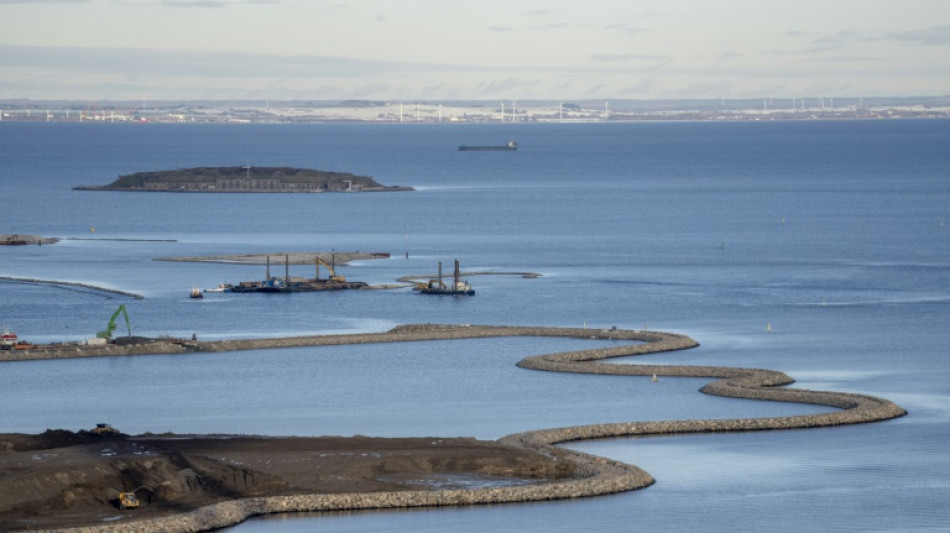
Some projects, like the construction of the artificial Lynetteholmen island that would serve as a dyke against rising sea water, have failed to win unanimous support.
But the city has generally been applauded for its adaptation efforts.
"They are definitely trying," researcher Isabel Froes, an associate professor at Copenhagen Business School, told AFP.
"They're engaging with researchers, with the public to create more awareness."
Even with the city's population growing, one of their strongest principles is to avoid building in the lowest-lying areas.
"There are still many places in Copenhagen that have problems in relation to flooding from rainwater," Aslaug Lund said.
"We should avoid development in low-lying areas."
Copenhagen's efforts are seen as a model for what other cities can do, Froes said.
"I call Denmark a prototype country because of the scope of it," she said.
"It's a great place to test new measures, to engage citizens around them also, because Denmark is a trust society. We tend to follow rules and we like rules as well, which is not (the case) everywhere."
O.Tse--ThChM