G20 leaders warn declining cooperation threat to global stability / Photo: © AFP

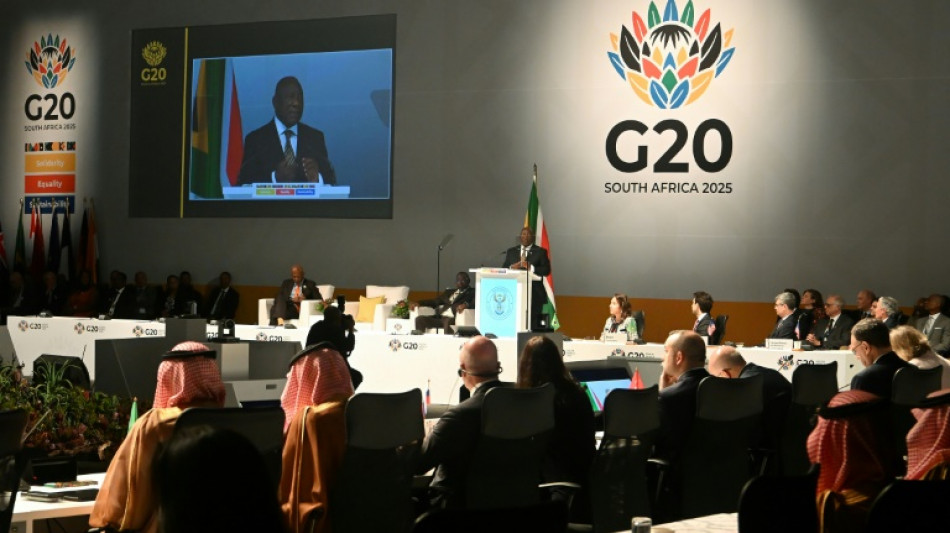
The erosion of multilateralism threatens global growth and stability, President Cyril Ramaphosa warned Wednesday at a G20 finance meeting in South Africa marked by the absence of the US treasury secretary.
Two days of talks by finance ministers and central bank governors from the world's leading economies opened a week after a meeting of G20 foreign ministers was snubbed by US Secretary of State Marco Rubio, who complained of its "anti-Americanism".
"The erosion of multilateralism presents a threat to global growth and stability," Ramaphosa said in his opening address.
"At this time of heightened geopolitical contestation, a rules-based order is particularly important as a mechanism for managing disputes and resolving conflict," he said.
The G20, a grouping of 19 countries as well as the European Union and the African Union, is divided on key issues, from Russia's war in Ukraine to climate change, with world leaders scrambling to respond to drastic policy shifts from Washington since the return of US President Donald Trump.
"Multilateral cooperation is our only hope of overcoming unprecedented challenges, including slow and uneven growth, rising debt burdens, persistent poverty and inequality, and the existential threat of climate change," Ramaphosa said.
Italian Foreign Minister Giancarlo Giorgetti echoed the call, warning that geopolitical tensions risked further slowing global economy, especially in poorer nations.
"Protectionism, trade barriers and political uncertainty threaten growth and global value chains, increasing production costs and inflation and weakening economic resilience," he said.
South Africa holds the rotating G20 presidency this year and has chosen the theme "Solidarity, Equality, Sustainability".
The US, the group's richest member and next to take over the presidency, has been pushing for an America First strategy and on Wednesday said tariffs on EU products would be 25 percent in general.
Trump also signalled that initially paused duties on US neighbours Canada and Mexico will take effect in April.
US Treasury Secretary Scott Bessent said on February 20 he would not attend the Cape Town meeting because he was too busy.
Just days before, Rubio had accused the G20 hosts of choosing an "anti-American" theme. It followed criticism from Trump about land reforms in South Africa aimed at redressing inequalities perpetrated during the apartheid era.
The United States was represented at the Cape Town meeting by Federal Reserve chief Jerome Powell.
The Group of 20 brings together the world's largest economies, which together represent around 85 percent of global GDP, to discuss international economic and financial stability.
- 'Dangerous world' -
While some countries chose not to send their finance ministers, those of Britain, Switzerland and France were present as was European Central Bank chief Christine Lagarde.
Defence spending was a topic of discussion at the meeting as EU members grapple with pressure to become less dependent on the US for security.
"We must come up with a recovery plan for defence," said Giorgetti. "If each country starts acting independently, the costs to the state will inevitably increase irrationally."
British Prime Minister Keir Starmer pledged Tuesday to boost defence spending to 2.5 percent of the economy by 2027, as uncertainty reigns over Trump's commitment to European security while he pursues talks with Russia over its war in Ukraine.
Ramaphosa said South Africa's priorities for its year at the helm of the G20 included strengthening the resilience of poorer countries to cope with natural disasters.
Another priority is to help developing economies cope with debt repayments, he said.
"Debt service costs are increasingly crowding out spending on education, healthcare and other social services, as well as infrastructure needed for economic development," he said.
The UN Development Programme said in a statement ahead of the meeting that ballooning debt service payments in the poorest countries had reached alarming levels and called for "bold, immediate" action to overhaul the borrowing system.
Interest payments exceed 10 percent of government revenue in 56 developing countries, nearly double the number from a decade ago, it said.
Without better access to more effective debt relief, many developing countries risk long-term solvency crises, it warned.
C.Smith--ThChM