Germany resorts to coal amid Russia gas supply cuts / Photo: © AFP

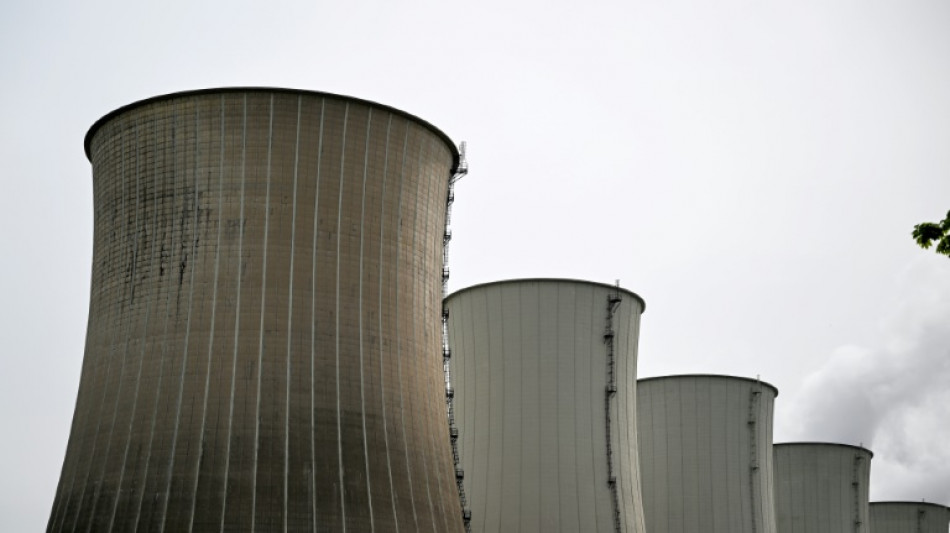
Germany announced emergency measures on Sunday to ensure its energy needs after a drop in Russian gas supplies, including reverting to coal in what it called a "bitter but indispensable" step.
"To reduce gas consumption, less gas must be used to generate electricity. Coal-fired power plants will have to be used more instead," the economy ministry said in a statement.
The move comes after Moscow turned up the pressure on Western allies by sharply reducing flows of natural gas in its pipelines to western Europe, driving up energy prices.
Gazprom said the supply reductions via the Nord Stream pipeline are the result of repair work, but EU officials believe Moscow is punishing allies of Ukraine, where Russian forces launched an invasion in February.
Berlin's temporary recourse to coal marks a turnaround for Chancellor Olaf Scholz's ruling coalition of Social Democrats, Greens and the liberal FDP, which has vowed to wind down its coal usage by 2030.
"It's bitter but indispensable for reducing gas consumption," economy and climate minister Robert Habeck said in a statement.
A law outlining the new measures is due to be adopted in the coming weeks, he added.
Under the measures, the government will allow the use of coal-fired power plants that are currently considered in reserve for use only as a last resort.
The steps also include an "auction" system for the sale of gas to manufacturers, which, according to the government, will help bring down consumption by the powerful sector.
A procedure similar to a tender process will see the state offer a remuneration to companies promising the biggest energy savings.
The mechanical engineering industry group VDMA welcomed the move.
"That allows you to direct the reduction at the place where the damage is less significant," it said in a statement.
Funding will also be released to finance the filling up of tanks before winter.
Habeck stressed that the increased use of coal was only "provisional" in the face of the "worsening" situation in the gas market.
- ' Showdown' -
Gazprom has said that exports to countries that did not belong to the former Soviet Union were down 28.9 percent between January 1 and June 15 compared to the same period last year.
After cutting daily gas supplies to Germany and Italy, Gazprom CEO Alexei Miller said last week that Moscow will play by its own rules.
"Our product, our rules. We don't play by rules we didn't create," he said during a panel discussion at the Saint Petersburg International Economic Forum in Russia's second city.
Germany is among several European countries that are highly reliant upon Russian gas for their energy needs and countries are racing to replenish their reserves for the following winter.
Berlin has managed to reduce the share of its natural gas supplied by Russia from 55 percent before the invasion to 35 percent -- thanks to increased deliveries from countries like Norway and the Netherlands, and through liquefied natural gas contracts (LNG).
But Habeck acknowledged that the situation was "serious".
"We shouldn't be under any illusions, we are in a showdown with (Russian President Vladimir) Putin," he said.
The German government is also emphasising the need to save energy, including by manufacturers. "Every kilowatt counts," the minister said.
It has launched a big awareness campaign directed at the general public and business.
The EU wants the gas storage infrastructures of its member states to be filled to at least 80 percent of their capacity by November.
In Germany, reserves are currently at 56 percent which is higher than the average of recent years, Habeck said, adding that for now supply was assured.
But he warned that the "absolute priority" was making sure that gas reserves were full for winter.
Since Russia's invasion of Ukraine, EU countries have scrambled to wean themselves off Russian energy but are divided about imposing a natural gas embargo because of the heavy reliance of several member states on Moscow's supplies.
J.Liv--ThChM