Slingshots v drones: Moscow puts the frighteners on Moldova / Photo: © AFP

Palanca felt the full horror of the war in neighbouring Ukraine one December day.
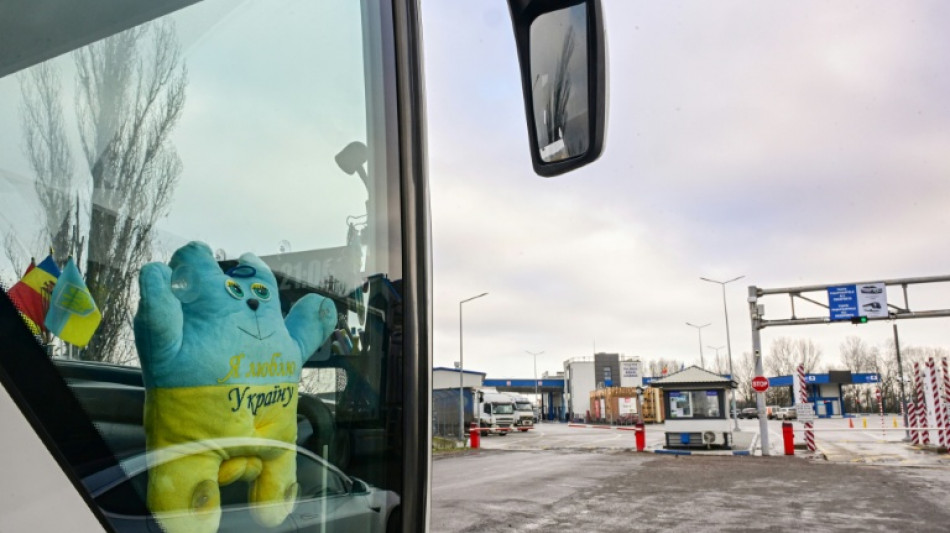
A mother was killed and her three children wounded by a Russian drone as they drove over the border bridge across the river Dniester into this previously quiet corner of southeast Moldova, Ukrainian officials said.
"We are right across from there, and it terrified us," villager Maria Morari, 62, told AFP of the two days of attacks on the crossing.
Like many in Palanca, she is worried that the war could spill over. The border village is on the strategic road running to the Ukrainian port of Odesa.
Moldova's airspace has been violated dozens of times since the invasion four years ago, with several Russian missiles and drones crashing on its territory, the latest an Iranian-designed Shahed suicide drone, carrying 50 kilos of explosives, which came down 12 kilometres northwest of Palanca last week.
The small, poor and divided ex-Soviet republic -- that is neither part of NATO nor the European Union -- had to temporarily close its airspace in November.
Even on quiet days, Palanca's 2,000 people have to do without GPS as the Ukrainians jam communications during air raid alerts across the border.
Some nights when the strikes get really loud, Morari said she has thought about taking shelter in the basement or even "abandoning everything we have worked for" and fleeing to the capital Chisinau.
- Defending ourselves 'with pitchforks' -
"My house often shakes" during the attacks on the other side of the river, 68-year-old pensioner Valeriu Voloh told AFP.
"A fool could easily make a mistake pushing the launch button and then it falls somewhere in Palanca," he said.
Yet Moldova is virtually defenceless, he added.
"We must defend ourselves, but with what? With a pitchfork? With a slingshot?" he said.
The country -- one of Europe's poorest -- spends only 0.6 percent of its GDP on defence, a percentage that Finance Minister Andrian Gavrilita admitted places Moldova "at the tail end on the planet".
It ranks 134 in terms of military strength out of the total 145 countries in the Global Firepower list.
Nosatii has said that the country has 20 Soviet-era radars which can't detect drones.
Moldova received a Thales radar from France in 2023 and is expecting another radar this year, acquired with EU money from a 20-million-euro package meant to finance air defence launchers and missiles.
Moldova has long been torn between Europe and Russia. While it hopes to conclude EU accession talks by 2028, less than a quarter of its 2.4 million people would vote to join NATO, according to a recent survey.
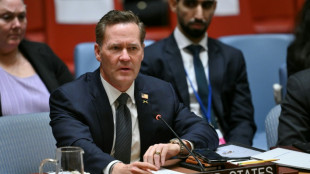
"Investments in defence are investments in peace, stability, and confidence," pro-EU President Maia Sandu wrote on Facebook last week after visiting a new military site under construction near Chisinau.
Sandu has frequently accused Moscow of interfering in the country's affairs, especially during elections.
- 'Turbo ladybug' -
But with pro-Russian politicians mocking drone incursions and constantly criticising army spending as they warn of the "militarisation" of Moldova, not everyone is convinced that its defences must be boosted.
In northern Moldova, the village of Cuhurestii de Jos suddenly found itself in the international spotlight in November when a drone marked with a red letter "Z" was found on a roof in a walnut orchard. It was later put on display outside Moldova's foreign ministry when Moscow's envoy was summoned over the crash, which came on a day several other drones crossed into the country's airspace.
But some in the village are deeply sceptical of whether Russia had anything to do with the drone, including the local priest, Sebastian Resetnic, 35.
Affiliated with the Orthodox church aligned to the Moscow Patriarchate, he wondered if the drone "came on its own or (if) someone brought it".
For 41-year-old Mariana Racu, the drone was "placed carefully, slowly" on the roof to cause panic or test people's reaction.
She echoed talking points by pro-Russian politicians who called the drone "a turbo ladybug" and accused Sandu's pro-EU ruling party PAS of having "gently placed" the drone on the roof "to cover up recent scandals".
- 'Psychological war' -
"There is still little understanding within (Moldovan) society that investment in defence is... not money thrown away," military expert Artur Lescu told AFP in Chisinau, adding "misinformation narratives" made some people "hide from reality".
The repeated drone incursions -- like those in Romania or Poland -- are part of "a psychological war" designed to "sow unrest", he said.
"Moldova has no capacity whatsoever to stop these missiles," said Armand Gosu, a Romanian historian who specialises in former Soviet countries.
If Moscow wins in Ukraine, "Russia could very easily destabilise Moldova", he said. "Everything could collapse like a house of cards."
H.Ng--ThChM