Ukraine war exhibition opens at Berlin Nazi bunker museum / Photo: © AFP

A permanent exhibition about the Ukraine war opens at a former Nazi bunker in Berlin on the fourth anniversary of Russia's invasion Tuesday, to encourage continued support for Kyiv.
Weapons, other objects brought back from the front lines and testimonies from the conflict have been collected by the Berlin Story Bunker, a museum housed in a former World War II air raid shelter in the German capital.
The aim is to raise public awareness about the "physical reality" of the conflict, museum curator Wieland Giebel told AFP.
The Ukrainian section is being added to the existing permanent exhibitions focusing on Nazism and Germany from 1945 to the present day.
"Visitors to Germany can't really imagine what war is like -- we want to show it to them," said Giebel, standing in front of the huge entrance to the bunker, built in 1943.
Germany is one of Ukraine's key backers; it is the biggest supplier of weapons to Kyiv in Europe and a major diplomatic ally.
It also hosts around 1.3 million Ukrainian refugees.
Most Germans support Ukraine in its fight against Russia, but arms deliveries are a divisive topic in a country with a strong pacifist tradition due to its dark Nazi past.
The far-right Alternative for Germany (AfD) party, which is Russia-friendly, has also seen a surge in support in recent times, coming second in national polls last year.
But Chancellor Friedrich Merz's government regularly reminds Germans that if Ukraine is defeated, Russia could turn its attention to other parts of Europe.
Such fears have prompted his coalition to launch a rearmament drive that aims to transform the long-neglected German military into the largest conventional force in Europe.
- 'Ukraine is Europe's shield' -
Giebel is determined that Ukraine should continue to receive support from Germany and the wider European Union, in particular through arms deliveries.
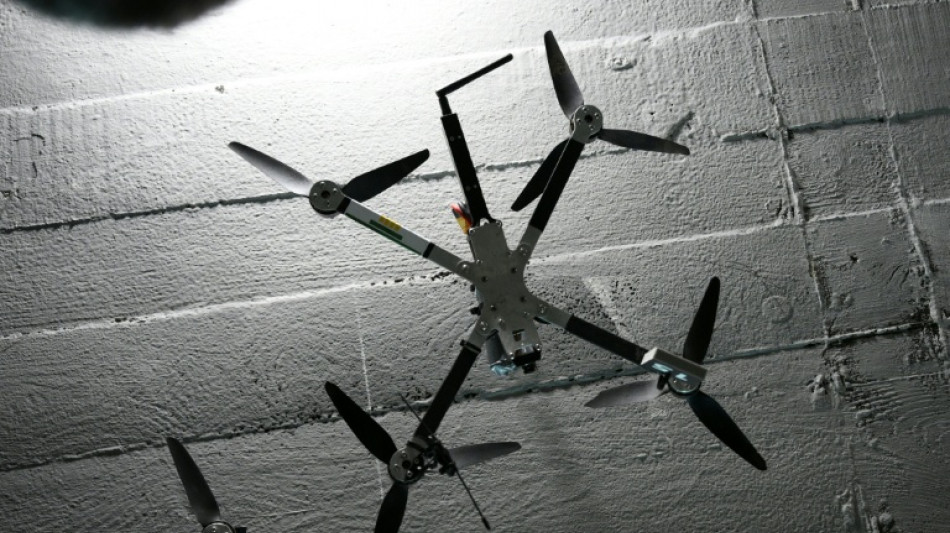
In the exhibition rooms, around 20 wrecks of Russian drones are suspended from the ceiling above a car gutted by a bomb.
The vehicle was transported to the site from Kherson, a city in southern Ukraine occupied by Russian forces in 2022 before being recaptured by Ukraine. It remains under constant Russian fire.
Personal testimonies seek to form connections with German visitors, such as a quote from Roman Schwarzman, a Holocaust survivor: "Hitler wanted to kill me because I am Jewish; Putin wants to kill me because I am Ukrainian."
On the exhibition's information panels, the war in Ukraine is fitted into a narrative constructed around the idea of "Russian imperialism".
It is linked to the Soviet Union's invasion of eastern Poland in 1939, the crushing of the Prague Spring, and even Russia's 2015 military intervention in Syria to support Bashar al-Assad, the country's longtime ruler who was deposed in late 2024.
The private Berlin museum had already made a name for itself on the first anniversary of the Ukraine war by displaying, in front of the Russian embassy in Berlin, the wreck of a destroyed tank that had been towed from the outskirts of Kyiv.
Attending an event Monday a day ahead of the new exhibition's public opening, Hanna Maliar, a former Ukrainian deputy defence minister, welcomed Germany's "military, political, and also cultural support".
Such backing was key, she stressed, as "Ukraine is the shield of Europe".
S.Davis--ThChM