'Not my son's fault': The women bearing the children of Sudan's war rapes / Photo: © AFP

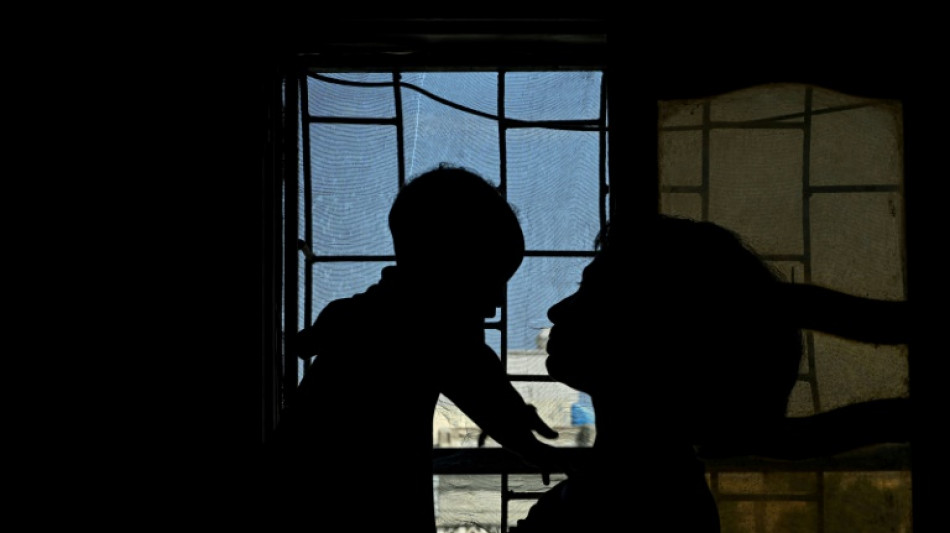
The baby bouncing on Nesma's lap has his mother's smile and her curious eyes, but nothing she says of the three paramilitary fighters who gang raped her two years ago in Sudan's capital.
"I saw their faces. I remember them," the 26-year-old university graduate told AFP.
Baby Yasser is one of thousands of children born to rape survivors in the three years of fighting between Sudan's army and the paramilitary Rapid Support Forces.
Nesma's family fled Khartoum early in the war, but a year in, she went back to retrieve the birth, graduation and death certificates they needed to start again.
RSF fighters stopped her bus among the factories of Khartoum North, ordered everyone out and separated the men from the women.
Nesma passed out as the third fighter raped her. "When I came to, it was morning. I went outside and one of the men from the bus was shot dead on the ground."
Her story matches the modus operandi of RSF fighters, who UN experts have accused of systematic sexual violence.
Such was the trauma that Nesma -- whose name we have changed at her request -- only realised she was pregnant after five months.
She wasn't sure if she was going to keep the baby until the eve of her caesarean section.
"Then I just couldn't let him go," she told AFP as Yasser nuzzled into the crook of her neck.
"It's not my son's fault, just like it is not mine," she said.
"I couldn't handle the thought of him going through pain, or ending up in a bad home."
- Double injustice -
Rape is being used as a weapon "of war, dominance, destruction and genocide" in Sudan "to destroy the fabric of society and change its makeup," UN special rapporteur Reem Alsalem told AFP.
Sudan's state minister for social affairs Sulaima Ishaq al-Khalifa said the vast majority of victims -- who she said number thousands -- do not report their ordeal, with many abortions and adoptions also going undocumented.
In a single town in Darfur, "there are hundreds and hundreds of girls, all raped, none of whom have been to a clinic, most of whom are pregnant," the UN's top official in Sudan, Denise Brown, told AFP.
The shame many are made to feel in an often conservative society doubles the injustice of what was done to them, argued Alsalem, UN special rapporteur on violence against women and girls.
"Families have abandoned their daughters, husbands have divorced their wives who were victims of rape.
"We're revictimising.... and it's not their fault."
While most families raise the children in secret, other women have been cast out, shunned or even accused of colluding with the RSF.
In a straw shelter in the Darfur refugee town of Tawila, 20-year-old Hayat told AFP her story as she tried to rock her four-month-old son to sleep.
She was raped while fleeing the RSF's capture of the Zamzam refugee camp last year near El Fasher. The paramilitaries killed over 1,000 people in their attack on the camp, which sheltered over half a million people, and conducted a systematic rape operation targeting non-Arab ethnic groups, according to the UN.
RSF fighters posted videos saying raping women from other ethnic groups "honours" their bloodline.
- War waged on women's bodies -
Hayat arrived in Tawila shell-shocked. With her cherub-cheeked son fussing in her arms, she said: "I just want a better future for him. I don't want him to grow up like us."
War has been fought on women's bodies across Darfur for decades. Mass rape was one of the crimes against humanity charges levelled at the Janjaweed, the government-armed militias that scarred the region with ethnic violence in the 2000s and from which the RSF later emerged.
Halima was first raped as a teenager by herders while working in the fields, then while fleeing to Zamzam in 2022, and a third time as she escaped the refugee camp.
Now 23, she was "saved" from having to carry a third child of rape by the emergency contraceptives doctors in Tawila gave her.
AFP met several rape survivors in Tawila who fell pregnant while escaping the fall of El-Fasher, the capital of North Darfur, to the RSF in October. The paramilitaries killed at least 6,000 people in three days there.
Rawia, 17, watched them kill half the group she was fleeing with on the street, before "three of them took everything we had and raped us." She is now five months pregnant.
Alia, 25, was dragged back to El-Fasher with four other girls and held captive for six weeks "until we escaped in the middle of the night". She then had a miscarriage.
Magda, 22, lost her husband in a rocket attack, then watched as her brother was shot dead on the road to Tawila.
She has pondered the life growing inside her since she was raped five months ago. "When I found out I was pregnant, I thought, 'If I lose this baby, it will be another thing for me to grieve. But if he lives, it's fate, I'll raise him.'"
Not everyone can make that leap.
Some came to Gloria Endreo -- a midwife with Doctors Without Borders -- "already bleeding, after trying for unsafe abortions."
She has seen hundreds of survivors in her two months in Tawila, many pregnant as a result of rape.
"Some of them couldn't say it," she told AFP. "Some of them who gave birth, in spite of themselves, have that resentment and disconnection. They can't show (their babies) love or attention. And then these women are forced to raise this child, a constant reminder of what happened to her."
- 'Both mother and father' -
In the blistering heat of a Khartoum afternoon, Fayha's five-month-old slept soundly, clinging to an AFP journalist's finger.
"But of course he keeps me up all night," the 30-year-old mother said, half-laughing as she told AFP how she has "to be both mother and father".
She was raped by a civilian while his friend -- an off-duty army soldier carrying a gun -- stood guard.
"I was terrified he'd shoot me," she said, tears flowing at the memory.
Sexual violence and abuse of detained women by the army is underreported for fear of retaliation, the UN has warned.
But observers say it is not comparable to the RSF's systematic strategy.
"The RSF rapes to subjugate society, to displace and dominate; army soldiers rape because they know they'll get away with it," one activist told AFP on condition of anonymity.
Fayha -- whose name she asked us to change -- found out she was pregnant at the end of her first trimester, and has barely slept since.
"Sometimes I get upset with him, it's time to nurse and I'm sick of him. Recently I've started to feel more of a motherly instinct. But motherhood itself is just so hard."
Fayha, Nesma and countless others have struggled to get their children birth certificates, without which they cannot get medical treatment, an education or social services.
Legally "this shouldn't be an issue", with emergency "procedures in place", according to Khalifa, a veteran activist turned minister.
But conservative social norms and bureaucratic collapse are failing many.
"What is going to be the legal status of these children?" the UN's Brown asked, "it's a long term issue. How will they be cared for with the families? What will this do to communities?"
- 'This RSF baby' -
The wounds are particularly raw in conservative Al-Jazira state, southeast of Khartoum, where many families have left their villages for good to escape the trauma of gang rape, forced marriage and sexual slavery inflicted on them by the RSF.
Lighter-skinned girls -- from different ethnic groups than RSF fighters' -- were "explicitly requested and treated as trophies or spoils of war," according to women's rights coalition SIHA.
When the army recaptured central Sudan last year, the government relaxed abortion restrictions in an apparent attempt to mitigate the impact of the RSF's sexual violence.
"There was a leniency regarding abortion, but many didn't know, and you had to get a permit. And because of the stigma, many wouldn't report it," said Alsalem.
It did not help that Abu Aqla Kaykal -- who led the RSF's Al-Jazira forces during much of the violence -- is now one of the army side's top commanders in the region, having switched sides with many of his fighters.
One volunteer in Al-Jazira told AFP she helped 26 women and girls get abortions, most of them "after taking a lot of very dangerous drugs without supervision".
Among those forced to carry to term, Khalifa remembers a 16-year-old, whose mother stepped in the second her grandson was born.
"She scooped him up, handed him to us and said, 'We're not taking this RSF baby home.' His mother never held him."
"She just wanted the entire thing erased." Khalifa's team placed the baby with a foster mother.
Other families lost both daughters and grandchildren. Many women and girls forcibly married to RSF fighters were taken with them back to Darfur when they retreated.
Those whose families were unable to pay ransoms are still held captive.
In the South Darfur state capital Nyala, "there are dozens of girls and women whose children are now a year or two old, and they're trapped," Khalifa said.
- Silver lining -
Others were left behind in Khartoum and Al-Jazira after the RSF's retreat, already pregnant or with a child in tow.
"Some families kept the children to raise," Khalifa said, with the displacement the war caused ironically helping them "pass the baby off as a sibling, or a war adoptee the family took in."
"Many didn't have the same neighbours around, so she could give birth without anyone knowing."
Not even the minister knows how many adoptions have taken place. Many happen informally, especially in eastern Sudan where fostering children in need is an established practice.
But "procedures are easy", she said, as the government tries to place as many abandoned children with families as possible.
Even so, the UN's Alsalem is worried that children are placed "with very little follow up and vetting".
Nesma said she could never bear the thought of letting Yasser go even when she was depressed and sleep-deprived in the trenches of newborn babydom.
Yasser is now 13 months and she thinks only two steps ahead: how to get a well-paid job with her degree and how to do right by her son.
"He deserves a good life," she said, holding his little hands as he tried to take his first steps.
Z.Huang--ThChM