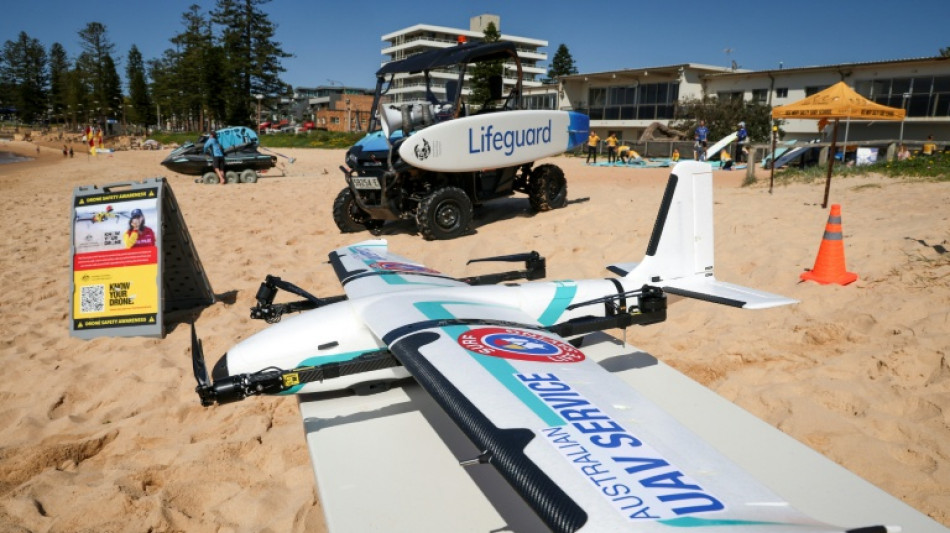
Australia boosts shark-spotting drone coverage at Sydney beaches / Photo: © AFP/File

Australia will expand shark-spotting drone coverage year-round at beaches across Sydney and beyond from July 1, authorities said Sunday, following a rise in attacks and sightings.
The New South Wales state government said it would invest an additional Aus$34 million ($23 million) in drones, harnessing artificial intelligence and emerging technologies in a "major scale-up" of coverage.
The decision will boost investment in "shark mitigation" in the state to Aus$120 million over the next two years, the government said in a statement.
"While no one can ever promise no shark interactions, this investment is about putting more eyes in the sky so we can spot sharks earlier and give people a clear heads-up when they're in the water," said the state's premier, Chris Minns.
"More drones in the air means we're getting a better picture of what's happening offshore and it means we'll get better at seeing them."
The enlarged drone monitoring deployment comes after a string of incidents in the state.
A local teacher swimming at Sydney's popular Coogee beach was mauled by a shark on June 13.
She was left in intensive care in hospital where her family says she has faced multiple surgeries including the amputation of her arm.
In the past week, sightings of a great white shark at Bondi Beach led to beach closures for three days in a row.
A 12-year-old boy died after he was bitten by a shark while playing in Sydney Harbour in January and a bull shark killed a woman swimming at a remote beach north of Sydney in November.
- Shark siren -
In other parts of the country, three divers were fatally mauled in separate incidents between May and June this year -- two in Western Australia and the third in Queensland.
Under the expanded drone watch run by the state's lifesavers, about 70 beaches in New South Wales -- including 38 in Sydney -- will be monitored every day.
"Surf Life Saving NSW will prioritise beaches with high numbers of swimmers, surfers and paddlers including in Sydney and the North Coast, where shark incidents have become more frequent," the state government said.
Drone flight hours will be extended from dawn to dusk, and coverage will include popular beaches that are not patrolled by lifesavers.
Australian scientists believe rising ocean temperatures are shifting sharks' migratory patterns, which may be contributing to an uptick in attacks.
There have been nearly 1,300 shark incidents around Australia since 1791, of which more than 260 resulted in death, according to a database of shark encounters with humans.
Australia has a multi-layered approach to protection against sharks, including old-fashioned nets which have come under criticism for trapping other marine species and their questionable effectiveness.
Lifeguards and drones can also spot the marine predators and alert beachgoers to the danger, often with a siren.
In New South Wales, sharks are lured by bait to "SMART drumlines" where they are then tagged with devices that can be detected when they swim past one of dozens of listening stations along the coast.
That sets off an alarm on a SharkSmart app, giving beachgoers an instant notification on their mobiles and smart watches.
M.Zhou--ThChM