CMSC
-0.3100

Iran launched strikes on Wednesday targeting American interests in Bahrain, Kuwait and Jordan after vowing "severe punishment" in response to US attacks, including one that the Iranian Red Crescent said left four people dead at a wedding celebration.
US Marine Corps base Camp Titin in Jordan was targeted for an "intense ballistic missile attack", Iran's Revolutionary Guards said early Wednesday, according to Iranian news outlet Tasnim.
The Jordanian army said it intercepted 10 ballistic missiles fired from Iran, and did not confirm any injuries or hits on the US training camp located on the Gulf of Aqaba, near the borders with Israel and Saudi Arabia. Three other missiles landed in remote areas, it said.
Missile and drone attacks were also reported in Kuwait, where the army said they were responding to Iranian hostilities, and AFP reporters in Bahrain heard alert sirens for airborne attacks go off early Wednesday.
The latest round of conflict began when Washington hit Iranian targets on Sunday, the first known strikes in several weeks, after which Tehran's forces targeted US troops in Jordan and the United Arab Emirates, and projectiles struck two oil tankers in unclaimed attacks.
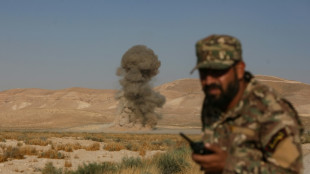
More US strikes came on Tuesday, with Iranian state television reporting that explosions were heard in the country's south along the strategic Strait of Hormuz waterway and on an island in the Gulf, and that US forces hit an airport in the southern province of Kerman.
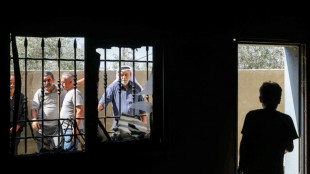
The Iranian Red Crescent said shrapnel from a US missile attack hit a home where a wedding celebration was taking place in the city of Kuhestak, killing four people, including a child, and wounding more than 50.
And the official IRNA news agency said that "four projectiles hit areas within the counties of Chabahar and Konarak," without specifying whether there was any damage.
Asked if the US military had received any credible reports of civilian casualties from the Tuesday strikes, US Central Command (CENTCOM) spokesperson, Captain Tim Hawkins, said "the US military never targets civilians, unlike the IRGC," referring to Iran's Revolutionary Guards.
CENTCOM had earlier said on X that the strikes followed "recent attempted attacks by (the Revolutionary Guards) against commercial shipping in the Strait of Hormuz and against American service members deployed to the region".
US President Donald Trump said the "large and powerful" strikes were "in retaliation for the Iranians' failed attempt at adding sea mines to the Strait" and "the Iranians shooting eight missiles, all successfully knocked down, at our Military Base in Jordan".
Earlier, Revolutionary Guards spokesman Hossein Mohebi warned on X that Washington "will regret its new attacks", saying that "severe punishment awaits the aggressors".
- Tankers attacked -
After six months of war, the foes remain at an impasse, with Iran keeping the Strait of Hormuz closed and the United States persisting with a counter-blockade of Iranian ports.
Washington said its forces attacked Iranian rocket launchers on the island of Larak on Sunday to prevent Tehran from planting mines in the strait's key shipping lanes.
The Middle East war began in late February with the US and Israeli attacks on Iran that killed its supreme leader Ayatollah Ali Khamenei.
A fragile ceasefire between the United States and Iran collapsed after attacks on commercial ships in the Strait of Hormuz, through which one-fifth of world oil supplies flowed before the war.
Greek maritime risk management firm Marisks said Tuesday that two crude tankers were hit by "unknown projectiles" late the previous day.
One of the incidents had been publicised earlier by the United Kingdom Maritime Trade Operations agency, which added that no casualties or environmental effects had been reported.
Iran's President Masoud Pezeshkian meanwhile vowed Tuesday to match any US move to return to a deal aimed at ending the war.
He also warned that a return by the United States to "a policy of pressure and threats could derail the path of diplomacy".
Z.Ma--ThChM