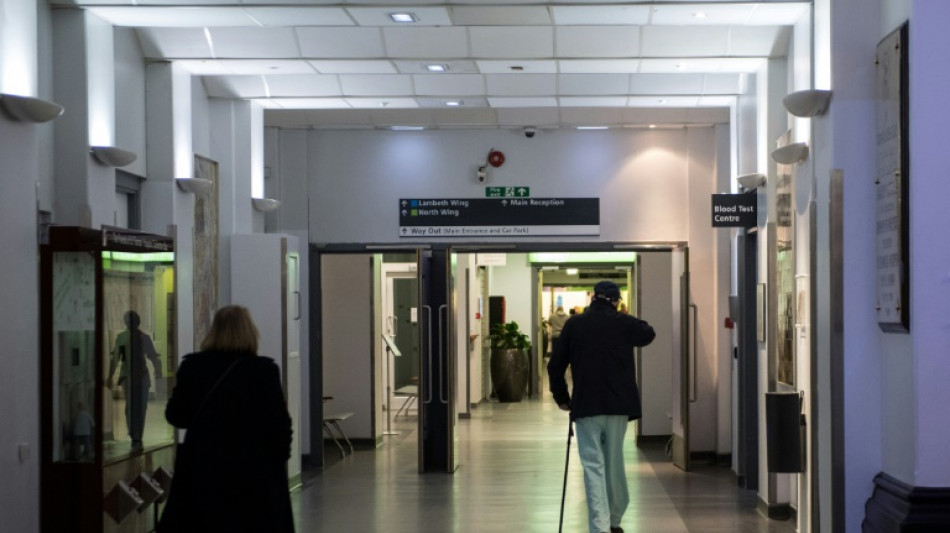
High energy prices threaten UK hospital services / Photo: © POOL/AFP

UK hospitals bosses on Thursday warned that patient care may have to be cut to offset huge increases in energy bills over the winter months.
Most hospital groups contacted by medical journal the BMJ said they expected bills to at least double, as the price hikes kicked in.
The NHS Confederation, which represents health providers in the publicly funded National Health Service, said there would be a knock-on effect.
"The gap in funding from rising inflation will either have to be made up by fewer staff being employed, longer waiting times for care or other areas of patient care being cut back," the group's senior acute lead, Rory Deighton, told the BMJ.
"A failure to properly compensate the NHS for inflation will only heighten pressure on our health service as we move towards a winter that we know will be particularly challenging this year."
UK inflation is at a 40-year high of 10.1 percent with dire predictions that rates could climb to 18 percent or more next year.
Last week households were told that their gas and electricity bills would go up by 80 percent from October, with further rises set for next year.
But non-domestic customers are not covered by the energy price cap, making them more vulnerable to the surge in wholesale prices.
Businesses across the board have warned the huge increases could force many to close if the government does nothing to help.
The BMJ said bosses at Great Ormond Street Children's Hospital in London told it that they expected an energy bill of about £650,000 ($756,000) a month in January and February next year.
At the same time last year, it was about £350,000.
Sheffield Children's Hospital in northern England has anticipated a rise of nearly 130 percent in its total bill for 2022-23.
But Nottingham University Hospital in central England has budgeted for a 214-percent rise in gas and electricity this year, it added.
NHS England set aside £1.5 billion to cover an expected £485-million increase in energy bills. But the estimate was made in May and prices have risen again, prompting concern it may not be enough.
- 'Breaking point' -
The situation only adds to a growing catalogue of problems faced by the publicly funded National Health Service.
The NHS, created in 1948 to provide free healthcare and paid out of general taxation, is a cherished British institution.
But the system, which costs £190 billion a year to run and employs some 1.2 million people in England alone, has long faced significant under-funding.
The NHS Confederation's Deighton said the UK's new prime minister, to be installed next week, needs to act immediately to offset cost of living increases.
"The NHS needs at least £3.4 billion to make up for inflation during this year alone, and that is before we face a winter of even higher wholesale energy prices," he added.
Deighton's boss, chief executive Matthew Taylor, told The Guardian this week that the NHS was "in its worst state in living memory".
Problems include chronic staff shortages, overcrowded accident and emergency departments, ambulance delays and lengthy waiting lists for treatment.
One experienced A&E doctor wrote on the UnHerd website this month that the service was "at breaking point", with patients at risk.
Health experts say the crisis is decades in the making but has been exacerbated by squeezed budgets over the last 12 years of Conservative government, Brexit and the coronavirus pandemic.
Nurses and junior doctors are currently being balloted for strike action as part of widespread industrial action over below-inflation pay offers.
NHS health and social care workers were hailed as heroes during the pandemic but in a sign of the crisis, some hospitals have set up food banks for staff struggling with the rising cost of living.
One NHS manager told LBC radio on Tuesday he was planning to convert spare hospital space into "warm rooms" for employees unable to afford winter heating at home.
T.Wu--ThChM