Tight race seen as Denmark calls November election / Photo: © Ritzau Scanpix/AFP

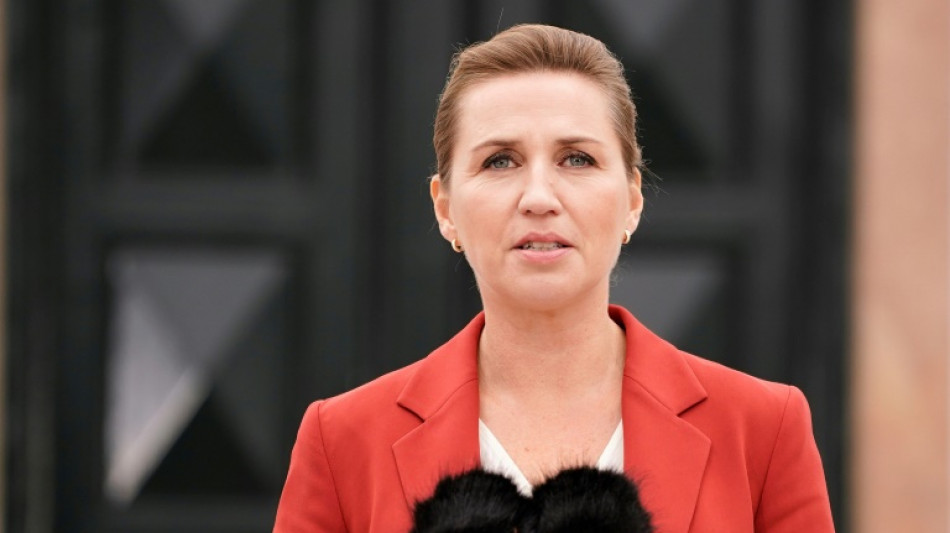
Denmark's Prime Minister Mette Frederiksen on Wednesday called an early general election for November 1, with her left-wing bloc neck and neck in the polls against the right and far right.
"I have today informed the queen that elections to the Folketing (parliament) will be held," the Social Democratic leader told a press conference.
In office since June 2019, Frederiksen had to call elections by June 2023, under the Danish system.
But she had faced an ultimatum from a small party propping up her minority government demanding that she call elections before parliament's first debate on October 6 after reconvening from the summer break on Tuesday.
Recent polls give the "red bloc" of several left-wing parties, led by the Social Democrats, between 47 and 50 percent of the vote, compared to 49 to 50 percent for the "blue bloc", which includes the Liberal Party, the Conservative Party and three nationalist right-wing parties.
- Mink scandal -
In terms of seats, neither bloc has a majority in parliament.
Frederiksen, 44, has embraced strong curbs on migration in the name of defending the welfare state, but she is still the favourite among voters to remain in her post.
According to a recent poll, 49.4 percent want her to serve a second term, compared to 27.4 percent for the Conservative Party leader Soren Pape Poulsen and 23.3 percent for the Liberals' Jakob Ellemann-Jensen, both of whom are challenging her for the post.
Frederiksen, a social media enthusiast, is now grappling with spiralling inflation caused by the European energy crisis.
While her overall management of the country during the pandemic was praised, she has faced a barrage of criticism for her handling of the "mink affair".
Faced with a worrying outbreak of a variant of the novel coronavirus in minks -- whose furs Denmark was previously the world's largest exporter -- the centre-left leader ordered the culling of more than 15 million animals in November 2020.
Shortly after, but with the cull already under way, it was established that the government had no legal basis for imposing the cull on farmers, dealing a heavy blow to the prime minister.
In early July, a commission appointed to determine blame for the affair reprimanded Frederiksen but without any other consequence.
- Fragmented politics -
The matter has nevertheless turned into a political saga, in the land of the hit political TV drama "Borgen" -- which is also the nickname for Christiansborg, the seat of the Danish parliament and government.
Following the reprimand, the Radical Left party demanded the prime minister call early elections, or they would topple the government by joining the opposition in a vote of no-confidence.
"This is the first time that a legal scandal has led more or less directly to elections, even if 'the fall of the government' is happening in slow motion," constitutional expert Frederik Waage told AFP.
In early September, the six opposition parties also published an open letter demanding that the prime minister call elections.
The Danish political landscape is more fragmented than ever, with polls suggesting that a total of 13 parties are likely to win seats in parliament and 45 percent of voters claiming to have changed parties since the last election.
Even the far right, long dominated by the Danish People's Party (DF) which has supported several right-wing governments in the past, is now splintered, with two other rival nationalist formations emerging in recent years, the New Right and the Denmark Democrats.
The latter -- whose name mimics that of the Swedish far-right Sweden Democrats -- is a new party founded by former immigration minister Inger Stojberg. It is credited with a nine-percent share of votes in the polls.
Stojberg is back in the political spotlight after serving two months with an electronic ankle bracelet last year for a decision she took to separate asylum seeker spouses when one of them was underage -- a move later ruled to be illegal.
Voter turnout is traditionally high in Denmark. In the 2019 election, 84.6 percent of some 4.2 million voters turned out to vote.
Q.Moore--ThChM