The China Mail - England v Australia: The Ashes explained

USD -
AED 3.6725
AFN 63.999686
ALL 80.906293
AMD 358.057859
ANG 1.789785
AOA 918.000314
ARS 1550.81894
AUD 1.427613
AWG 1.8025
AZN 1.697809
BAM 1.740036
BBD 2.003559
BDT 123.852313
BGN 1.747831
BHD 0.375489
BIF 2986.971974
BMD 1
BND 1.274158
BOB 12.010284
BRL 5.488704
BSD 0.994627
BTN 94.291535
BWP 13.758962
BYN 2.955771
BYR 19600
BZD 2.000463
CAD 1.395615
CDF 2312.503383
CHF 0.816545
CLF 0.024951
CLP 982.000185
CNY 6.680904
CNH 6.671335
COP 3246.51
CRC 451.369275
CUC 1
CUP 23.871582
CVE 98.090062
CZK 21.62802
DJF 177.122067
DKK 6.64475
DOP 59.93942
DZD 135.51674
EGP 54.898498
ERN 15
ETB 163.249788
EUR 0.88908
FJD 2.244199
FKP 0.745268
GBP 0.741665
GEL 2.5894
GGP 0.745268
GHS 11.593068
GIP 0.745268
GMD 74.000444
GNF 8810.408095
GTQ 7.60417
GYD 208.500872
HKD 7.845925
HNL 26.733444
HRK 6.76901
HTG 130.391459
HUF 323.298499
IDR 18155.1
ILS 3.15988
IMP 0.745268
INR 94.655098
IQD 1507.908268
IRR 1883408.498708
ISK 121.090097
JEP 0.745268
JMD 157.767152
JOD 0.709008
JPY 158.311502
KES 129.940046
KGS 87.449903
KHR 4062.751587
KMF 441.000185
KPW 899.999961
KRW 1340.070281
KWD 0.31074
KYD 0.8289
KZT 450.213523
LAK 22401.124415
LBP 89543.21849
LKR 330.928532
LRD 169.096028
LSL 16.579341
LTL 2.95274
LVL 0.60489
LYD 6.382657
MAD 9.775113
MDL 17.99331
MGA 4515.451812
MKD 54.761312
MMK 2099.52083
MNT 3598.087189
MOP 8.038145
MRU 40.373975
MUR 47.089785
MVR 15.455036
MWK 1724.696212
MXN 18.592195
MYR 4.0671
MZN 63.910117
NAD 16.579341
NGN 1343.960063
NIO 36.606575
NOK 9.217075
NPR 150.864442
NZD 1.77767
OMR 0.38451
PAB 0.994823
PEN 3.447319
PGK 4.462633
PHP 63.64102
PKR 275.144822
PLN 3.915004
PYG 5942.170819
QAR 3.625947
RON 4.752198
RSD 104.584034
RUB 81.923877
RWF 1471.080115
SAR 3.762939
SBD 8.051718
SCR 13.780348
SDG 601.494895
SEK 9.735335
SGD 1.278125
SHP 0.745545
SLE 22.910163
SLL 20969.504398
SOS 568.442122
SRD 37.541947
STD 20697.981008
STN 21.797153
SVC 8.703542
SYP 13001.999685
SZL 16.563773
THB 33.637503
TJS 9.14122
TMT 3.51
TND 2.972103
TOP 2.40776
TRY 50.022203
TTD 6.742932
TWD 32.879001
TZS 2646.897038
UAH 45.412048
UGX 4202.39832
UYU 39.987723
UZS 11861.722948
VES 890.036595
VND 25712
VUV 119.472328
WST 2.779309
XAF 583.198137
XAG 0.019244
XAU 0.000247115849
XCD 2.70255
XCG 1.79257
XDR 0.707052
XOF 583.198137
XPF 106.091876
YER 236.175013
ZAR 16.46859
ZMK 9001.200161
ZMW 20.156742
ZWL 321.999592
SSP 5745.96484
MXV 2.092765
  • RYCEF

    0.4000

    19.71

    +2.03%

  • CMSC

    0.0000

    20.4

    0%

  • BTI

    0.4200

    56.05

    +0.75%

  • BP

    0.2800

    44.43

    +0.63%

  • RBGPF

    1.6000

    67

    +2.39%

  • RIO

    -0.1500

    94.41

    -0.16%

  • AZN

    -0.4300

    166.15

    -0.26%

  • GSK

    0.4600

    49.7

    +0.93%

  • BCE

    -0.4100

    20.56

    -1.99%

  • NGG

    -0.2500

    75.24

    -0.33%

  • VOD

    -0.0400

    16.58

    -0.24%

  • RELX

    -0.4500

    33.07

    -1.36%

  • BCC

    -0.5500

    76.59

    -0.72%

  • CMSD

    -0.0300

    20.27

    -0.15%

  • JRI

    -0.2500

    10.77

    -2.32%

England v Australia: The Ashes explained
England v Australia: The Ashes explained / Photo: © AFP/File

England v Australia: The Ashes explained

England and Australia will renew their storied rivalry on Friday in the first Test of the latest Ashes series at Edgbaston.

Text size:

But what exactly are the Ashes and why does the contest inspire such passion between two otherwise friendly countries on opposite sides of the world?

AFP Sport explains the history behind one of sport's oldest and most intense contests.

The facts

The "Ashes" is the name given to the series of Test matches played between England and Australia, generally every two years.

Test matches each last a maximum of five days, with the overall winner of the series presented with a replica of the historic Ashes urn.

Australia are the current holders after winning the 2021/22 edition on home soil.

The upcoming series is the first Ashes contest to be staged in England since the 2019 series ended in a 2-2 draw.

England's last series victory came in 2015.

'The body will be cremated'

The use of the term "Ashes" dates from England's first home defeat against Australia at The Oval in London in 1882.

Following Australia's victory, Sporting Times journalist Reginald Shirley Brooks printed a mock obituary of English cricket, saying: "The body will be cremated and the ashes taken to Australia".

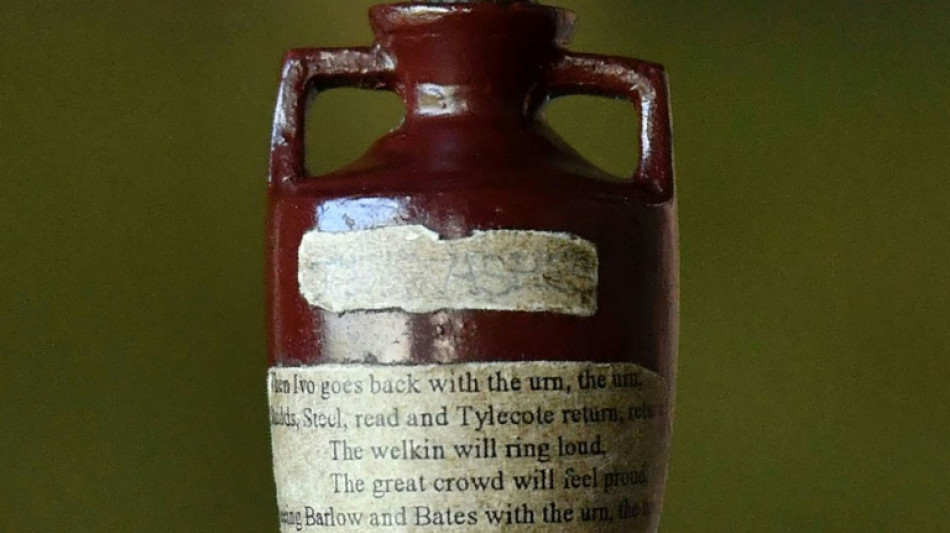
A few weeks later, England set off to tour Australia and, after a "social" match near Melbourne on Christmas Eve 1882, English captain Ivo Bligh was given a small terracotta urn as a symbol of the "Ashes" he had sworn to win back.

Standing at little more than 10 centimetres (four inches) tall, the original Ashes urn resides in the Marylebone Cricket Club museum at the famous Lord's ground in London.

In 1998, Bligh's 82-year-old daughter-in-law said the urn contains the remains of her mother-in-law's veil, while others claim it is filled with the ashes of a burnt cricket bail.

Bloody faces and bitter feuds

Few sporting rivalries are fiercer than the Ashes, with battered bodies and bloodied faces all part of more than a century of feuding.

In the 1932/33 "Bodyline" series, England deliberately aimed fast deliveries at Australian batters' bodies rather than the stumps in the hope they would get out trying to protect themselves.

The aggressive tactic was seen as unsporting, but unrepentant England won the series to the fury of their bruised opponents.

The Ashes has provided some of cricket's most memorable moments.

The 1981 series was named "Botham's Ashes" after all-rounder Ian Botham's feats with bat and ball inspired England to victory.

Australia spinner Shane Warne provided one of the most iconic moments in Ashes history when his incredible "ball of the century" bowled Mike Gatting in 1993.

Arguably the greatest Ashes series was played in 2005 when England, powered by Andrew Flintoff and Kevin Pietersen, beat an Australia team packed with stars.

The tone for that series -- England's first Ashes triumph since 1986/87 -- was set early in the first Test when Steve Harmison's bouncer left Australia batsman Ricky Ponting with blood streaming down his face.

T.Luo--ThChM