The China Mail - All regions experienced water extremes in 2021: UN

USD -
AED 3.672501
AFN 65.476319
ALL 80.577087
AMD 365.860022
ANG 1.789783
AOA 917.000049
ARS 1491.641402
AUD 1.41719
AWG 1.80125
AZN 1.697547
BAM 1.696734
BBD 2.015728
BDT 122.843622
BGN 1.696366
BHD 0.377075
BIF 2998
BMD 1
BND 1.280933
BOB 11.734342
BRL 5.209199
BSD 1.000794
BTN 95.468406
BWP 13.472141
BYN 3.009929
BYR 19600
BZD 2.012779
CAD 1.393785
CDF 2273.000256
CHF 0.813435
CLF 0.023231
CLP 914.290229
CNY 6.743198
CNH 6.745195
COP 3125.44
CRC 449.393362
CUC 1
CUP 26.5
CVE 96.097828
CZK 21.014198
DJF 178.218681
DKK 6.484485
DOP 58.508892
DZD 132.931669
EGP 50.176501
ERN 15
ETB 161.890385
EUR 0.86745
FJD 2.21445
FKP 0.740201
GBP 0.741685
GEL 2.610218
GGP 0.740201
GHS 11.074982
GIP 0.740201
GMD 73.501678
GNF 8774.999914
GTQ 7.628599
GYD 209.38434
HKD 7.84715
HNL 26.830633
HRK 6.535402
HTG 130.904201
HUF 315.257502
IDR 17864
ILS 2.962965
IMP 0.740201
INR 95.43215
IQD 1311.025996
IRR 1374587.497717
ISK 123.34037
JEP 0.740201
JMD 158.336044
JOD 0.708968
JPY 159.5095
KES 129.495898
KGS 87.449705
KHR 4047.49823
KMF 426.999894
KPW 900.000294
KRW 1418.620493
KWD 0.30861
KYD 0.834053
KZT 465.738688
LAK 22580.225386
LBP 89621.102036
LKR 333.612392
LRD 181.645463
LSL 16.144844
LTL 2.95274
LVL 0.604889
LYD 6.374682
MAD 9.270009
MDL 17.373275
MGA 4310.91697
MKD 53.37538
MMK 2099.846019
MNT 3597.969266
MOP 8.08894
MRU 40.105493
MUR 47.149798
MVR 15.460087
MWK 1735.471585
MXN 17.04444
MYR 4.086397
MZN 63.900861
NAD 16.144914
NGN 1360.849945
NIO 36.82706
NOK 9.513135
NPR 152.752101
NZD 1.71006
OMR 0.384513
PAB 1.000794
PEN 3.377159
PGK 4.42879
PHP 61.374501
PKR 277.795321
PLN 3.7389
PYG 5973.01084
QAR 3.635016
RON 4.547598
RSD 101.752974
RUB 83.076096
RWF 1474.223003
SAR 3.743113
SBD 8.064941
SCR 14.023536
SDG 600.498289
SEK 9.568698
SGD 1.28072
SHP 0.740866
SLE 24.550085
SLL 20969.499227
SOS 571.973887
SRD 37.722498
STD 20697.981008
STN 21.254723
SVC 8.756946
SYP 13001.999906
SZL 16.149252
THB 33.194033
TJS 9.247366
TMT 3.5
TND 2.934571
TOP 2.40776
TRY 47.773796
TTD 6.786763
TWD 32.126993
TZS 2645.502939
UAH 44.737671
UGX 3715.737009
UYU 40.062929
UZS 11954.697077
VES 765.397601
VND 26075
VUV 118.594628
WST 2.730779
XAF 569.073676
XAG 0.015463
XAU 0.000229
XCD 2.70255
XCG 1.803702
XDR 0.707757
XOF 569.06874
XPF 103.462785
YER 237.149877
ZAR 16.21045
ZMK 9001.20247
ZMW 18.815201
ZWL 321.999592
  • RBGPF

    0.0000

    72.16

    0%

  • CMSD

    0.0100

    21.6

    +0.05%

  • CMSC

    0.0000

    21.45

    0%

  • BCE

    0.0250

    23.155

    +0.11%

  • BCC

    -0.4000

    83.85

    -0.48%

  • NGG

    0.3950

    81.075

    +0.49%

  • RIO

    -2.8050

    98.415

    -2.85%

  • JRI

    -0.0210

    12.689

    -0.17%

  • GSK

    0.1850

    50.485

    +0.37%

  • RELX

    -0.5500

    34

    -1.62%

  • AZN

    -0.7600

    157.74

    -0.48%

  • BP

    -0.0750

    42.855

    -0.18%

  • RYCEF

    0.1700

    20.71

    +0.82%

  • VOD

    0.1100

    16.2

    +0.68%

  • BTI

    1.5450

    57.385

    +2.69%

All regions experienced water extremes in 2021: UN
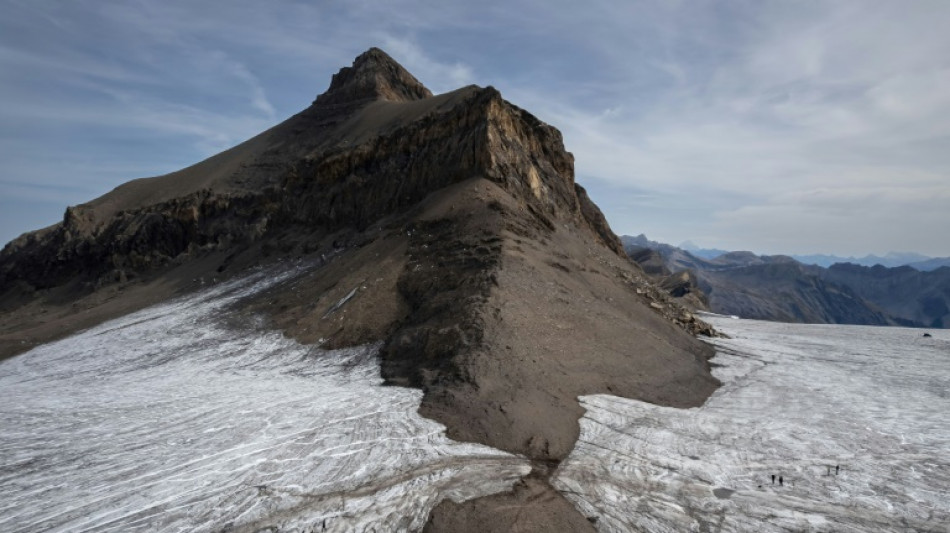
All regions experienced water extremes in 2021: UN / Photo: © AFP

All regions experienced water extremes in 2021: UN

All regions of the world saw water extremes last year -- both floods and droughts -- and billions of people had insufficient freshwater, the United Nations said on Tuesday.

Text size:

Large areas of the planet recorded drier than normal conditions in 2021, the UN's World Meteorological Organization said in its first annual State of Global Water Resources report.

The report assesses the effects of changes in the climate, environment and society on the Earth’s freshwater resources -- limited supplies that are under growing demand -- so they can be managed better.

"The impacts of climate change are often felt through water -- more intense and frequent droughts, more extreme flooding, more erratic seasonal rainfall and accelerated melting of glaciers -- with cascading effects on economies, ecosystems and all aspects of our daily lives," said WMO head Petteri Taalas.

"And yet there is insufficient understanding of changes in the distribution, quantity and quality of freshwater resources."

Some 3.6 billion people face inadequate access to freshwater at least one month per year. That is forecast to rise to more than five billion by 2050, the report said.

Between 2001 and 2018, 74 percent of all natural disasters were water-related, according to UN studies.

In 2021, all regions saw devastating water extremes, the report said.

There were record-breaking floods in western Europe and the Amazon, while water levels in rivers in Paraguay and southern Brazil dropped to an all-time low.

The report assessed streamflow -- the volume of water flowing through a river -- over a 30-year period.

Drops in water volumes were twice as widespread as rises.

Major river basins in the Americas and central Africa saw water volumes shrink. Rivers in northern India and southern Africa saw above average increases.

- Frozen resources -

Terrestrial water storage -- all water on the land surface and in the subsurface -- shrank more than it grew, the report said.

Negative hotspots included Patagonia, the Ganges and Indus headwaters, and the southwestern United States.

"Some of the hotspots are exacerbated by (over-extraction) of groundwater for irrigation. The melting of snow and ice also has a significant impact in several areas, including Alaska, Patagonia and the Himalayas," the WMO said.

The world’s biggest natural reservoir of freshwater is the cryosphere -- glaciers, snow cover, ice caps and permafrost -- and changes to this reservoir affect food production, health and the natural world, the report said.

Around 1.9 billion people live in areas where drinking water is supplied by glaciers and snow melt but these glaciers are melting increasingly fast, it stressed.

It urged authorities to speed up the introduction of drought and flood early warning systems to help reduce the impact of water extremes.

S.Wilson--ThChM