The China Mail - Tiny meteorite may have caused coolant leak from Soyuz capsule

USD -
AED 3.672496
AFN 64.501784
ALL 81.582896
AMD 360.987939
ANG 1.789785
AOA 917.999892
ARS 1513.250902
AUD 1.437599
AWG 1.8
AZN 1.69594
BAM 1.74671
BBD 2.012735
BDT 123.371781
BGN 1.747831
BHD 0.377596
BIF 2992.404453
BMD 1
BND 1.281553
BOB 11.707653
BRL 5.047896
BSD 0.999357
BTN 95.144703
BWP 13.728493
BYN 3.0198
BYR 19600
BZD 2.010066
CAD 1.420145
CDF 2312.499459
CHF 0.827967
CLF 0.02504
CLP 985.519711
CNY 6.69275
CNH 6.691875
COP 3197.63
CRC 455.473044
CUC 1
CUP 23.983889
CVE 98.47771
CZK 21.69425
DJF 177.955203
DKK 6.655785
DOP 61.203074
DZD 134.36195
EGP 53.070978
ERN 15
ETB 163.232787
EUR 0.89042
FJD 2.264551
FKP 0.754659
GBP 0.754535
GEL 2.596549
GGP 0.754659
GHS 11.657639
GIP 0.754659
GMD 74.000028
GNF 8791.365814
GTQ 7.636833
GYD 209.011214
HKD 7.84724
HNL 26.830935
HRK 6.7079
HTG 130.869501
HUF 323.918032
IDR 17929.5
ILS 3.0976
IMP 0.754659
INR 94.986803
IQD 1515.08791
IRR 1790500.000031
ISK 121.510005
JEP 0.754659
JMD 158.71669
JOD 0.70901
JPY 157.69198
KES 129.829929
KGS 87.44976
KHR 4060.142989
KMF 441.999885
KPW 899.999961
KRW 1350.595016
KWD 0.31151
KYD 0.832883
KZT 451.509766
LAK 22502.503662
LBP 89549.999843
LKR 330.755285
LRD 170.384164
LSL 16.549612
LTL 2.95274
LVL 0.60489
LYD 6.425005
MAD 9.844365
MDL 17.887667
MGA 4500.252296
MKD 54.992163
MMK 2100.02843
MNT 3599.679138
MOP 8.078342
MRU 40.033223
MUR 47.609504
MVR 15.460159
MWK 1733.03028
MXN 18.48065
MYR 4.0815
MZN 63.909741
NAD 16.474534
NGN 1330.130525
NIO 36.776559
NOK 9.48377
NPR 152.229808
NZD 1.77663
OMR 0.384506
PAB 0.999379
PEN 3.440965
PGK 4.535955
PHP 63.045498
PKR 276.68889
PLN 3.89015
PYG 5702.318437
QAR 3.643224
RON 4.751303
RSD 104.544013
RUB 83.626116
RWF 1474.482346
SAR 3.677394
SBD 8.078071
SCR 13.856214
SDG 601.50203
SEK 9.95506
SGD 1.28198
SHP 0.754518
SLE 24.670285
SLL 20969.504398
SOS 571.137676
SRD 37.712026
STD 20697.981008
STN 21.88047
SVC 8.745048
SYP 13001.999685
SZL 16.467583
THB 33.538501
TJS 9.223858
TMT 3.5
TND 2.987126
TOP 2.40776
TRY 49.411001
TTD 6.796403
TWD 32.31401
TZS 2630.004973
UAH 44.915626
UGX 4037.706697
UYU 40.172371
UZS 11952.148538
VES 875.701598
VND 25878.5
VUV 119.372685
WST 2.788609
XAF 584.07701
XAG 0.01779
XAU 0.00024065738
XCD 2.70255
XCG 1.80126
XDR 0.707052
XOF 584.07701
XPF 106.509246
YER 236.199682
ZAR 16.550903
ZMK 9001.198289
ZMW 19.863078
ZWL 321.999592
SSP 5748.524006
MXV 2.086896
  • RYCEF

    0.4000

    19.71

    +2.03%

  • CMSC

    0.0000

    20.4

    0%

  • BTI

    0.4200

    56.05

    +0.75%

  • BP

    0.2800

    44.43

    +0.63%

  • RBGPF

    1.6000

    67

    +2.39%

  • RIO

    -0.1500

    94.41

    -0.16%

  • AZN

    -0.4300

    166.15

    -0.26%

  • GSK

    0.4600

    49.7

    +0.93%

  • BCE

    -0.4100

    20.56

    -1.99%

  • NGG

    -0.2500

    75.24

    -0.33%

  • VOD

    -0.0400

    16.58

    -0.24%

  • RELX

    -0.4500

    33.07

    -1.36%

  • BCC

    -0.5500

    76.59

    -0.72%

  • CMSD

    -0.0300

    20.27

    -0.15%

  • JRI

    -0.2500

    10.77

    -2.32%

Tiny meteorite may have caused coolant leak from Soyuz capsule
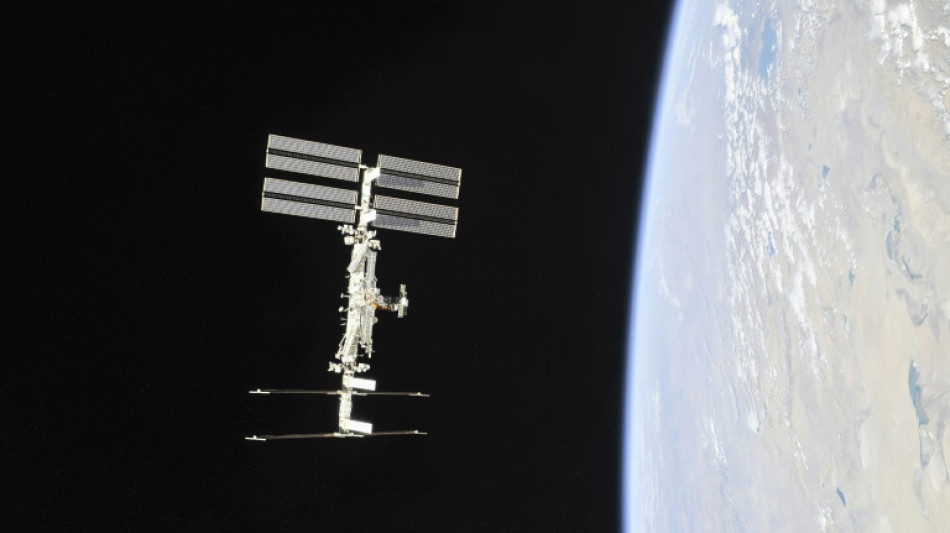
Tiny meteorite may have caused coolant leak from Soyuz capsule / Photo: © NASA/AFP

Tiny meteorite may have caused coolant leak from Soyuz capsule

Russian and NASA engineers were assessing a coolant leak on Thursday from a Soyuz crew capsule docked with the International Space Station (ISS) that may have been caused by a micrometeorite strike.

Text size:

The coolant leak forced the last-minute cancellation of a spacewalk by two Russian cosmonauts on Wednesday and could potentially impact a return flight to Earth by three crew members.

Russia's space corporation Roscosmos and the US space agency said the leak on the Soyuz MS-22 spacecraft did not pose any danger to the astronauts and cosmonauts aboard the ISS.

"The crew members aboard the space station are safe, and were not in any danger during the leak," NASA said.

It said ground teams were evaluating "the fluid and potential impacts to the integrity of the Soyuz spacecraft."

"NASA and Roscosmos will continue to work together to determine the next course of action following the ongoing analysis," NASA said.

The TASS news agency quoted Sergei Krikalev, a former cosmonaut who heads the crewed space flight program for Roscosmos, as saying that the leak may have been caused by a micrometeorite striking Soyuz MS-22.

"The cause of the leak may be a micrometeorite entering the radiator," TASS quoted Krikalev as saying. "Possible consequences are changes in the temperature regime."

"No other changes in the telemetric parameters of either the Soyuz spacecraft or the (ISS) station on the Russian or American segments have been detected," Krikalev said.

Soyuz MS-22 flew Russian cosmonauts Sergei Prokopyev and Dmitry Petelin and NASA astronaut Frank Rubio to the ISS in September.

It is scheduled to bring them back to Earth in March and another vessel would have to be sent to the ISS if Soyuz MS-22 is unavailable.

Prokopyev and Petelin had been making preparations for a spacewalk on Wednesday when the leak was discovered.

"The crew reported the warning device of the ship's diagnostic system went off, indicating a pressure drop in the cooling system," Roscosmos said. "At the moment, all systems of the ISS and the ship are operating normally, the crew is safe."

- White particles -

NASA said the leak had occurred on the "aft end" of Soyuz MS-22, which is secured to the ISS.

Dramatic NASA TV images showed white particles resembling snowflakes streaming out of the rear of the vessel for hours.

There are currently four other astronauts and cosmonauts aboard the space station in addition to Rubio, Prokopyev and Petelin.

NASA astronauts Josh Cassada and Nicole Mann, Japanese astronaut Koichi Wakata and Russian cosmonaut Anna Kikina were flown to the ISS in October aboard a SpaceX spacecraft.

Space has been a rare avenue of cooperation between Moscow and Washington since the start of Moscow's assault on Ukraine in February, and ensuing Western sanctions on Russia that shredded ties between the two countries.

The ISS was launched in 1998 at a time of increased US-Russia cooperation following their Space Race competition during the Cold War.

S.Davis--ThChM