The China Mail - Plastic litter in oceans overestimated, study suggests

USD -
AED 3.672496
AFN 65.501046
ALL 80.252226
AMD 365.710727
ANG 1.789783
AOA 917.999903
ARS 1491.769395
AUD 1.41205
AWG 1.80125
AZN 1.698743
BAM 1.691612
BBD 2.013139
BDT 122.6901
BGN 1.696366
BHD 0.376955
BIF 2988.136891
BMD 1
BND 1.278517
BOB 11.648756
BRL 5.177698
BSD 0.999563
BTN 95.325535
BWP 13.465905
BYN 3.040208
BYR 19600
BZD 2.010163
CAD 1.387435
CDF 2272.999932
CHF 0.811755
CLF 0.023199
CLP 913.060365
CNY 6.743204
CNH 6.742205
COP 3125.58
CRC 449.699638
CUC 1
CUP 26.5
CVE 95.374635
CZK 20.924999
DJF 177.983437
DKK 6.462995
DOP 58.506797
DZD 132.785851
EGP 50.278198
ERN 15
ETB 161.682098
EUR 0.864498
FJD 2.21345
FKP 0.740977
GBP 0.738775
GEL 2.610338
GGP 0.740977
GHS 10.94471
GIP 0.740977
GMD 73.552774
GNF 8780.192453
GTQ 7.626074
GYD 209.068696
HKD 7.84736
HNL 26.795144
HRK 6.513599
HTG 130.74072
HUF 313.438495
IDR 17786.6
ILS 2.94955
IMP 0.740977
INR 95.40895
IQD 1309.396638
IRR 1374587.50235
ISK 122.930286
JEP 0.740977
JMD 158.290121
JOD 0.708998
JPY 159.017499
KES 129.390025
KGS 87.450177
KHR 4044.370446
KMF 427.000406
KPW 900.000294
KRW 1410.929821
KWD 0.308681
KYD 0.832969
KZT 463.807353
LAK 22558.003762
LBP 89503.492118
LKR 332.608197
LRD 181.419508
LSL 16.169578
LTL 2.95274
LVL 0.60489
LYD 6.364419
MAD 9.270704
MDL 17.332336
MGA 4302.981815
MKD 53.221809
MMK 2099.413896
MNT 3597.332522
MOP 8.078535
MRU 40.139599
MUR 47.106766
MVR 15.449821
MWK 1733.128635
MXN 16.996355
MYR 4.086097
MZN 63.909774
NAD 16.169438
NGN 1360.060239
NIO 36.786998
NOK 9.45165
NPR 152.530263
NZD 1.698125
OMR 0.384497
PAB 0.999503
PEN 3.371291
PGK 4.490038
PHP 61.365012
PKR 277.622707
PLN 3.723485
PYG 5999.091833
QAR 3.643755
RON 4.532199
RSD 101.429673
RUB 84.076852
RWF 1469.849192
SAR 3.757224
SBD 8.048583
SCR 13.730989
SDG 600.495571
SEK 9.50945
SGD 1.27816
SHP 0.740866
SLE 24.494781
SLL 20969.499227
SOS 571.228392
SRD 37.722503
STD 20697.981008
STN 21.191847
SVC 8.745594
SYP 13001.999906
SZL 16.168082
THB 33.124502
TJS 9.230177
TMT 3.51
TND 2.930439
TOP 2.40776
TRY 47.88447
TTD 6.771876
TWD 31.943981
TZS 2649.957982
UAH 44.71415
UGX 3713.330537
UYU 40.047746
UZS 11898.82067
VES 770.109096
VND 26148.5
VUV 118.611996
WST 2.733656
XAF 567.350963
XAG 0.0154
XAU 0.000229
XCD 2.70255
XCG 1.801393
XDR 0.707052
XOF 567.380408
XPF 103.151367
YER 237.200572
ZAR 16.165065
ZMK 9001.203576
ZMW 18.889874
ZWL 321.999592
  • BCC

    -0.1200

    84.13

    -0.14%

  • RBGPF

    -0.8200

    71.34

    -1.15%

  • RIO

    -3.0200

    98.2

    -3.08%

  • CMSC

    0.0250

    21.475

    +0.12%

  • CMSD

    0.0000

    21.59

    0%

  • BCE

    0.1900

    23.32

    +0.81%

  • RELX

    0.1200

    34.67

    +0.35%

  • GSK

    0.1500

    50.45

    +0.3%

  • BTI

    1.5100

    57.35

    +2.63%

  • JRI

    -0.0300

    12.68

    -0.24%

  • AZN

    -1.2600

    157.24

    -0.8%

  • RYCEF

    -0.3900

    20.71

    -1.88%

  • BP

    -0.1000

    42.83

    -0.23%

  • VOD

    0.1300

    16.22

    +0.8%

  • NGG

    0.5200

    81.2

    +0.64%

Plastic litter in oceans overestimated, study suggests
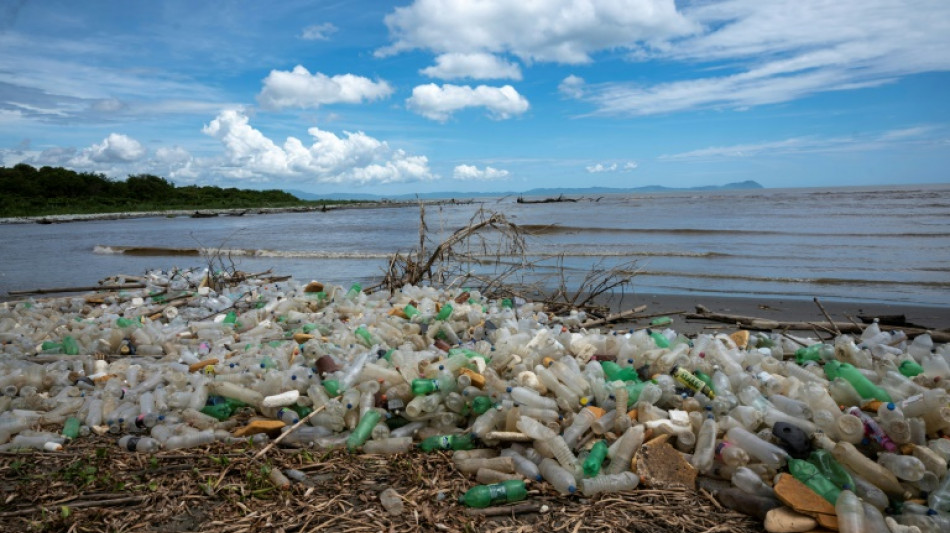
Plastic litter in oceans overestimated, study suggests / Photo: © AFP

Plastic litter in oceans overestimated, study suggests

There is less plastic littering the ocean than scientists previously thought, but what is there could persist for a long time, a new study said Monday.

Text size:

The modelling study estimated that pieces of plastic bigger than 25 millimetres (one inch) make up over 95 percent of plastic floating on the ocean.

While most plastic particles in the ocean are very small, the total mass of these microplastics -- defined as less than five millimetres (0.2 inches) -- is relatively low.

The preponderance of larger floating pieces suggests that the total amount of plastic in the ocean is "much lower" than previously thought, according to the study published in the journal Nature Geoscience.

Plastic pollution in the ocean has been estimated at more than 25 million tonnes, with a quarter of a million tonnes floating on the surface.

But the study said that the amount of plastic on the ocean surface is much higher, at about three million tonnes.

That the plastic is floating around in large pieces could with help clean-up efforts.

"Large, floating pieces on the surface are easier to clean up than microplastics," the study's co-author Erik van Sebille of Utrecht University in the Netherlands said in a statement.

The results are based on a 3D model of the ocean using a huge amount of observational data and measurements taken from surface water, beaches and the deep ocean from 1980 to 2020.

- 'Take action now' -

The model also found that less new plastic finds its way to the ocean every year than previously thought -- about half a million tonnes instead of four to 12 million tonnes -- stemming largely from coastlines and fishing activity.

However, the combination of more surface plastic and less new plastic suggests that the litter will likely remain in the ocean for much longer than previously believed.

"It means that it will take longer until the effects of measures to combat plastic waste will be visible," the study's lead Mikael Kaandorp said.

"If we don't take action now, the effects will be felt for much longer," he added.

And the amount of plastic pollution in the world's oceans is still growing.

Without further mitigation and clean-up, the lingering plastic litter could double within two decades, according to the study's authors.

Concern over the impact of plastics on the environment and human well-being has surged in recent years.

Plastic debris is estimated to kill more than a million seabirds and 100,000 marine mammals each year, according to the United Nations Environment Programme.

The new study comes as the world awaits the first draft of a highly anticipated international UN treaty to combat plastic pollution, expected in November.

I.Taylor--ThChM--ThChM