The China Mail - Coin tosses are not 50/50: researchers find a slight bias

USD -
AED 3.673042
AFN 63.503991
ALL 82.403989
AMD 368.150403
ANG 1.790403
AOA 918.000367
ARS 1465.449815
AUD 1.426534
AWG 1.8025
AZN 1.70397
BAM 1.705709
BBD 2.013483
BDT 122.708482
BGN 1.69088
BHD 0.37702
BIF 2985
BMD 1
BND 1.290663
BOB 6.90816
BRL 5.151601
BSD 0.999721
BTN 94.239742
BWP 13.585663
BYN 2.777729
BYR 19600
BZD 2.010527
CAD 1.41635
CDF 2280.000362
CHF 0.807012
CLF 0.02293
CLP 902.460396
CNY 6.769604
CNH 6.783725
COP 3452.68
CRC 453.506829
CUC 1
CUP 26.5
CVE 96.403894
CZK 21.091104
DJF 177.720393
DKK 6.516504
DOP 58.403884
DZD 133.34504
EGP 49.986489
ERN 15
ETB 158.37504
EUR 0.871204
FJD 2.235504
FKP 0.755912
GBP 0.755744
GEL 2.64504
GGP 0.755912
GHS 11.303856
GIP 0.755912
GMD 73.000355
GNF 8777.503848
GTQ 7.625892
GYD 209.119888
HKD 7.83535
HNL 26.703838
HRK 6.566204
HTG 130.583803
HUF 306.820388
IDR 17826.55
ILS 2.956604
IMP 0.755912
INR 94.37505
IQD 1310
IRR 1375000.000352
ISK 125.530386
JEP 0.755912
JMD 157.959917
JOD 0.70904
JPY 161.30504
KES 129.470385
KGS 87.450384
KHR 4012.503796
KMF 425.00035
KPW 900.00035
KRW 1528.650383
KWD 0.30802
KYD 0.833035
KZT 487.855928
LAK 22030.000349
LBP 89550.000349
LKR 333.641485
LRD 182.150382
LSL 16.20377
LTL 2.95274
LVL 0.60489
LYD 6.375039
MAD 9.245039
MDL 17.654036
MGA 4200.000347
MKD 53.691363
MMK 2099.523204
MNT 3579.573337
MOP 8.070939
MRU 40.080379
MUR 47.570378
MVR 15.460378
MWK 1736.000345
MXN 17.345204
MYR 4.137904
MZN 63.903729
NAD 16.203727
NGN 1360.440377
NIO 36.610377
NOK 9.699904
NPR 150.787532
NZD 1.743376
OMR 0.384983
PAB 0.999725
PEN 3.384039
PGK 4.38775
PHP 60.716504
PKR 278.303701
PLN 3.71375
PYG 6138.96617
QAR 3.640504
RON 4.568104
RSD 102.170373
RUB 73.103247
RWF 1464
SAR 3.74824
SBD 8.061424
SCR 13.683262
SDG 600.503676
SEK 9.583504
SGD 1.292404
SHP 0.746601
SLE 24.750371
SLL 20969.503664
SOS 571.503662
SRD 37.402504
STD 20697.981008
STN 21.4
SVC 8.747449
SYP 110.532098
SZL 16.203649
THB 32.890369
TJS 9.272075
TMT 3.51
TND 2.91175
TOP 2.40776
TRY 46.437504
TTD 6.779085
TWD 31.715038
TZS 2630.985038
UAH 44.909735
UGX 3638.520172
UYU 39.96965
UZS 12005.000334
VES 596.036404
VND 26320
VUV 118.645306
WST 2.751804
XAF 572.078806
XAG 0.015419
XAU 0.00024
XCD 2.70255
XCG 1.801643
XDR 0.703697
XOF 565.000332
XPF 103.250363
YER 238.625037
ZAR 16.485037
ZMK 9001.203584
ZMW 17.919703
ZWL 321.999592
  • CMSC

    0.0500

    22.37

    +0.22%

  • NGG

    -1.2400

    79.44

    -1.56%

  • CMSD

    0.0000

    22.29

    0%

  • RBGPF

    -0.5300

    60.61

    -0.87%

  • BCC

    3.8500

    74.66

    +5.16%

  • RELX

    -0.8300

    31.18

    -2.66%

  • GSK

    -1.4800

    50.67

    -2.92%

  • RIO

    -2.5900

    100.08

    -2.59%

  • BCE

    0.0000

    23.28

    0%

  • VOD

    -0.2300

    14.3

    -1.61%

  • JRI

    0.0500

    12.67

    +0.39%

  • RYCEF

    -0.0300

    18.4

    -0.16%

  • AZN

    -2.9600

    174.93

    -1.69%

  • BTI

    -0.5800

    58.91

    -0.98%

  • BP

    -1.0400

    39.1

    -2.66%

Coin tosses are not 50/50: researchers find a slight bias
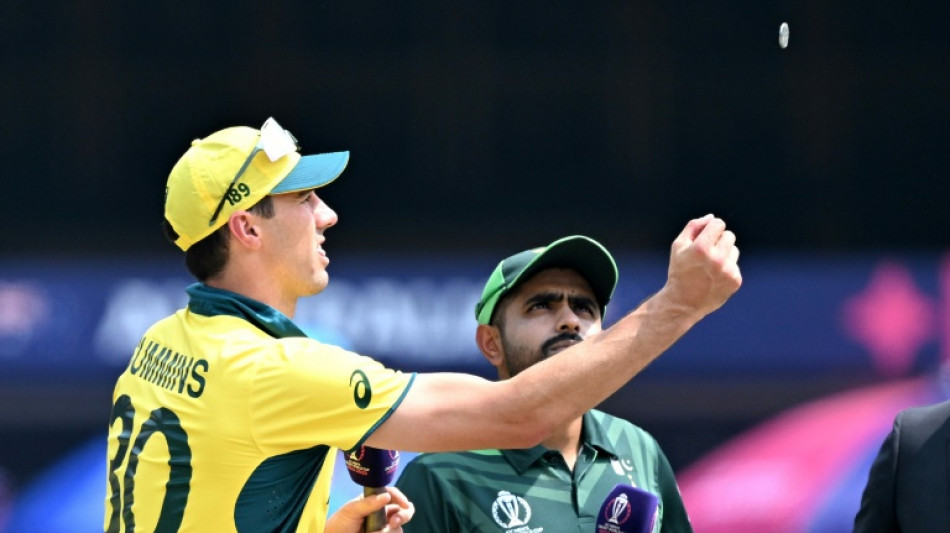
Coin tosses are not 50/50: researchers find a slight bias / Photo: © AFP/File

Coin tosses are not 50/50: researchers find a slight bias

Want to get a slight edge during a coin toss? Check out which side is facing upwards before the coin is flipped –- then call that same side.

Text size:

This tactic will win 50.8 percent of the time, according to researchers who conducted 350,757 coin flips.

For the preprint study, which was published on the arXiv database last week and has not yet been peer-reviewed, 48 people tossed coins of 46 different currencies.

They were told to flip the coins with their thumb and catch it in their hand -- if the coins fell on a flat surface that could introduce other factors such as bouncing or spinning.

Frantisek Bartos, of the University of Amsterdam in the Netherlands, told AFP that the work was inspired by 2007 research led by Stanford University mathematician Persi Diaconis -- who is also a former magician.

Diaconis' model proposed that there was a "wobble" and a slight off-axis tilt that occurs when humans flip coins with their thumb, Bartos said.

Because of this bias, they proposed it would land on the side facing upwards when it was flipped 51 percent of the time -- almost exactly the same figure borne out by Bartos' research.

While that may not seem like a significant advantage, Bartos said it was more of an edge that casinos have against "optimal" blackjack players.

It does depend on the technique of the flipper. Some people had almost no bias while others had much more than 50.8 percent, Bartos said.

For people committed to choosing either heads or tails before every toss, there was no bias for either side, the researchers found.

None of the many different coins showed any sign of bias either.

Happily, achieving a fair coin flip is simple: just make sure the person calling heads or tails cannot see which side is facing up before the toss.

- 'It's fun to do stupid stuff' -

Bartos first heard of the bias theory while studying Bayesian statistics during his master's degree, and decided to test it on a massive scale.

But there was a problem: he needed people willing to toss a lot of coins.

At first he tried to persuade his friends to flip coins over the weekend while watching "Lord of the Rings".

"But nobody was really down for that," he said.

Eventually Bartos managed to convince some colleagues and students to flip coins whenever possible, during lunch breaks, even while on holiday.

"It will be terrible," he told them. "But it's fun to do some stupid stuff from time to time."

The flippers even held weekend-long events where they tossed coins from 9am to 9pm. A massage gun was deployed to soothe sore shoulders.

Countless decisions have been made by coin tosses throughout human history.

While writing his paper, Bartos visited the British Museum and learned that the Wright brothers used one to determine who would attempt the first plane flight.

Coin tosses have also decided numerous political races, including a tied 2013 mayoral election in the Philippines.

But they are probably most common in the field of sport. During the current Cricket World Cup, coin tosses decide which side gets to choose whether to bat or field first.

Z.Ma--ThChM