The China Mail - WHO clarifies terminology for air-transmitted pathogens

USD -
AED 3.672502
AFN 64.505328
ALL 81.278204
AMD 377.023001
ANG 1.789895
AOA 917.000324
ARS 1396.999767
AUD 1.414137
AWG 1.8025
AZN 1.701643
BAM 1.648148
BBD 2.017081
BDT 122.486127
BGN 1.648986
BHD 0.37698
BIF 2968.655855
BMD 1
BND 1.262698
BOB 6.920205
BRL 5.215105
BSD 1.001462
BTN 90.766139
BWP 13.130917
BYN 2.871071
BYR 19600
BZD 2.014216
CAD 1.36045
CDF 2239.999932
CHF 0.769402
CLF 0.021701
CLP 856.879928
CNY 6.90065
CNH 6.907665
COP 3669.44
CRC 488.174843
CUC 1
CUP 26.5
CVE 92.919683
CZK 20.44345
DJF 178.340138
DKK 6.29587
DOP 62.789414
DZD 129.670971
EGP 46.847101
ERN 15
ETB 155.91814
EUR 0.842703
FJD 2.19355
FKP 0.733683
GBP 0.734005
GEL 2.690173
GGP 0.733683
GHS 10.981149
GIP 0.733683
GMD 73.490979
GNF 8791.097665
GTQ 7.681191
GYD 209.527501
HKD 7.816025
HNL 26.465768
HRK 6.352402
HTG 131.140634
HUF 318.852969
IDR 16829
ILS 3.08335
IMP 0.733683
INR 90.692901
IQD 1311.996225
IRR 42125.000158
ISK 122.379744
JEP 0.733683
JMD 156.446849
JOD 0.709004
JPY 153.548503
KES 129.000258
KGS 87.450038
KHR 4029.780941
KMF 415.999729
KPW 899.945229
KRW 1445.349966
KWD 0.30673
KYD 0.834608
KZT 495.523168
LAK 21477.839154
LBP 89535.074749
LKR 309.834705
LRD 186.775543
LSL 15.890668
LTL 2.95274
LVL 0.60489
LYD 6.316863
MAD 9.145255
MDL 16.970249
MGA 4422.478121
MKD 51.977015
MMK 2099.574581
MNT 3581.569872
MOP 8.064618
MRU 39.97927
MUR 45.896569
MVR 15.449981
MWK 1736.631653
MXN 17.21665
MYR 3.906001
MZN 63.874966
NAD 15.890668
NGN 1356.369782
NIO 36.851175
NOK 9.52409
NPR 145.225485
NZD 1.656685
OMR 0.384492
PAB 1.001546
PEN 3.360847
PGK 4.298602
PHP 58.025005
PKR 280.142837
PLN 3.55129
PYG 6594.110385
QAR 3.650023
RON 4.292401
RSD 98.918961
RUB 77.328254
RWF 1462.164975
SAR 3.750385
SBD 8.038668
SCR 13.452726
SDG 601.496752
SEK 8.92778
SGD 1.26348
SHP 0.750259
SLE 24.449797
SLL 20969.51263
SOS 571.349117
SRD 37.779005
STD 20697.981008
STN 20.646096
SVC 8.763215
SYP 11059.574895
SZL 15.897494
THB 31.066499
TJS 9.42903
TMT 3.51
TND 2.88801
TOP 2.40776
TRY 43.740203
TTD 6.78456
TWD 31.405502
TZS 2607.511637
UAH 43.076943
UGX 3545.214761
UYU 38.401739
UZS 12328.669001
VES 389.80653
VND 25970
VUV 119.325081
WST 2.701986
XAF 552.773529
XAG 0.012697
XAU 0.000201
XCD 2.70255
XCG 1.804974
XDR 0.687473
XOF 552.773529
XPF 100.500141
YER 238.325011
ZAR 16.011601
ZMK 9001.201949
ZMW 18.578116
ZWL 321.999592
  • RBGPF

    0.1000

    82.5

    +0.12%

  • CMSC

    0.0000

    23.7

    0%

  • CMSD

    -0.1280

    23.942

    -0.53%

  • RYCEF

    -0.0600

    16.87

    -0.36%

  • GSK

    0.0500

    58.54

    +0.09%

  • JRI

    0.0300

    13.16

    +0.23%

  • BCE

    0.1800

    25.83

    +0.7%

  • RIO

    -1.6100

    97.91

    -1.64%

  • BCC

    -1.3500

    88.06

    -1.53%

  • NGG

    0.5800

    91.22

    +0.64%

  • RELX

    1.0800

    28.81

    +3.75%

  • VOD

    -0.0600

    15.62

    -0.38%

  • AZN

    -0.2400

    204.52

    -0.12%

  • BTI

    0.2800

    60.61

    +0.46%

  • BP

    -1.3600

    37.19

    -3.66%

WHO clarifies terminology for air-transmitted pathogens
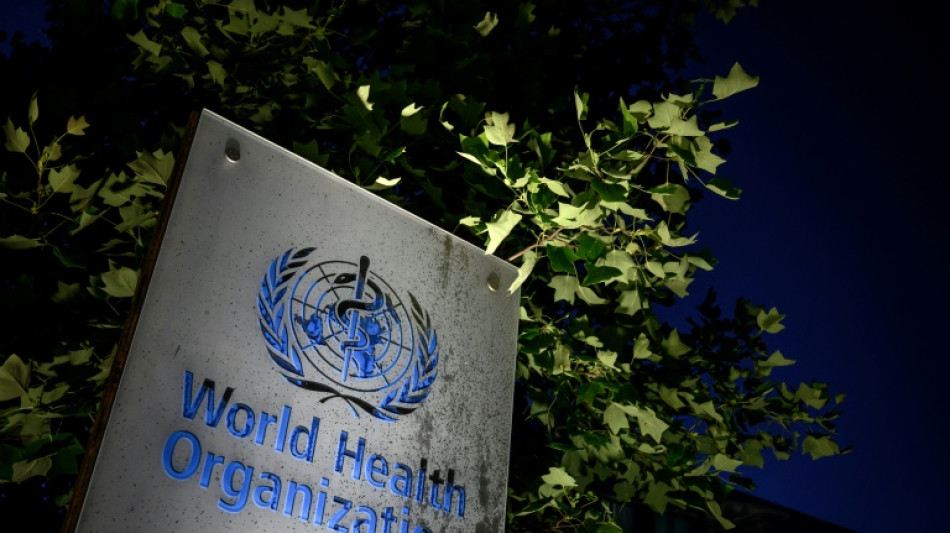
WHO clarifies terminology for air-transmitted pathogens / Photo: © AFP

WHO clarifies terminology for air-transmitted pathogens

The World Health Organization on Thursday announced a new, catch-all terminology for pathogens that transmit through the air, erasing a distinction that caused dangerous confusion during the Covid pandemic.

Text size:

During the Covid-19 crisis the standoff between experts arguing over whether the SARS-CoV-2 virus spread through droplets or through an aerosol mist proved a crucial public health challenge.

In the initial months of the pandemic in early 2020, the WHO and other experts said the virus was spreading via droplets, emitted through coughs and sneezes.

It was understood that such droplets did not linger in the air but sank to cover surfaces that others might touch. That meant the main advice to ward off infection was frequent and thorough handwashing.

It took a while before most experts acknowledged that the virus was spreading more easily through the air, which required other precautions.

But as experts argued over whether or not Covid was airborne, it became apparent that there was a lack of a common understanding and terminology across scientific disciplines to describe the transmission of pathogens through the air.

"Varying terminologies highlighted gaps in common understanding and contributed to challenges in public communication and efforts to curb the transmission of the pathogen," the WHO said in a statement.

- 'Infectious respiratory particles' -

The WHO said that after more than two years of consultations, it had been agreed that all pathogen particles transmitted through the air, regardless of size, should be referred to as "infectious respiratory particles", or IRPs.

The new terminology will apply not just to the Covid virus, but to other respiratory infections such as tuberculosis, influenza and measles.

Broad agreement on the new terminology across the scientific community should improve understanding and make collaboration easier across disciplines, WHO chief scientist Jeremy Farrar told reporters in Geneva.

"It is difficult to make scientific progress unless we all agree with the terminology," he said.

The new terminology should simplify "the categorisation, so that we no longer have what I think were, to some degree, false dichotomies", he added.

Rather than distinguishing between two modes of transmission based on the size of the particles being transmitted, it is important to recognise there are many other factors driving transmission, he said. These factors included air humidity, temperature and airflow.

Agreeing on a single term was like reaching "base camp", Farrar said. From there, there was still a long climb to agreeing the best measures to take to avoid infection in hospitals, schools and transport systems.

The WHO said it did however maintain the distinction between two types of through-the-air transmission.

The first was airborne transmission or inhalation, when IRPs are expelled into the air and inhaled by another person.

The second was direct deposition, when IRPs are expelled into the air from an infectious person and then directly deposited on the exposed mouth, nose or eyes of another person nearby.

W.Tam--ThChM