The China Mail - Giant tooth of ancient marine reptile discovered in Alps

USD -
AED 3.6725
AFN 65.000392
ALL 81.560537
AMD 360.775985
ANG 1.789785
AOA 917.000038
ARS 1513.259304
AUD 1.426757
AWG 1.8025
AZN 1.69852
BAM 1.745253
BBD 2.010361
BDT 122.920831
BGN 1.747831
BHD 0.376943
BIF 2992.879196
BMD 1
BND 1.277729
BOB 11.742397
BRL 5.026904
BSD 0.99809
BTN 95.053074
BWP 13.711808
BYN 3.005903
BYR 19600
BZD 2.007505
CAD 1.421535
CDF 2312.500085
CHF 0.833695
CLF 0.024908
CLP 980.310333
CNY 6.69215
CNH 6.693095
COP 3188.87
CRC 454.401456
CUC 1
CUP 23.954527
CVE 98.394667
CZK 21.766799
DJF 177.744859
DKK 6.67725
DOP 61.199631
DZD 134.533035
EGP 53.110599
ERN 15
ETB 163.034338
EUR 0.89323
FJD 2.244702
FKP 0.754659
GBP 0.75405
GEL 2.59497
GGP 0.754659
GHS 11.653162
GIP 0.754659
GMD 73.99995
GNF 8780.344165
GTQ 7.630461
GYD 208.818175
HKD 7.84804
HNL 26.791833
HRK 6.730802
HTG 130.556993
HUF 324.828003
IDR 17896.7
ILS 3.070525
IMP 0.754659
INR 94.93315
IQD 1512.171616
IRR 1779859.999974
ISK 121.67048
JEP 0.754659
JMD 158.507638
JOD 0.708975
JPY 158.464501
KES 129.709756
KGS 87.449776
KHR 4061.892099
KMF 439.999911
KPW 899.999961
KRW 1335.810052
KWD 0.31171
KYD 0.831738
KZT 447.662772
LAK 22447.38615
LBP 89384.56802
LKR 330.214649
LRD 170.186374
LSL 16.458174
LTL 2.95274
LVL 0.60489
LYD 6.420696
MAD 9.759245
MDL 17.935779
MGA 4506.353512
MKD 54.946281
MMK 2100.02843
MNT 3599.679138
MOP 8.068514
MRU 40.035874
MUR 47.609682
MVR 15.460224
MWK 1730.796688
MXN 18.36106
MYR 4.083097
MZN 63.904996
NAD 16.458174
NGN 1330.39558
NIO 36.729176
NOK 9.49681
NPR 152.085276
NZD 1.77988
OMR 0.38447
PAB 0.99809
PEN 3.443122
PGK 4.527952
PHP 62.869025
PKR 276.352441
PLN 3.90425
PYG 5706.789697
QAR 3.638278
RON 4.772694
RSD 104.865987
RUB 83.925021
RWF 1474.693033
SAR 3.75547
SBD 8.078071
SCR 13.80872
SDG 601.470907
SEK 9.962585
SGD 1.2819
SHP 0.754518
SLE 24.669955
SLL 20969.504398
SOS 570.38835
SRD 37.647505
STD 20697.981008
STN 21.863385
SVC 8.733208
SYP 13001.999685
SZL 16.461129
THB 33.582023
TJS 9.212593
TMT 3.5
TND 2.988292
TOP 2.40776
TRY 49.391298
TTD 6.787934
TWD 32.153499
TZS 2630.002982
UAH 45.026146
UGX 4132.460023
UYU 40.119931
UZS 11876.249286
VES 875.701602
VND 25890
VUV 119.372685
WST 2.788609
XAF 585.920422
XAG 0.017078
XAU 0.00024143713
XCD 2.70255
XCG 1.798883
XDR 0.707052
XOF 585.920422
XPF 106.421331
YER 236.198615
ZAR 16.48656
ZMK 9001.198006
ZMW 19.871586
ZWL 321.999592
SSP 5748.524006
MXV 2.073391
  • RYCEF

    0.4000

    19.71

    +2.03%

  • CMSC

    0.0000

    20.4

    0%

  • BTI

    0.4200

    56.05

    +0.75%

  • BP

    0.2800

    44.43

    +0.63%

  • RBGPF

    1.6000

    67

    +2.39%

  • RIO

    -0.1500

    94.41

    -0.16%

  • AZN

    -0.4300

    166.15

    -0.26%

  • GSK

    0.4600

    49.7

    +0.93%

  • BCE

    -0.4100

    20.56

    -1.99%

  • NGG

    -0.2500

    75.24

    -0.33%

  • VOD

    -0.0400

    16.58

    -0.24%

  • RELX

    -0.4500

    33.07

    -1.36%

  • BCC

    -0.5500

    76.59

    -0.72%

  • CMSD

    -0.0300

    20.27

    -0.15%

  • JRI

    -0.2500

    10.77

    -2.32%

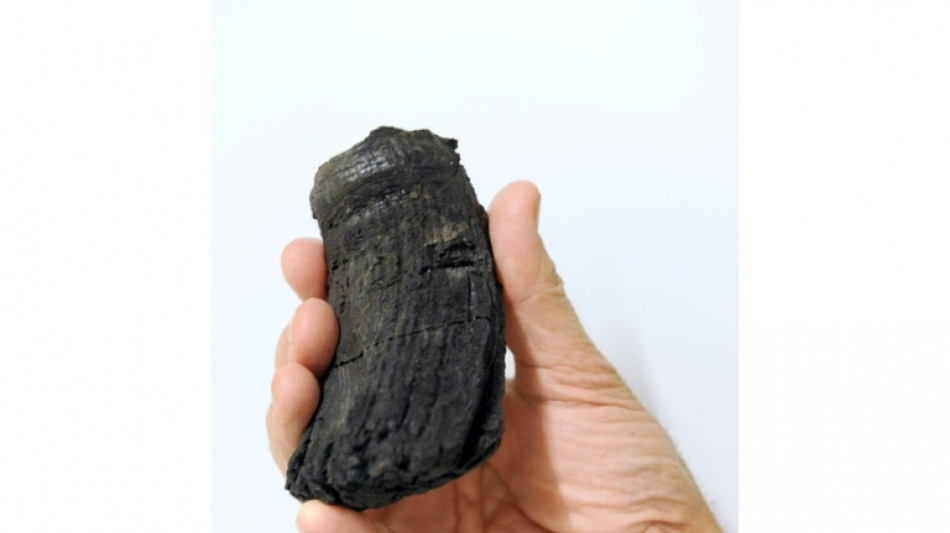
Giant tooth of ancient marine reptile discovered in Alps
Giant tooth of ancient marine reptile discovered in Alps / Photo: © EUREKALERT!/AFP

Giant tooth of ancient marine reptile discovered in Alps

The fossils of three ichthyosaurs -- giant marine reptiles that patrolled primordial oceans -- have been discovered high up in the Swiss Alps, and include the largest ever tooth found for the species, a study said Thursday.

Text size:

With elongated bodies and small heads, the prehistoric leviathans weighed up to 80 metric tons (88 US tons) and grew to 20 meters (yards), making them among the largest animals to have ever lived.

They first appeared 250 million years ago in the early Triassic, and a smaller, dolphin-like subtype survived until 90 million years ago. But the gigantic ichthyosaurs, which comprised most of the species, died out 200 million years ago.

Unlike dinosaurs, ichthyosaurs barely left a trace of fossil remains, and "why that is remains a great mystery to this day," said Martin Sander of the University of Bonn, lead author of the paper in the Journal of Vertebrate Paleontology.

The specimens in question, dated to 205 million years ago in the study, were unearthed between 1976 and 1990 during geological surveys, but were only recently analyzed in detail.

Fun fact: they were discovered at an altitude of 2,800 meters (9,100 feet). During their lifetimes the three swam in waters around the supercontinent Pangea-- but due to plate tectonics and the folding of the Alps, the fossils kept rising.

Ichthyosaurs were previously thought to have only inhabited the deep ocean, but the rocks from which the new fossils derive are believed to have been at the bottom of a shallow coastal area. It could be that some of the giants followed schools of fish there.

There are two sets of skeletal remains. One consists of ten rib fragments and a vertebra, suggesting an animal some 20 meters long, which is more or less equivalent to the largest ichthyosaur to have been found, in Canada.

The second animal measured 15 meters, according to an estimate from the seven vertebrae found.

"From our point of view, however, the tooth is particularly exciting," explained Sander.

"Because this is huge by ichthyosaur standards: Its root was 60 millimeters (2.4 inches) in diameter - the largest specimen still in a complete skull to date was 20 millimeters and came from an ichthyosaur that was nearly 18 meters long."

While this could indicate a beast of epic proportions, it's more likely to have come from an ichthyosaur with particularly gigantic teeth, rather than a particularly gigantic ichthyosaur.

Current research holds that extreme gigantism is incompatible with a predatory lifestyle requiring teeth.

That's why the largest known animal to have ever lived -- the blue whale at 30 meters long and 150 tons -- lacks teeth.

Blue whales are filter feeders, while the much smaller sperm whales, at 20 meters long and 50 tons, are hunters, and use more of their energy to fuel their muscles.

"Marine predators therefore probably can't get much bigger than a sperm whale," Sander said, though more fossils would need to be found to know for certain. "Maybe there are more remains of the giant sea creatures hidden beneath the glaciers," he said.

X.So--ThChM