The China Mail - Greenland ice cap loses enough water in 20 years to cover US: study

USD -
AED 3.673042
AFN 65.503991
ALL 82.250403
AMD 381.770403
ANG 1.790403
AOA 917.000367
ARS 1440.198104
AUD 1.502404
AWG 1.8
AZN 1.70397
BAM 1.668223
BBD 2.014603
BDT 122.238002
BGN 1.66581
BHD 0.375335
BIF 2965
BMD 1
BND 1.291806
BOB 6.911523
BRL 5.419704
BSD 1.000264
BTN 90.4571
BWP 13.253269
BYN 2.948763
BYR 19600
BZD 2.011703
CAD 1.37805
CDF 2240.000362
CHF 0.795992
CLF 0.023203
CLP 910.250396
CNY 7.054504
CNH 7.05355
COP 3803.5
CRC 500.345448
CUC 1
CUP 26.5
CVE 94.27504
CZK 20.669104
DJF 177.720393
DKK 6.361804
DOP 63.850393
DZD 129.69404
EGP 47.313439
ERN 15
ETB 155.22504
EUR 0.851404
FJD 2.26525
FKP 0.744826
GBP 0.747831
GEL 2.703861
GGP 0.744826
GHS 11.48504
GIP 0.744826
GMD 73.000355
GNF 8691.000355
GTQ 7.661306
GYD 209.264835
HKD 7.77985
HNL 26.203838
HRK 6.417704
HTG 131.108249
HUF 327.990388
IDR 16633.75
ILS 3.222795
IMP 0.744826
INR 90.552404
IQD 1310
IRR 42122.503816
ISK 126.403814
JEP 0.744826
JMD 160.152168
JOD 0.70904
JPY 155.75604
KES 128.903801
KGS 87.450384
KHR 4006.00035
KMF 419.503794
KPW 899.99623
KRW 1474.980383
KWD 0.306704
KYD 0.833596
KZT 521.66941
LAK 21680.000349
LBP 89550.000349
LKR 309.078037
LRD 177.025039
LSL 16.880381
LTL 2.95274
LVL 0.60489
LYD 5.420381
MAD 9.19125
MDL 16.909049
MGA 4510.000347
MKD 52.398791
MMK 2100.268185
MNT 3547.376613
MOP 8.020795
MRU 39.740379
MUR 45.903741
MVR 15.403739
MWK 1736.503736
MXN 18.014404
MYR 4.097304
MZN 63.910377
NAD 16.880377
NGN 1452.570377
NIO 36.775039
NOK 10.137304
NPR 144.731702
NZD 1.72295
OMR 0.382805
PAB 1.000264
PEN 3.603708
PGK 4.259204
PHP 59.115038
PKR 280.225038
PLN 3.59745
PYG 6718.782652
QAR 3.641104
RON 4.335904
RSD 99.975303
RUB 79.673577
RWF 1451
SAR 3.75231
SBD 8.176752
SCR 14.958069
SDG 601.503676
SEK 9.269904
SGD 1.292038
SHP 0.750259
SLE 24.125038
SLL 20969.503664
SOS 571.503662
SRD 38.548038
STD 20697.981008
STN 21.25
SVC 8.752207
SYP 11058.380716
SZL 16.880369
THB 31.520369
TJS 9.192334
TMT 3.51
TND 2.916038
TOP 2.40776
TRY 42.696104
TTD 6.787844
TWD 31.335104
TZS 2470.000335
UAH 42.263496
UGX 3555.146134
UYU 39.25315
UZS 12002.503617
VES 267.43975
VND 26306
VUV 121.486164
WST 2.783946
XAF 559.50409
XAG 0.016138
XAU 0.000232
XCD 2.70255
XCG 1.802728
XDR 0.695185
XOF 558.000332
XPF 102.075037
YER 238.503589
ZAR 16.875405
ZMK 9001.203584
ZMW 23.081057
ZWL 321.999592
  • RBGPF

    0.0000

    81.17

    0%

  • VOD

    0.0500

    12.59

    +0.4%

  • NGG

    0.2400

    74.93

    +0.32%

  • GSK

    -0.0700

    48.81

    -0.14%

  • RELX

    0.1000

    40.38

    +0.25%

  • BTI

    -1.2700

    57.1

    -2.22%

  • AZN

    -0.4600

    89.83

    -0.51%

  • SCS

    0.0200

    16.14

    +0.12%

  • RYCEF

    -0.2500

    14.6

    -1.71%

  • RIO

    -1.0800

    75.66

    -1.43%

  • BP

    -0.2700

    35.26

    -0.77%

  • CMSC

    -0.1300

    23.3

    -0.56%

  • CMSD

    -0.1500

    23.25

    -0.65%

  • JRI

    -0.0200

    13.7

    -0.15%

  • BCC

    0.2500

    76.51

    +0.33%

  • BCE

    0.3100

    23.71

    +1.31%

Greenland ice cap loses enough water in 20 years to cover US: study


Greenland ice cap loses enough water in 20 years to cover US: study

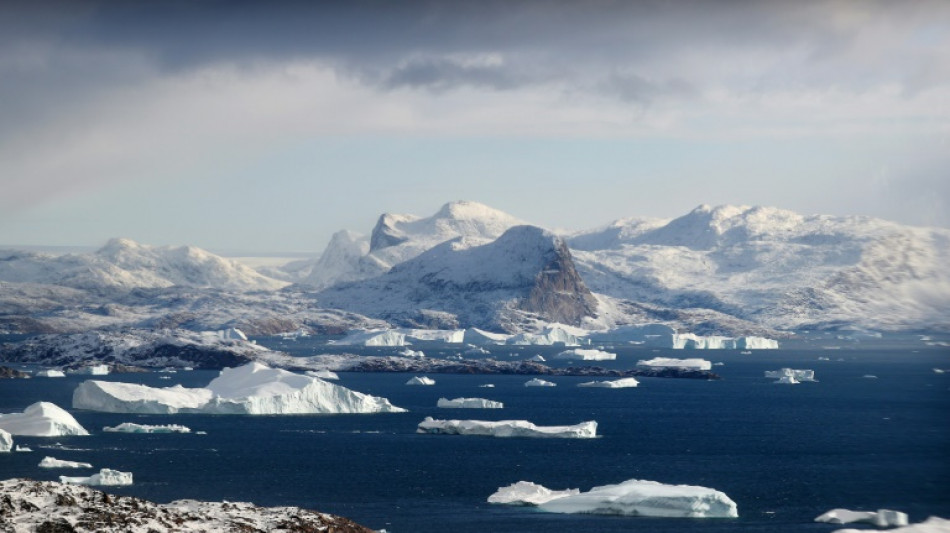
Greenland's immense ice sheet has lost enough ice in the past 20 years to submerge the entire United States in half a metre of water, according to data released this week by Danish researchers.

Text size:

The climate is warming faster in the Arctic than anywhere else on the planet and melting ice from Greenland is now the main factor in the rise in the Earth's oceans, according to NASA.

Since measurements began in 2002, the Greenland ice sheet has lost about 4,700 billion tonnes of ice, said Polar Portal, a joint project involving several Danish Arctic research institutes.

This represents 4,700 cubic kilometres of melted water -- "enough to cover the entire US by half a meter" -- and has contributed 1.2 centimetres to sea level rise, the Arctic monitoring website added.

Polar Portal's findings are based on satellite imagery from the US-German GRACE programme (Gravity Recovery and Climate Experiment), which showed the ice melt to be most severe near the coasts of the Arctic territory, at the edge of the ice sheet.

In these peripheral zones, "independent observations also indicate that the ice is thinning, that the glacier fronts are retreating in fjords and on land, and that there is a greater degree of melting from the surface of the ice", the website said.

The west coast of Greenland is particularly affected, according to the data.

Climate change is particularly alarming in the Arctic, which scientists say is warming at a rate three to four times the global average.

According to a study published by NASA in late January, the accelerated melting near Greenland's coasts can be explained by the warming of the Arctic Ocean.

The phenomenon "is melting Greenland's glaciers at least as much as warm air is melting them from above".

Melting ice from Greenland is currently the main factor in the rise in the Earth's oceans and the territory's glaciers are now retreating six to seven times faster than they were 25 years ago, the US agency added.

According to climate scientists, the Greenland ice sheet contains enough water to raise the oceans by more than seven metres, and the ice sheet in Antarctica contains enough for a rise of almost 50 metres.

Arctic sea ice cover, although its melting has no effect on sea levels, has also shrunk considerably, losing almost 13 percent of its average surface area every 10 years.

L.Johnson--ThChM