The China Mail - Monkey business: Neanderthals and ancient apes likely kissed too

USD -
AED 3.672498
AFN 65.498106
ALL 81.051571
AMD 375.859332
ANG 1.79008
AOA 916.497158
ARS 1416.446495
AUD 1.413497
AWG 1.8
AZN 1.695264
BAM 1.642701
BBD 2.007895
BDT 121.837729
BGN 1.67937
BHD 0.376981
BIF 2949.857215
BMD 1
BND 1.265076
BOB 6.903242
BRL 5.194898
BSD 0.996892
BTN 90.375901
BWP 13.137914
BYN 2.873173
BYR 19600
BZD 2.004955
CAD 1.356445
CDF 2215.000232
CHF 0.766405
CLF 0.021628
CLP 853.970006
CNY 6.9225
CNH 6.91111
COP 3673.08
CRC 494.204603
CUC 1
CUP 26.5
CVE 92.612579
CZK 20.361605
DJF 177.523938
DKK 6.275825
DOP 62.758273
DZD 129.497006
EGP 46.881699
ERN 15
ETB 155.496052
EUR 0.83996
FJD 2.192099
FKP 0.731721
GBP 0.73155
GEL 2.690096
GGP 0.731721
GHS 10.970939
GIP 0.731721
GMD 73.501083
GNF 8751.926558
GTQ 7.647373
GYD 208.567109
HKD 7.81758
HNL 26.333781
HRK 6.329797
HTG 130.732404
HUF 317.258982
IDR 16798
ILS 3.084801
IMP 0.731721
INR 90.52085
IQD 1305.980178
IRR 42125.000158
ISK 121.802706
JEP 0.731721
JMD 155.929783
JOD 0.708991
JPY 155.210977
KES 128.896279
KGS 87.450406
KHR 4020.661851
KMF 413.999932
KPW 900.003053
KRW 1462.055014
KWD 0.30709
KYD 0.830758
KZT 492.323198
LAK 21424.491853
LBP 89570.078396
LKR 308.550311
LRD 185.426737
LSL 15.97833
LTL 2.952739
LVL 0.60489
LYD 6.302705
MAD 9.117504
MDL 16.932639
MGA 4376.784814
MKD 51.774104
MMK 2100.147418
MNT 3570.525201
MOP 8.025869
MRU 39.586763
MUR 45.679579
MVR 15.459738
MWK 1728.624223
MXN 17.194145
MYR 3.923498
MZN 63.76003
NAD 15.97833
NGN 1354.939889
NIO 36.687385
NOK 9.517145
NPR 144.601881
NZD 1.654635
OMR 0.384497
PAB 0.996892
PEN 3.348144
PGK 4.337309
PHP 58.522499
PKR 278.761885
PLN 3.53947
PYG 6573.156392
QAR 3.634035
RON 4.276802
RSD 98.549011
RUB 77.251007
RWF 1455.48463
SAR 3.75074
SBD 8.054878
SCR 13.836531
SDG 601.500203
SEK 8.92498
SGD 1.26597
SHP 0.750259
SLE 24.524979
SLL 20969.499267
SOS 568.704855
SRD 37.971496
STD 20697.981008
STN 20.57786
SVC 8.723333
SYP 11059.574895
SZL 15.970939
THB 31.168005
TJS 9.336094
TMT 3.5
TND 2.879712
TOP 2.40776
TRY 43.633798
TTD 6.753738
TWD 31.523799
TZS 2586.096953
UAH 42.973963
UGX 3548.630942
UYU 38.224264
UZS 12265.141398
VES 384.79041
VND 25885
VUV 119.800563
WST 2.713692
XAF 550.946582
XAG 0.012177
XAU 0.000198
XCD 2.70255
XCG 1.796657
XDR 0.685201
XOF 550.946582
XPF 100.167141
YER 238.349504
ZAR 15.926345
ZMK 9001.203383
ZMW 18.8468
ZWL 321.999592
  • RIO

    -0.7100

    96.14

    -0.74%

  • CMSC

    0.0150

    23.6

    +0.06%

  • CMSD

    0.0000

    23.97

    0%

  • RYCEF

    0.5300

    17.41

    +3.04%

  • RBGPF

    0.1000

    82.5

    +0.12%

  • BTI

    -1.3550

    59.795

    -2.27%

  • BCC

    1.8800

    90.9

    +2.07%

  • JRI

    0.0210

    12.831

    +0.16%

  • RELX

    -0.1100

    29.37

    -0.37%

  • AZN

    3.5100

    191.52

    +1.83%

  • GSK

    -0.6200

    58.39

    -1.06%

  • VOD

    -0.0900

    15.39

    -0.58%

  • BCE

    0.1250

    25.745

    +0.49%

  • NGG

    -0.3400

    88.05

    -0.39%

  • SCS

    0.0200

    16.14

    +0.12%

  • BP

    -2.4600

    36.76

    -6.69%

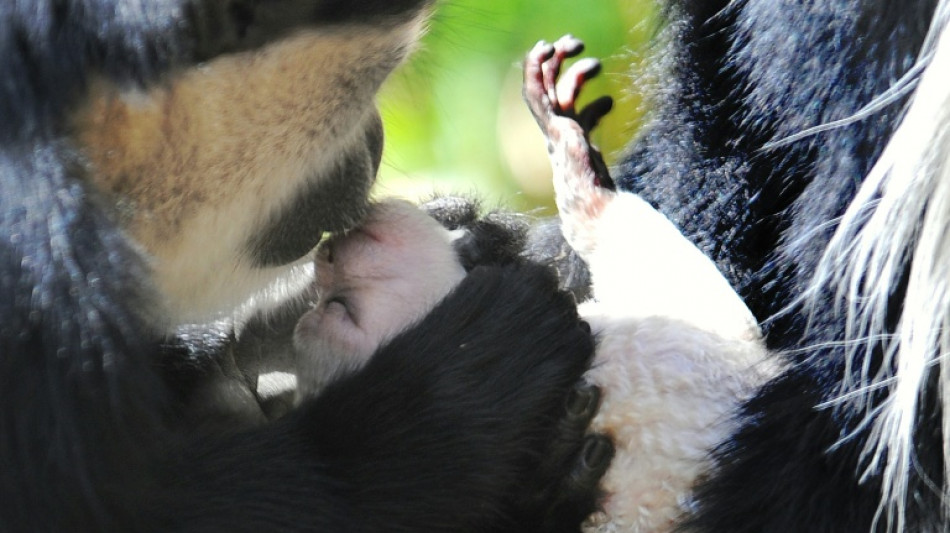
Monkey business: Neanderthals and ancient apes likely kissed too
Monkey business: Neanderthals and ancient apes likely kissed too / Photo: © AFP

Monkey business: Neanderthals and ancient apes likely kissed too

Scientists have found evidence suggesting that kissing dates back up to 21 million years and that our ape ancestors and Neanderthals likely locked lips, research published Wednesday said.

Text size:

Kissing has long presented an evolutionary puzzle to scientists as it appears to carry high risks such as disease transmission while having no obvious reproductive or survival advantages.

But the new study found that the practice has evolved over millions of years, and that our extinct human relatives, the Neanderthals, could have shared a peck to stay warm in the ice age.

The research led by scientists at the University of Oxford was published in the journal "Evolution and Human Behaviour".

"This is the first time anyone has taken a broad evolutionary lens to examine kissing," said co-author Matilda Brindle, an evolutionary biologist at the University of Oxford.

"Our findings add to a growing body of work highlighting the remarkable diversity of sexual behaviours exhibited by our primate cousins."

For the purpose of the study, researchers defined kissing as a "non-aggressive, mouth-to-mouth contact that did not involve food transfer".

"The results indicate that kissing is an ancient trait in the large apes," evolving in primate ancestors from 17 to 21 million years ago, according to an Oxford University statement.

"Kissing was retained over the course of evolution and is still present in most of the large apes," it added.

The researchers first collected data about modern primates that have been observed kissing, including chimpanzees, bonobos and orangutans.

Then, treating kissing as a "trait", they mapped it to the family tree of primates. By stimulating different evolutionary scenarios, they estimated the probability that ancient ancestors also engaged in kissing.

Previous studies have found that humans and Neanderthals had shared oral microbes through saliva transfer, suggesting that the species had kissed each other.

P.Deng--ThChM