AI fever spreads, but are markets masking economic cracks? / Photo: © AFP

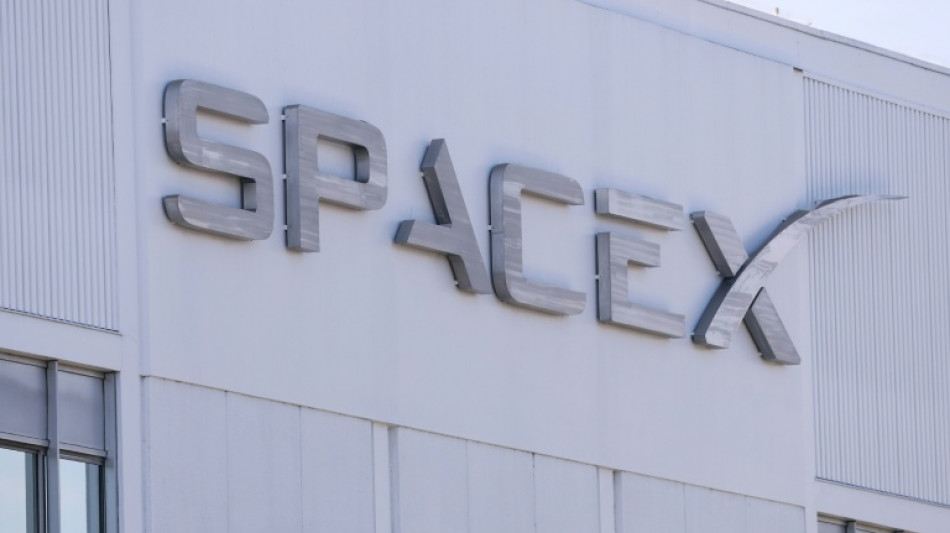
SpaceX's record-smashing IPO plan shows investors are eager to keep pouring money into all things AI, even as alarm bells ring for the wider economy.
And that has analysts wondering: Where will the cash come from if soaring inflation dents growth? Or if the artificial intelligence rollout proves less profitable than hoped?
- Historic influx -
Investment by AI labs is at historically "unprecedented" levels, with expected outlays by the 11 top American players over the next 12 months representing nearly three percent of US GDP, said Raphael Gallardo, chief economist at asset management group Carmignac in Paris.
At the beginning of this year confidence in that spending surge wobbled, with chipmakers and other tech hardware firms taking a hit on stock markets worldwide.
But despite the outbreak of an ongoing war in the Middle East, "for now, those concerns largely have been dismissed by the markets" after reassuring profit reports, said Adam Sarhan of 50 Park Investments in New York.
"If you look at the actual earnings, those fears did not come to pass and in fact a lot of companies" committed to spend more on AI, Sarhan told AFP.
Google for example announced this week that it would raise up to $80 billion for a major expansion of its AI infrastructure.
It said it was "compute constrained in the near term" -- jargon meaning it cannot build necessary infrastructure fast enough to meet demand.
SpaceX meanwhile aims to raise $75 billion in an initial public offering expected next week, by far the largest IPO ever.
Its rivals OpenAI and Anthropic, behind ChatGPT and Claude respectively, are set to follow suit in the coming months, valuing the companies around a whopping $1 trillion.
- Gobbling up chips -
Beyond US-based chatbot makers, companies worldwide have profited from the AI rush, especially chipmakers providing their computing power.
South Korea's benchmark Kospi stock index for example has nearly doubled its value since January this year, propelled by chipmakers Samsung Electronics and SK hynix -- both also now trillion-dollar companies.
Those two companies alone account for half the Kospi's market capitalisation.
"The fact that two companies make up such a large portion of the market highlights just how concentrated that dependence is, and that is the biggest risk factor," said Kim Dae-jong, a professor at Sejong University.
In Taiwan, TSMC, a supplier to AI chip specialist Nvidia, represents on its own 40 percent of the Taipei stock market, while technology investor SoftBank in Japan this week surpassed Toyota as the country's most valuable company.
In the United States, red-hot demand for Micron and Intel chips have seen their share prices more than double so far this year, while European equity benchmarks have soared thanks in large part to Infineon and STMicroelectronics.
- Too hot for comfort? -
There are signs however that market expectations have outstripped the ability of companies to meet them.
This week the US chip specialist Broadcom saw its shares plunge despite its second-quarter profit having nearly doubled to $9.3 billion as its forecast for third-quarter chip revenue growth of over 200 percent failed to meet expectations.
"The support provided by huge capital inflows to AI and chip stocks is fading, exposing the often extreme overpricing in these sectors," said Andreas Lipkow, analyst at CMC Markets.
"In a best case, investors will take profits ahead of the summer pause, and markets would have time to consolidate," he said, especially if they sell tech holdings to buy the new SpaceX shares.
"If not, the likelihood of a major short-term correction on international equity markets remains high," he said.
"These companies are cash cows and we're in one of the biggest investment cycles in history", said Frederik Ducrozet, head of macroeconomic research at Pictet Wealth Management in Switzerland.
But so far none of the three AI powerhouses -- SpaceX, Anthropic and OpenAI -- are turning profits, he noted, "which argues for more caution", he said.
- AI vs stagflation? -
Analysts and policymakers are worried that AI enthusiasm cannot escape the gravitational pull of soaring energy costs -- data centres suck huge amounts of electricity -- and slowing growth overall.
In the US alone, AI investments currently account for nearly nine-tenths of GDP growth overall -- overshadowing weak consumer demand and rising costs for small and midsize firms, said Gallardo at Carmignac.
"AI-related spending has become a huge part of the US growth story... the same handful of firms raising money, buying chips, leasing compute and booking revenues off one another," added James Smith, an economist at ING.
"But the fact remains that if you strip out AI, the rest of US private non-residential investment has been falling year-on-year for six straight quarters," he said.
And the situation could worsen if the US Federal Reserve, the European Central Bank and other central banks raise rates to contain energy-fuelled inflation, something many analysts consider inevitable.
Z.Huang--ThChM