The China Mail - IEA sees global energy emissions peaking in 2025

USD -
AED 3.672956
AFN 64.505228
ALL 81.040385
AMD 377.50973
ANG 1.79008
AOA 916.999969
ARS 1404.50598
AUD 1.403519
AWG 1.8
AZN 1.696617
BAM 1.642722
BBD 2.014547
BDT 122.351617
BGN 1.67937
BHD 0.377026
BIF 2955
BMD 1
BND 1.262741
BOB 6.911728
BRL 5.200299
BSD 1.000176
BTN 90.647035
BWP 13.104482
BYN 2.868926
BYR 19600
BZD 2.011608
CAD 1.35747
CDF 2225.000264
CHF 0.77153
CLF 0.021661
CLP 855.309788
CNY 6.91325
CNH 6.908785
COP 3670.12
CRC 494.712705
CUC 1
CUP 26.5
CVE 92.896859
CZK 20.43415
DJF 177.720241
DKK 6.29349
DOP 62.625016
DZD 129.579728
EGP 46.768404
ERN 15
ETB 155.050329
EUR 0.84235
FJD 2.18585
FKP 0.731875
GBP 0.73416
GEL 2.689773
GGP 0.731875
GHS 11.005011
GIP 0.731875
GMD 73.480153
GNF 8780.000439
GTQ 7.671019
GYD 209.257595
HKD 7.817865
HNL 26.505018
HRK 6.345799
HTG 131.086819
HUF 319.612498
IDR 16789.4
ILS 3.077095
IMP 0.731875
INR 90.71835
IQD 1310.5
IRR 42125.000158
ISK 122.310218
JEP 0.731875
JMD 156.494496
JOD 0.709058
JPY 153.28804
KES 128.999901
KGS 87.449981
KHR 4029.99977
KMF 414.999995
KPW 899.999067
KRW 1445.320096
KWD 0.30695
KYD 0.83354
KZT 493.505294
LAK 21445.00001
LBP 89733.661066
LKR 309.394121
LRD 186.550156
LSL 15.859909
LTL 2.95274
LVL 0.60489
LYD 6.30377
MAD 9.13875
MDL 16.898415
MGA 4429.999957
MKD 51.905343
MMK 2099.913606
MNT 3568.190929
MOP 8.053234
MRU 39.905016
MUR 45.709754
MVR 15.459761
MWK 1736.498954
MXN 17.18487
MYR 3.915006
MZN 63.897938
NAD 15.959808
NGN 1351.219876
NIO 36.714952
NOK 9.491225
NPR 145.034815
NZD 1.65331
OMR 0.384496
PAB 1.000181
PEN 3.354948
PGK 4.183501
PHP 58.210158
PKR 279.599936
PLN 3.55107
PYG 6605.156289
QAR 3.64125
RON 4.286501
RSD 98.87949
RUB 77.096736
RWF 1452.5
SAR 3.750421
SBD 8.048395
SCR 13.923955
SDG 601.500709
SEK 8.896815
SGD 1.26201
SHP 0.750259
SLE 24.250448
SLL 20969.499267
SOS 571.501804
SRD 37.777031
STD 20697.981008
STN 20.95
SVC 8.752
SYP 11059.574895
SZL 15.86027
THB 31.040991
TJS 9.391982
TMT 3.5
TND 2.83525
TOP 2.40776
TRY 43.636199
TTD 6.783192
TWD 31.351501
TZS 2590.153989
UAH 43.034895
UGX 3536.076803
UYU 38.350895
UZS 12300.000209
VES 388.253525
VND 26000
VUV 119.366255
WST 2.707053
XAF 550.953523
XAG 0.011844
XAU 0.000197
XCD 2.70255
XCG 1.802643
XDR 0.685659
XOF 549.498647
XPF 100.7501
YER 238.40052
ZAR 15.87941
ZMK 9001.197564
ZMW 19.029301
ZWL 321.999592
  • RBGPF

    0.1000

    82.5

    +0.12%

  • CMSC

    0.0084

    23.7

    +0.04%

  • CMSD

    -0.0100

    24.07

    -0.04%

  • BCC

    -0.3200

    89.41

    -0.36%

  • AZN

    11.3600

    204.76

    +5.55%

  • RIO

    2.2800

    99.52

    +2.29%

  • GSK

    -0.3300

    58.49

    -0.56%

  • RELX

    -1.5600

    27.73

    -5.63%

  • NGG

    1.8800

    90.64

    +2.07%

  • BCE

    -0.1800

    25.65

    -0.7%

  • BTI

    0.1400

    60.33

    +0.23%

  • RYCEF

    -0.4800

    16.93

    -2.84%

  • JRI

    0.3500

    13.13

    +2.67%

  • VOD

    0.4300

    15.68

    +2.74%

  • BP

    1.5800

    38.55

    +4.1%

IEA sees global energy emissions peaking in 2025
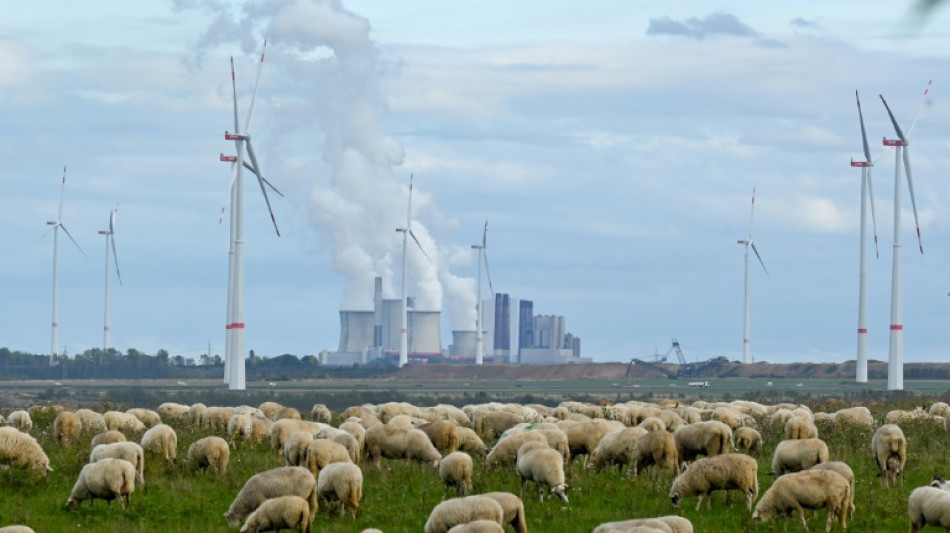
IEA sees global energy emissions peaking in 2025 / Photo: © AFP

IEA sees global energy emissions peaking in 2025

The International Energy Agency said Thursday it believes global energy emissions will peak in 2025 as surging prices due to the Russian invasion of Ukraine propel investment in renewables.

Text size:

Only last year the IEA said there was "no clear peak in sight" in energy emissions, but the new higher investment in wind and solar is setting up demand for all fossil fuels to peak or plateau, leading to a drop in emissions.

"The global energy crisis triggered by Russia's invasion of Ukraine is causing profound and long-lasting changes that have the potential to hasten the transition to a more sustainable and secure energy system," the IEA said as it released its latest annual World Energy Outlook report.

Based on the latest measures and policies announced by governments in the face of soaring energy prices, the IEA forecasts global clean energy investment to rise by more than 50 percent from today's levels to $2 trillion per year by 2030.

Those measures will propel sustained gains in renewables and nuclear power.

"As a result, a high point for global emissions is reached in 2025," the IEA said.

Global energy-related CO2 emissions are then set to fall back slowly from a high point of 37 billion tonnes per year to 32 billion tonnes by 2050, it added.

The Paris-based organisation, which advises energy-consuming nations, said that its forecast sees demand for all types of fossil fuels peaking or hitting a plateau.

Coal use, which has seen a temporary bump higher, will drop back in the next few years as more renewables come online.

Natural gas hits a plateau in the end of the decade, instead of the previous forecast of a steady rise.

Oil demand levels off in the mid-2030s and then gradually declines towards mid-century due to uptake of electric vehicles, instead of the earlier estimate of a steady increase.

Overall, the share of fossil fuels in the global energy mix in the IEA's stated policies scenario falls from around 80 percent to just above 60 percent by 2050.

"Energy markets and policies have changed as a result of Russia's invasion of Ukraine, not just for the time being, but for decades to come," said IEA Executive Director Fatih Birol in a statement as the report was released.

But that will still leave the world on track for a rise in global temperatures of around 2.5 degrees Celsius by the end of the century, which would likely trigger severe climate change impacts.

The IEA also has a scenario to arrive at zero net emissions in 2050, which is seen as necessary to hit the 1.5C warming target enshrined in the Paris climate pact.

That would require clean energy investments to rise to $4 trillion per year by 2030, instead of the current forecast of $2 trillion.

"The IEA, with all its expertise and authority is clear: clean energy investments must triple by 2030, and gas is a dead end," said Laurence Tubiana, head of the European Climate Foundation and France's former climate ambassador.

"The current European energy crisis clearly proves the dangers of gas: high price, volatility, geopolitical dependence," she added.

Q.Yam--ThChM