Beyond Pandora: Oscar films highlight man's destruction of our own planet / Photo: © GETTY IMAGES NORTH AMERICA/AFP/File

While James Cameron's ecological sci-fi fable "Avatar: The Way of Water" is vying for best picture at the Oscars, his fellow nominees in the documentary categories have been busy chronicling very real threats to our own planet.
From the smoggy skies of New Delhi to the melting sea ice of Siberia, "All That Breathes" and "Haulout" each use complex, local stories to shine a global spotlight on man's desecration of nature here on Earth.
Brother-and-sister filmmakers Maxim Arbugaev and Evgenia Arbugaeva are the first indigenous Yakut filmmakers to be nominated for an Oscar with "Haulout," which follows a scientist in Siberia charting the disastrous impact of the climate crisis on walrus populations.
The short film, which has little dialogue, begins with stunning shots and roaring audio of the stark, windswept Arctic coastline, as marine biologist Maxim Chakilev waits patiently by his hut for migrating walruses to arrive.
Suddenly 100,000 of the rotund mammals appear outside his hut, squashed together on the beach. It is an initially mesmerizing spectacle, but one that we later learn is the result of the loss of sea ice -- and the dangerous overcrowding has deadly effects.
"We just hope that we can join the chorus of scientists and artists from all over the world and contribute to this conversation on the dire state of our planet," said Arbugaeva.
The siblings told AFP that their Oscar nomination in the documentary short film category has been the cause for huge celebration in their remote homeland.
And they are even planning to bring Chakilev -- their grizzled, solitary marine biologist -- to the glamorous awards gala in Los Angeles on March 12.
But the spotlight on their ancestral region is vital to conveying how climate crisis is upending life for humans and animals, in wildly different ways, all across the globe.
"We have access to that very crucial area of the Arctic," said Arbugaeva.
"Talking from the native land, I think that's very, very important," she added.
"The stories we see, they're not the stories that are on the surface... it requires years and years of just being there and understanding."
- 'Not enough' -
Shaunak Sen's "All That Breathes," a feature-length documentary set in India's capital, also examines how animals have been forced to change their behavior by human activity.
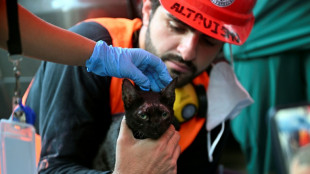
It follows three men who have devoted their lives to an improvised and largely self-funded wildlife clinic, caring for some of the hundreds of birds falling victim to Delhi's polluted air each day.
Every day, crates of injured black kite birds arrive at their basement, and the quixotic trio even perform a daring river rescue of one with a broken wing.
"Hundreds of birds falling out of the sky every day. What amazes me is that people go on as if everything's normal," says one of the men, to his wife.
The men discuss how the birds have learned to feast on trash, collect cigarette butts as a parasite repellent, and -- apparently -- even to sing at a higher pitch to communicate over Delhi's thunderous traffic.
Sen told AFP he chose his subjects to make audiences "consider the entanglement of human and non-human life."
In addition to the acrid air, many of the birds are wounded by the strings of wooden toy kites flown by humans.
- 'Crying' -
But for Sen, even the recent spate of environment-focused films are "not enough."
"It should be way more, given how much attention the planetary condition requires," the director said.
Sen believes filmmakers must make "more sophisticated stories that make us think of the planet" rather than focusing on "just gloom and doom and despair."
His film begins with a sweeping shot of piles of refuse, before gradually revealing the wildlife that has learned to thrive within the squalor.
By contrast, "Haulout" begins with incredible natural beauty before revealing the insidious tragedy created by the loss of sea ice, which means walruses arrive exhausted on the crowded beach, where many are trampled to death.
One heartbreaking scene finds a malnourished walrus pup prodding the body of its dead mother, before feebly trying to swim off into the ocean.
"When local storytellers tell stories of their environment, it's something that is so personal... you're talking about your own heart and the heart of your community that is breaking," said Arbugaeva.
Filming the tragic walrus footage, "my hands would be shaking because I would be just so emotional or crying that the camera would be not stable," she recalled.
"Sometimes some footage was not usable. Key, crucial moments. But it's just very hard."
M.Zhou--ThChM