Lebanese activists fight rampant beachside development / Photo: © AFP

In a pristine patch of Lebanon's north coast, a rare marine visitor has fuelled opposition to a seafront development, in a country where unchecked construction has obstructed access to beaches.
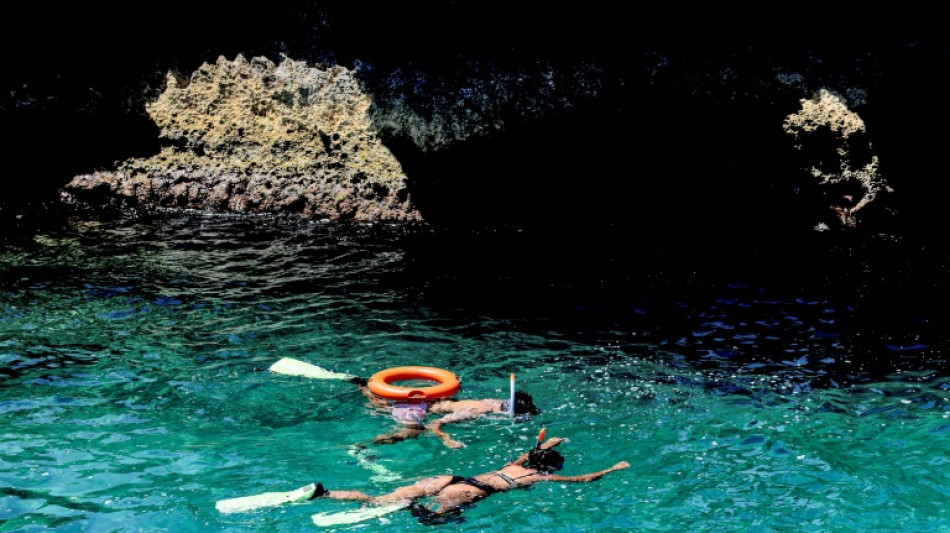
Residents of Amchit say a Mediterranean monk seal sometimes visits the area, taking refuge in the crystal-blue waters of a sea-cave accessible only by wading or paddling between low rocks to reach a tiny, sheltered cove.
But local environmental group Terre Liban has warned that a proposed development on the ground above risks causing the cave to collapse, destroying the secluded site.
"The seal chose this sea-cave because the water is clean" and the covered shore provides a resting place, said Farid Sami Abi Yunes.
The architect, 41, is among those campaigning for the cave to be listed as a nature reserve.
Mediterranean monk seals were once abundant but are now considered endangered by the International Union for Conservation of Nature, which cites threats including habitat loss.
Milad Fakhri from the National Centre for Marine Sciences says seals have been seen in Lebanese waters in recent years but "no official study has been carried out" into them.
Abi Yunes, one of those lucky enough to have snapped a picture of the seal while kayaking, said he was determined to protect the area.
"This villa must not be built... over a cave hosting an animal threatened with extinction," he said.
- 'Raw sewage' -
Residents of Amchit accuse the authorities of green-lighting the construction without considering the furry visitor.
Much of Lebanon's seafront is dotted with formal and informal structures and developments, some of them abandoned.
Many resorts that now restrict access to the coast are unlicensed, built on land that was obtained during the country's 1975-1990 civil war.
Some establishments charge more than $30 a day for entry -- eye-watering prices in a country gripped by a crushing economic crisis.
Local group Nahnoo, which campaigns for the preservation of public spaces, says that more than 80 percent of Lebanon's coast is no longer freely accessible.
The group's president Mohammad Ayoub said most of the rest was effectively unusable because of the dumping of "raw sewage".
Rampant construction isn't new in Lebanon but now "people mobilise more to defend the public domain", Ayoub said.
His group has registered more than 1,100 construction violations on the Lebanese coast.
Local activists showed AFP several instances of coastal construction that they said impeded public access.
Further north in Thoum, Riad Nakhul said the owners of two seaside facilities had failed to respect a stop-work order issued in June.
"Work continues discreetly," said Nakhul, an activist and historian, pointing to part of the coast that had been cemented over and where a pool was being built.
"Why don't the authorities get moving and enforce their decision?" he asked.
"We have nothing against tourism," he added, but construction of seaside facilities "must be legal".
- Demolition demand -
In nearby Kfarabida, residents have instead achieved a small victory at the "Abu Ali" beach, whose narrow crescent of rocky sand is wedged between the edge of a hill and sparkling blue water.
The space, one of the last public beaches in the area, was formerly home to a civil war-era structure built illegally on the shorefront, said activist Tony Nassif, 26.
"We found out recently that the owner wanted to develop" the structure, effectively taking over the beach, Nassif said.
So "we decided to get together to demand it be demolished," he told AFP, pointing to the empty space now free for beachgoers.
Last month in Naqura on Lebanon's south coast, environmental groups including Nahnoo managed to stop preparatory development work at another seafront site.
Elsewhere, however, swimmers and sunbathers have already been pushed out.
Karl Metrebian, 32, said he changed beaches after the one he went to for years in Kfarabida was privatised.
"Everywhere in the world the coast is free," said Metrebian, who works in the entertainment industry. "Why should it be different here?"
Nahnoo's Clara Khoury accused authorities of turning a blind eye to coastal developments that blocked public access.
"In Lebanon unfortunately, when people have influence, the state makes exceptions," she alleged.
J.Liv--ThChM