Wildfires upend Indigenous Canadians' balance with nature / Photo: © AFP

Adrienne Jerome is heartbroken.
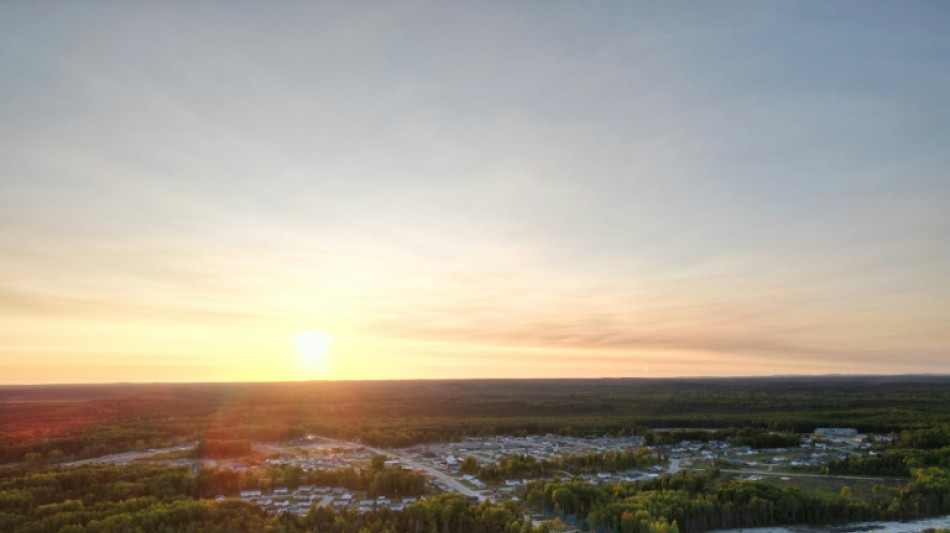
Her house survived Canada’s record wildfires this year, but everything that made her and many other Indigenous people in the area feel at home -- the spruce forests that enveloped her town, providing not just food but protection, everything from game to medicinal plants -- is gone.
"An evacuation in the middle of the night, with sirens blaring... it was a great shock," the former leader of this Anishinaabe tribe told AFP. "Children were crying and didn't want to leave their mothers.”
As they recover from this summer’s fires, isolated Indigenous communities surrounded by vast forests and often reachable only by air or a long, winding road are now facing big questions about their ability to maintain traditional ways of life.
"The forest that protects us has disappeared," Jerome says in a quavering voice.
"Our pantry has disappeared. There are no more small game animals, no hares, no partridges. All of the medicinal plants have burned."
All that remains now are blackened trunks.
A record number of wildfires, topping more 6,400 at last count, scorched almost 18 million hectares (nearly 70,000 square miles) this year, and forced thousands of Indigenous people to flee for their lives. Although they only represent five percent of Canada's population, they nevertheless constitute one in two evacuees.
Some communities had to evacuate multiple times over the spring and summer.
- 'Our church has disappeared' -
Wildfires are now "so dangerous and fast-moving" that evacuations are increasingly necessary, says Amy Cardinal Christianson, a Canadian Forest Service researcher who studies the effects of burns on Indigenous communities.
This poses particular challenges for remote northern villages with few or no links to Canada's large population centers in the south.
Anxieties are compounded by "a lack of trust that wildfire agencies will protect what the person or community values the most," says Christianson.
"That might be a trapline, a ceremonial site, a herd of cattle."
But the fires have become so big and numerous of late that authorities have been forced to prioritize saving homes in larger towns or cities under threat, over all else.
Everything Indigenous people do is rooted in "the forest, our territory," says Lucien Wabanonik, leader of the Lac-Simon community, his own home just steps from the woodland.
"Other people don't realize the loss that this represents for us. It's not a loss that we measure on a financial scale," he explains.
"Sacred sites, burials, meeting places have disappeared with the fire," he laments. "Our church had disappeared. It's an immense loss."
- 'It smells of death' -
This year marked the first time the Lac-Simon community had to evacuate due to forest fires.
Fires have flared in the region before but never on this scale: lightning sparked hundreds of fires at once during a weekend of storms in early June that lit up tinder dry forests.
"It smells like death," says Jerome, adding that she sobs when she thinks of all the wildlife that got trapped by advancing fires.
The community has mourned their deaths in several ceremonies.
At the same time, however, the fires have prompted renewed interest in reviving Indigenous practices that are currently curtailed.
Several Indigenous communities are calling for a return to prescribed burns to prevent wildfires, which involve setting a specific area on fire under controlled conditions to clear dead branches, brush and other materials that could become fuel for massive blazes.
Their ancestors used cultural burning practices for millennia, but there are legal barriers to who can do it now.
"These burns produce a mosaic on the landscape, creating or keeping meadows open, and promoting earlier succession forests with lots of deciduous trees that are less likely to cause crown fires," says Christianson.
Firefighters can use these "natural fire breaks to fight an out-of-control wildfire," she adds.
Adds Wabanonik, "a major shift must be taken."
C.Fong--ThChM