Inside King Charles's passion project, focus of Amazon film / Photo: © AFP

Teaching children how to milk cows, combat food waste or embroider linen are among the programmes on sustainability offered at a charity founded by King Charles III two decades ago.
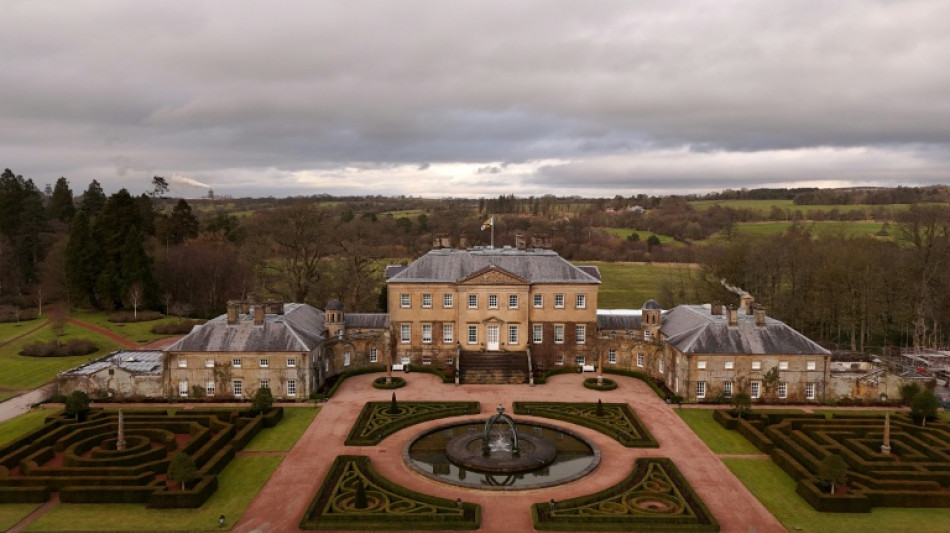
Now the King's Foundation based in Dumfries House, a sprawling 2,000-acre (809-hectare) estate in rural Ayrshire, southwest Scotland, will be at the heart of a new Amazon Prime documentary "Finding Harmony: A King's Vision".
The king's philosophy of "harmony" encourages people to "start to see ourselves in a more interconnected way" with nature, explained Simon Sadinsky, excutive director at the foundation overseeing education programmes.
Dumfries House is where that vision is "put into practice", Sadinsky told AFP on a rare media tour of the estate.
The new documentary will get its premiere on Wednesday at Windsor Castle with the king in attendance, before going on global release on Amazon on February 6.
Young schoolchildren are taught about food waste at the estate's farm and cookery school, while older students learn about sustainable textiles in the estate's imposing 18th-century Palladian mansion.
The textile centre uses plants from the walled garden for dyes, while the cookery school picks herbs, vegetables and edible flowers from the gardens, and there is a health centre with another garden full of medicinal plants.
"Wherever we've got a building, we try and plant for the purpose of the building," explained Melissa Simpson, the head of horticulture at Dumfries House.
It has transformed the way students from the local Auchinleck Primary School, in a run-down former mining town, learn about the environment, said the school's deputy head, Pauline Robertson.
"You can hear them talking much more about sustainability" and how we "maintain this wonderful planet that we live in", she added.
- Community's 'life blood' -
Liam, 10, scrunched up his face in mock disgust at a flatulent cow. Despite not being from a farming family, he wants to become a farmer when he grows up and spend "time with the animals".
The local area is one of "fairly high deprivation" and unemployment, said Sadinsky.
"The loss of jobs has also meant that young people were leaving the community when they had the opportunity to."
To address this, programmes focus on "heritage-led regeneration" to teach young people skills needed in the community.
"Whether that's around the green energy sector, or that's around farming and agriculture... it's providing a bit of a lifeblood back to the community itself," added Sadinsky.
After graduating from a textile programme run by the foundation, Nicole Christie launched her sustainable women's luxury brand, Ellipsis.
She puts to good use her knowledge of natural dyes and repurposing fabric scraps.
While entering the luxury fashion industry is "difficult" in Scotland, Christie says she wanted her brand to be based in Glasgow -- around an hour's drive from Ayrshire -- to "create opportunities for young graduates".
- A 'real risk' -
Dumfries House was in disrepair and due to be sold in 2007, along with its massive collection of Chippendale furniture, when the then-prince Charles led a consortium to buy it.
Like the multi-million-dollar purchase, which was derided by some at the time as a vanity project, Charles's regeneration plan for Dumfries House "was a real risk", said Sadinsky.
Nearly two decades later, some 10,000 students take part every year in programmes on the estate, while a total of 15,000 are trained on King's Foundation courses.
Stuart Banks was a high-school dropout when he enrolled on a hospitality course in 2013. He now serves as the king's butler when Charles is in residence at Dumfries House.
"I think I was so enthusiastic about the place and the project... it was here that sort of inspired me... to make a career," said Banks.
"The King's Foundation isn't a magic pill," he warned.
But "they saw someone who's been kind of left behind... and they've done everything they can to give me the tools to better my life".
H.Ng--ThChM