RYCEF
0.4000

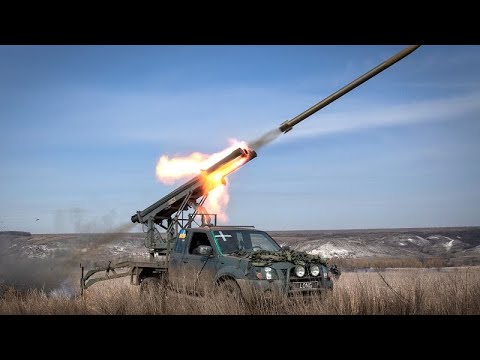
Ukraine is putting ground robots to work on a scale that is beginning to change how its army supplies positions, evacuates casualties and conducts some of its most dangerous combat missions. The significance lies in the gradual transfer of battlefield exposure from people to machines. For a force under sustained pressure to preserve experienced soldiers, that change could matter well beyond the individual missions captured on video.
The expansion is measurable. By early September 2026, Ukraine’s DELTA battlefield management system had recorded approximately 112,000 logistics and evacuation missions by ground robotic systems since the start of the year. The monthly total rose from 7,511 in January to 25,143 in August, an increase of roughly 3.3 times. These figures describe missions, not the number of robots deployed, and they should not be read as a tally of successful attacks or lives saved. They nevertheless show how far the technology has moved into routine military activity.
Supply work explains much of its value. Ammunition, food and water still have to reach troops in positions exposed to surveillance and attack. Wounded soldiers still have to be brought out. A remotely operated vehicle can undertake part of that movement while its operator remains elsewhere. The load may be ordinary; the route is what makes the task dangerous. Repeated across many positions, reducing the number of journeys made by people can alter the daily burden on an infantry force.
The strongest case for a robot is often the journey it allows a soldier to avoid. That changes the economics of military equipment. The purchase price matters, but so do the consequences of losing it. A destroyed machine consumes production capacity and money. A lost soldier also removes training, experience and relationships that cannot be replaced on a factory schedule. This is why an apparently modest cargo platform can have greater practical importance than a more spectacular experimental weapon.
Combat applications are developing alongside that logistical role. Ukraine’s Third Army Corps includes NC13, a unit specialising in ground robotic operations. In September, corps commander Andrii Biletskyi described an ambition to replace around a third of the corps’ frontline personnel with robots by the end of the year. That remains an objective for a particular formation, rather than a demonstrated reduction across the Ukrainian army. It signals how seriously some commanders now regard the technology.
There is a longer history behind the sudden attention. In December 2024, the Khartiia Brigade used a coordinated force of aerial drones and ground robots in an assault near Hlyboke in the Kharkiv region. More than 50 unmanned systems took part. The operation demonstrated that different remotely operated platforms could be combined for surveillance, fire support and attack. It also exposed the limits: ground conditions disabled some machines, and soldiers were still needed to secure and hold the territory afterwards.
Those distinctions remain essential. An unmanned vehicle has no crew aboard; that does not make it an autonomous decision-maker. Remote operation, assistance with navigation and independent target selection are different capabilities. Much of the operational change visible in Ukraine concerns the first of these. Human operators, commanders and technicians remain central to making the equipment useful. Describing every remotely controlled vehicle as an artificial intelligence weapon obscures both its present strengths and its weaknesses.
The physical environment imposes constraints that software cannot simply remove. A ground vehicle must negotiate soil, vegetation, rubble and obstacles that an aircraft may pass over. Its camera sees from a low position. Communications can be intermittent, and movement through complex terrain requires information that may be incomplete or already outdated. Research on small military robot teams has long identified the combination of restricted visibility, difficult navigation and unreliable communication as a central challenge. Ukraine is testing those problems under combat conditions.
Scaling the fleet therefore requires a larger support system. More vehicles mean more operators to train, more repairs, more replacement components and a greater need to coordinate machines with the soldiers around them. The useful measure is how many tasks can be completed reliably over time. A large delivery of equipment can look impressive while leaving unanswered questions about serviceability, workload and availability after repeated deployments.
Nor does removing a crew eliminate risk. Operators still work within a military system exposed to attack, and a machine that fails during an evacuation may leave a casualty in danger. Remote control changes where human vulnerability sits. It does not make the mission consequence-free. Reliability is particularly important when the payload is a wounded person rather than ammunition, and success in one role cannot automatically establish suitability for another.
The likely effect on the fighting is therefore uneven. Robotic systems can ease dangerous supply tasks and support selected assaults while remaining poorly suited to others. Their value depends on the terrain, the communications environment and the organisation using them. A successful demonstration offers evidence of a capability; repeated use establishes whether a formation can depend on it.
Ukraine’s developing robot force is best understood through that practical test. Can it keep a position supplied with fewer exposed soldiers? Can it bring someone back who would otherwise remain stranded? Can it reduce the personnel required for a dangerous task without creating a greater burden elsewhere? The answers will determine how much battlefield activity can move to machines. For the soldiers still holding the line, those gains are substantial enough without the promise of a war fought without people.