The China Mail - Smog and extreme heat, an unsafe combo for Texans

USD -
AED 3.672498
AFN 66.01795
ALL 81.918073
AMD 380.082198
ANG 1.790403
AOA 917.000317
ARS 1451.749668
AUD 1.499855
AWG 1.8025
AZN 1.700141
BAM 1.660779
BBD 2.006725
BDT 121.751979
BGN 1.660725
BHD 0.377041
BIF 2943.593924
BMD 1
BND 1.285546
BOB 6.899392
BRL 5.593024
BSD 0.996315
BTN 89.32611
BWP 13.141537
BYN 2.897914
BYR 19600
BZD 2.003838
CAD 1.37381
CDF 2259.999662
CHF 0.78991
CLF 0.023193
CLP 909.850267
CNY 7.04095
CNH 7.02196
COP 3793.03
CRC 496.671309
CUC 1
CUP 26.5
CVE 93.63218
CZK 20.65465
DJF 177.422642
DKK 6.3437
DOP 62.353521
DZD 129.566957
EGP 47.489902
ERN 15
ETB 154.42113
EUR 0.84919
FJD 2.27745
FKP 0.750114
GBP 0.74135
GEL 2.685028
GGP 0.750114
GHS 11.383785
GIP 0.750114
GMD 73.487596
GNF 8709.274779
GTQ 7.634761
GYD 208.4508
HKD 7.77715
HNL 26.262695
HRK 6.398405
HTG 130.448073
HUF 329.955015
IDR 16785
ILS 3.20254
IMP 0.750114
INR 89.761967
IQD 1305.237594
IRR 42099.999951
ISK 125.680418
JEP 0.750114
JMD 159.029924
JOD 0.708996
JPY 156.04701
KES 128.429994
KGS 87.450116
KHR 3996.739435
KMF 419.00048
KPW 899.999969
KRW 1483.870657
KWD 0.30727
KYD 0.830305
KZT 513.773309
LAK 21581.29819
LBP 89223.786556
LKR 308.472878
LRD 176.352705
LSL 16.642013
LTL 2.95274
LVL 0.60489
LYD 5.406576
MAD 9.120954
MDL 16.868483
MGA 4488.638294
MKD 52.269794
MMK 2100.312258
MNT 3551.223311
MOP 7.984274
MRU 39.714174
MUR 45.980253
MVR 15.459953
MWK 1727.692673
MXN 17.969497
MYR 4.067021
MZN 63.898534
NAD 16.642013
NGN 1455.949607
NIO 36.664685
NOK 10.09705
NPR 142.921436
NZD 1.72015
OMR 0.384497
PAB 0.9964
PEN 3.35527
PGK 4.238734
PHP 58.754044
PKR 279.104565
PLN 3.58065
PYG 6732.108284
QAR 3.64186
RON 4.320201
RSD 99.734007
RUB 78.799672
RWF 1451.2075
SAR 3.75044
SBD 8.146749
SCR 14.142203
SDG 601.5159
SEK 9.219503
SGD 1.287215
SHP 0.750259
SLE 24.049856
SLL 20969.503664
SOS 568.424986
SRD 38.4065
STD 20697.981008
STN 20.802996
SVC 8.718284
SYP 11058.38145
SZL 16.637512
THB 31.190097
TJS 9.166469
TMT 3.5
TND 2.914388
TOP 2.40776
TRY 42.827702
TTD 6.773717
TWD 31.510303
TZS 2470.474018
UAH 41.938114
UGX 3590.23131
UYU 39.052682
UZS 11952.718997
VES 282.15965
VND 26329.5
VUV 120.603378
WST 2.787816
XAF 557.009782
XAG 0.01444
XAU 0.000224
XCD 2.70255
XCG 1.79571
XDR 0.692741
XOF 557.009782
XPF 101.270337
YER 238.502559
ZAR 16.716565
ZMK 9001.206597
ZMW 22.517917
ZWL 321.999592
  • SCS

    0.0200

    16.14

    +0.12%

  • RBGPF

    0.0000

    80.22

    0%

  • CMSC

    -0.0500

    23.12

    -0.22%

  • RYCEF

    -0.3200

    15.36

    -2.08%

  • CMSD

    -0.0500

    23.2

    -0.22%

  • BCC

    -0.5400

    74.23

    -0.73%

  • RELX

    0.2500

    40.98

    +0.61%

  • JRI

    -0.0100

    13.37

    -0.07%

  • RIO

    1.7800

    80.1

    +2.22%

  • NGG

    0.3000

    76.41

    +0.39%

  • BCE

    -0.1100

    22.73

    -0.48%

  • VOD

    0.0400

    12.88

    +0.31%

  • GSK

    -0.0200

    48.59

    -0.04%

  • BTI

    0.3200

    56.77

    +0.56%

  • BP

    0.2000

    34.14

    +0.59%

  • AZN

    0.1900

    91.55

    +0.21%

Smog and extreme heat, an unsafe combo for Texans
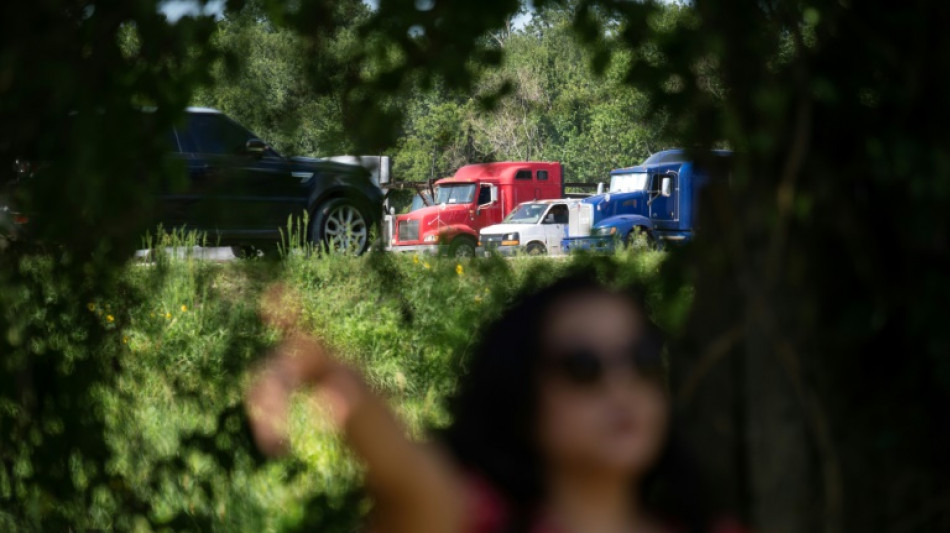
Smog and extreme heat, an unsafe combo for Texans / Photo: © AFP

Smog and extreme heat, an unsafe combo for Texans

Extreme temperatures have combined with habitual smog in Houston for more than two weeks, and Erandi Trevino feels the hazardous combination in her body.

Text size:

"It burns my face. I feel it in my nostrils," Trevino says.

The heat wave sprawling across the southern United States has lasted since June 14, and the sultry air and humidity make for temperatures that feel like they are higher than 40 degrees C (104 degrees F).

Houston, the fourth most populous US city with 2.3 million people, is home to four oil refineries (one of them among the nation's largest), heavy industry, a tangle of highways and plenty of trucks.

"In past years, we may have a heat emergency that lasts typically two, three, maybe four days at the most (but) I've never seen in the last 20 years... where it extends past a week and a half," Porfirio Villarreal, spokesman for the Houston Health Department, told AFP.

Between four and 10 people die each year in the city of Houston from heat-related illness, Villarreal said.

Trevino, 31, an organizer with Public Citizen, lives next to a truck parking lot where exhaust spews constantly.

Fewer than seven miles away (10 kilometers) is the Houston Ship Channel, site of major industrial and petrochemical activity.

The heat and pollution have delivered a one-two blow.

- High ozone days -

"It's absolutely affecting my health, no doubt about it," she said, trucks rumbling behind her home in the southwest of the city.

"In Houston, we're affected by a lot of ground-level ozone... (which) is what happens when pollution and heat combine."

"When we have heat waves here that are 100 degrees (F) for several weeks on end, plus the high levels and spikes and pollution that we have from the industry, then that results in a lot of days with high ozone levels."

Ozone can be good or bad depending on where it exists. Good ozone occurs naturally in the upper atmosphere, shielding humans from harmful ultraviolet rays.

But ozone at ground level is a harmful contaminant, and is caused when pollutants emitted by vehicles, power plants, refineries and other sources chemically react with sunlight, especially in hot weather, the Environmental Protection Agency says.

Trevino, who also is director of the Health Port Communities Coalition, demands that ozone meters be installed near industrial areas of the city. None exist currently.

- Millions affected -

According to the American Lung Association, nearly 120 million US citizens (more than a third of the nation) live in areas with unhealthy levels of ozone or particle pollution, with some of them vulnerable to illness and even death.

"I feel like that it is extremely dangerous for our health in the long run, especially for the little ones and the elderly," said Esmeralda Carr, a 32-year-old mother of four and a neighbor of Trevino's.

"When you have a lot of pollution, you end up having more people go to the hospitals. They may have asthma, which is exacerbated by that ozone or that pollution," Villarreal said.

Those most harmed by the pollution are African American and Latino communities, the American Lung Association says.

K.Lam--ThChM