The China Mail - South America sweats under high temps -- in the middle of winter

USD -
AED 3.672497
AFN 66.036454
ALL 81.924334
AMD 380.162903
ANG 1.790403
AOA 917.000203
ARS 1451.787039
AUD 1.49402
AWG 1.8025
AZN 1.699493
BAM 1.661132
BBD 2.006879
BDT 121.777831
BGN 1.657805
BHD 0.377029
BIF 2944.418964
BMD 1
BND 1.285906
BOB 6.900857
BRL 5.592797
BSD 0.996391
BTN 89.332937
BWP 13.142542
BYN 2.898136
BYR 19600
BZD 2.003991
CAD 1.370675
CDF 2259.99999
CHF 0.787698
CLF 0.023064
CLP 904.79859
CNY 7.04095
CNH 7.01637
COP 3791.72
CRC 496.780988
CUC 1
CUP 26.5
CVE 93.652061
CZK 20.61705
DJF 177.436202
DKK 6.332069
DOP 62.36729
DZD 129.65002
EGP 47.509863
ERN 15
ETB 154.455231
EUR 0.847695
FJD 2.27745
FKP 0.743131
GBP 0.74025
GEL 2.684991
GGP 0.743131
GHS 11.386202
GIP 0.743131
GMD 73.499594
GNF 8711.715844
GTQ 7.636382
GYD 208.495061
HKD 7.7782
HNL 26.268494
HRK 6.388502
HTG 130.484081
HUF 331.369946
IDR 16796
ILS 3.19072
IMP 0.743131
INR 89.509912
IQD 1305.51474
IRR 42100.000026
ISK 125.279833
JEP 0.743131
JMD 159.063692
JOD 0.708981
JPY 155.937994
KES 128.896448
KGS 87.449617
KHR 3997.842677
KMF 418.999641
KPW 899.961009
KRW 1481.109751
KWD 0.30715
KYD 0.830481
KZT 513.882401
LAK 21585.880634
LBP 89230.605919
LKR 308.538377
LRD 176.366184
LSL 16.645547
LTL 2.95274
LVL 0.60489
LYD 5.406989
MAD 9.12289
MDL 16.872064
MGA 4488.98136
MKD 52.172476
MMK 2099.845274
MNT 3553.409727
MOP 7.985969
MRU 39.722944
MUR 45.970204
MVR 15.459844
MWK 1727.824721
MXN 17.94771
MYR 4.063998
MZN 63.898004
NAD 16.645547
NGN 1454.479952
NIO 36.67465
NOK 10.06477
NPR 142.952997
NZD 1.71273
OMR 0.384502
PAB 0.996611
PEN 3.355982
PGK 4.239923
PHP 58.846021
PKR 279.125897
PLN 3.58653
PYG 6732.622819
QAR 3.642633
RON 4.313402
RSD 99.507042
RUB 78.250296
RWF 1451.515641
SAR 3.750726
SBD 8.146749
SCR 13.717754
SDG 601.5106
SEK 9.17975
SGD 1.28507
SHP 0.750259
SLE 24.050168
SLL 20969.503664
SOS 568.545682
SRD 38.406498
STD 20697.981008
STN 20.808915
SVC 8.720135
SYP 11056.89543
SZL 16.638784
THB 31.110975
TJS 9.168415
TMT 3.5
TND 2.915007
TOP 2.40776
TRY 42.829165
TTD 6.775155
TWD 31.474955
TZS 2466.723973
UAH 41.941319
UGX 3590.993638
UYU 39.060974
UZS 11955.256967
VES 282.15965
VND 26331
VUV 121.541444
WST 2.783984
XAF 557.128054
XAG 0.014356
XAU 0.000223
XCD 2.70255
XCG 1.796091
XDR 0.692794
XOF 557.052354
XPF 101.29184
YER 238.502594
ZAR 16.69165
ZMK 9001.217591
ZMW 22.519638
ZWL 321.999592
  • CMSD

    0.0200

    23.22

    +0.09%

  • SCS

    0.0200

    16.14

    +0.12%

  • BCC

    -0.6100

    73.53

    -0.83%

  • GSK

    0.5100

    49.11

    +1.04%

  • AZN

    1.3400

    92.89

    +1.44%

  • CMSC

    0.0332

    23.17

    +0.14%

  • RIO

    0.8000

    80.91

    +0.99%

  • BTI

    0.1500

    56.915

    +0.26%

  • RYCEF

    -0.3200

    15.36

    -2.08%

  • BCE

    0.0150

    22.74

    +0.07%

  • RBGPF

    0.0000

    80.22

    0%

  • VOD

    0.1550

    13.035

    +1.19%

  • RELX

    0.0210

    40.996

    +0.05%

  • JRI

    0.0000

    13.37

    0%

  • BP

    0.4850

    34.62

    +1.4%

  • NGG

    0.6200

    77.05

    +0.8%

South America sweats under high temps -- in the middle of winter
South America sweats under high temps -- in the middle of winter / Photo: © AFP

South America sweats under high temps -- in the middle of winter

Far away from the extreme summer temperatures of the northern hemisphere, Southern Cone countries such as Chile and Argentina are also experiencing record heat, but in the middle of what is supposed to be their winter.

Text size:

On Tuesday, the mountain town of Vicuna in central Chile hit 37 degrees Celsius (almost 99 degrees Fahrenheit).

"It's been more than 70 years since a temperature like this was recorded" in Vicuna, Chilean meteorologist Cristobal Torres told AFP.

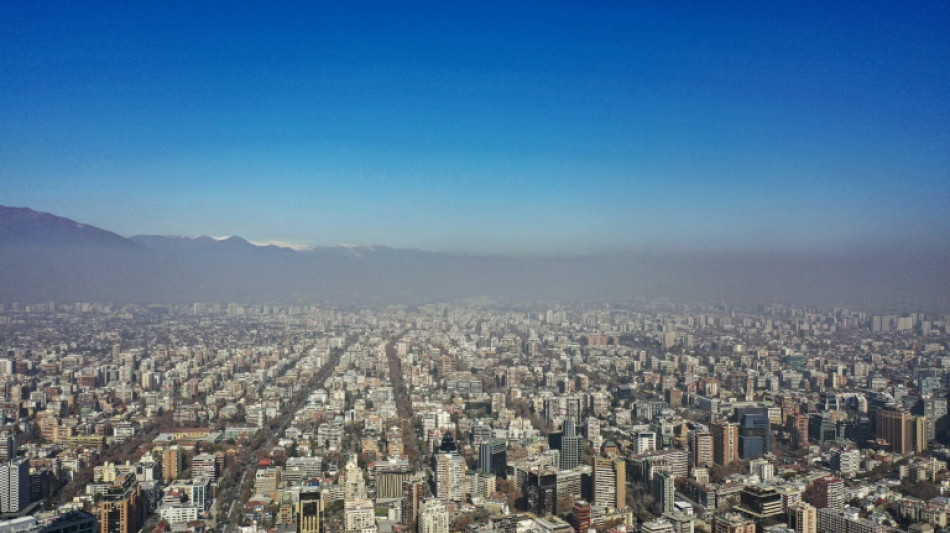
Unusually high temperatures were also recorded 450 kilometers (280 miles) south in the capital Santiago: 24C (75F) on Wednesday, with similar levels forecast for Thursday and Friday.

Meanwhile in Buenos Aires, the temperature exceeded 30C (86F) on Tuesday, making it the highest August 1 temperature since record-keeping began, according to Argentina's National Meteorological Service. The average August temperature in Buenos Aires is usually between 18C (64F) and 9C (48F).

Several cities across Uruguay also recorded temperatures of 30C (86F) on Wednesday.

"What we are experiencing is the combination of two phenomena: a global warming trend due to climate change plus the El Nino phenomenon," said Chile's Environment Minister Maisa Rojas, a climatologist.

"When El Nino ends, the global weather situation should stop being so extreme," she said.

An El Nino event is characterized by increased Pacific Ocean temperatures, causing rainfall, floods and avalanches in western South America, as well as heat waves.

Santiago, Buenos Aires and Montevideo are expected to return to normal temperatures in the coming days, but it is believed that similar heat waves will occur with increasing frequency.

"It is very likely that the heat record will be broken this year (in Santiago), and that is extraordinarily abnormal. Ten years ago we had two heat waves a year and now we are talking about nine," explained University of Santiago climatologist Raul Cordero.

One of the most significant impacts of the warm weather is on snowpacks in the mountains, which are vital for the water supply in Chile's capital.

"Winter heat waves have devastating effects on glaciers and snow," Cordero said.

Rojas also warned about the effects of heat at the poles.

"The ice around the polar areas is at minimum levels," she said on X, formerly known as Twitter.

"Especially around Antarctica, where at this time of year sea ice grows to reach a maximum in September, it is at a historic minimum."

I.Ko--ThChM